Quote
"I do not understand the capricious lewdness of the sleeping mind."
J
John Cheever"Wisdom we know is the knowledge of good and evil not the strength to choose between the two."
John William Cheever was an American short story writer and novelist. He is sometimes called "the Chekhov of the suburbs". His fiction is mostly set on the Upper East Side of Manhattan; the Westchester suburbs; old New England villages based on various South Shore towns around Quincy, Massachusetts, where he was born; and Italy, especially Rome. His short stories included "The Enormous Radio", "Go
"I do not understand the capricious lewdness of the sleeping mind."
"Homesickness is nothing … Fifty percent of the people in the world are homesick all the time."
"Art is the triumph over chaos."
"I can’t write without a reader. It’s precisely like a kiss—you can’t do it alone."
"One would never have guessed that the world had such a capacity for genuine grief. The most we can do is exploit our memories of his excellence."
"The need to write comes from the need to make sense of one’s life and discover one’s usefulness."
"The wound is the place where the Light enters you."
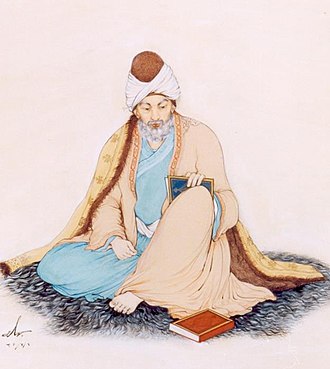 Rumi
Rumi"Be the change that you wish to see in the world."
 Mahatma Gandhi
"In philosophy equally as in poetry it is the highest and most useful prerogative of genius to produce the strongest impressions of novelty, while it rescues admitted truths from the neglect caused by the very circumstance of their universal admission."
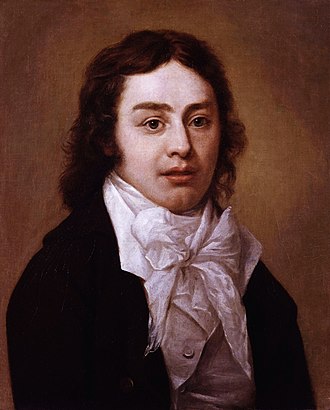 Samuel Taylor Coleridge
"An [hypertext] encyclopaedia will be an overall attempt by the knowledgeable, the learned societies or anyone else, to represent the state-of-the-art in their field. An encyclopaedia will be a living document, as up to date as it can be, instantly accessible at any time. It will contain carefully authored explanations and summaries of the subject, as well as computer-generated indexes of literature. A reference to a paper from the encyclopaedia conveys authority and acceptance by academic society. A measure of a paper’s standing may be conveyed by the number of links it is away from an encyclopaedia."
 Tim Berners-Lee
"The British intellectual tradition is empirical and liberal, the French is rationalist and aristocratic, and the German is idealist and conservative. ...In the great ontological debate between mind and matter, German philosophy comes down solidly on the side of mind. Its emphasis is intuition as opposed to reason, ideas as opposed to facts."
"To know the mighty works of God, to comprehend His wisdom and majesty and power; to appreciate, in degree, the wonderful workings of His laws, surely all this must be a pleasing and acceptable mode of worship to the Most High, to whom ignorance cannot be more grateful than knowledge."