Quote
"The Abolitionst... must see that he has neither the right or power of operating except by moral means and suasion."
 Abolitionism
Abolitionism
Abolitionism
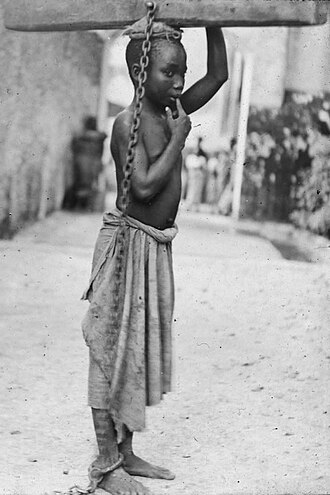
Abolitionism, or the abolitionist movement, is the political movement to end slavery and liberate enslaved individuals around the world. It gained momentum in the western world in the late 18th and 19th centuries.
"The Abolitionst... must see that he has neither the right or power of operating except by moral means and suasion."
Abolitionism"Meanwhile, a wave of Protestant revivals known as the Second Great Awakening swept the country during the first third of the nineteenth century. In New England, upstate New York, and those portions of the Old Northwest above the 41st parallel populated by the descendants of New England Yankees, this evangelical enthusiasm generated a host of moral and cultural reforms. The most dynamic and divisive of them was abolitionism. Heirs of the Puritan notion of collective accountability that made every man his brothers keeper, these Yankee reformers repudiated Calvinist predestination, preached the availability of redemption to anyone who truly sought it, urged converts to abjure sin, and worked for the elimination of sins from society. The most heinous social sin was slavery. All people were equal in Gods sight; the souls of black folks were as valuable as those of whites; for one of Gods children to enslave another was a violation of the Higher Law, even if it was sanctioned by the Constitution. By midcentury this antislavery movement had gone into politics and had begun to polarize the country. Slaveholders did not consider themselves egregious sinners. And they managed to convince most non-slaveholding whites in the South (two-thirds of the white population there) that emancipation would produce economic ruin, social chaos, and racial war. Slavery was not the evil that Yankee fanatics portrayed; it was a positive good, the basis of prosperity, peace, and white supremacy, a necessity to prevent blacks from degenerating into barbarism, crime, and poverty."
Abolitionism"The delegates of the annual conference are decidedly opposed to modern Abolitionism, and wholly disclaim any right, wish, or intention to interfere in the civil and political relation between master and slave as it exists in the slave states of the union."
Abolitionism"In 1770, on the eve of the American Revolution, African American slavery was legal and almost unquestioned throughout the New World. The ghastly slave trade from Africa was still expanding and for many decades had been shipping five Africans across the Atlantic for every European immigrant to the Americas. An imaginary “hemispheric traveler” would have seen black slaves in every colony from Canada and New England all the way south to Spanish Peru and Chile. In the incomparably rich colonies of the Caribbean, they often constituted population majorities of 90 percent or more. But in 1888, one hundred and eighteen years later, when Brazil finally freed all its slaves, the institution had been outlawed throughout the Western Hemisphere. This final act of liberation, building on Abraham Lincoln’s emancipation achievement in the American Civil War, took place only a century after the creation of the first antislavery societies in human history—initially small groups in such places as Philadelphia, London, Manchester, and New York. The abolition of New World slavery depended in large measure on a major transformation in moral perception—on the emergence of writers, speakers, and reformers, beginning in the mid-eighteenth century, who were willing to condemn an institution that had been sanctioned for thousands of years and who also strove to make human society something more than an endless contest of greed and power."
Abolitionism"The way to abolish slavery in America is to vote such men into power as well use their powers for the abolition of slavery... The Constitution itself. Its language is we the people. Not we the white people, not even we the citizens, not we the privileged class, not we the high, not we the low, but we the people. Not we the horses, sheep, and swine, and wheel-barrows, but we the people, we the human inhabitants. If Negroes are people, they are included in the benefits for which the Constitution of America was ordained and established. But how dare any man who pretends to be a friend to the Negro thus gratuitously concede away what the Negro has a right to claim under the Constitution?"
Abolitionism"In this study the term "abolitionist" will be applied to those Americans who before the Civil War had agitated for immediate, unconditional, and universal abolition of slavery in the United States. Contemporaries of the antislavery movement and later historians have sometimes mistakenly used the word "abolitionist" to describe adherents of the whole spectrum of antislavery sentiment. Members of the Free Soil and Republican parties have often been called abolitionists, even though these parties were pledged officially before 1861 only to the limitation of slavery, not to its extirpation. It is a moot question whether such radical anti-slavery leaders such as Charles Sumner, John Andrew, George Julian, Thaddeus Stevens, or Owen Lovejoy were genuine "abolitionists". In their hearts they probably desired an immediate end to slavery as fervently as did William Lloyd Garrison. But they were committed publicly by political affiliation and party responsibility to a set of principles that fell short of genuine abolitionism."
Abolitionism