Quote
"A walk down 14th street is more amazing than any masterpiece of art."
A
Allan KaprowAllan Kaprow
author ·
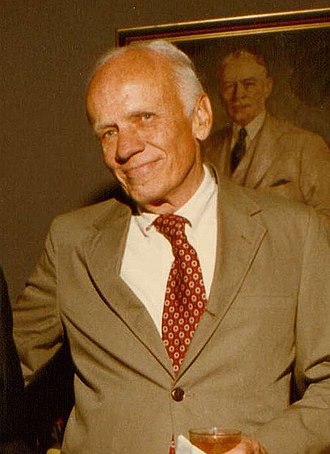
Allan Kaprow was an American performance artist, installation artist, painter, and assemblagist. He helped to develop the "Environment" and "Happening" in the late 1950s and 1960s, as well as their theory. His Happenings — some 200 of them — evolved over the years. Eventually Kaprow shifted his practice into what he called "Activities", intimately scaled pieces for one or several players, devoted
"A walk down 14th street is more amazing than any masterpiece of art."
"Well, you know, a lot of work nowadays [c. 1991] tends to be illustrative of theory already written, and some of it tends to be quite consciously didactic, as if the determination is to teach somebody something. And letting that go for the moment, as far as its value is concerned, its exactly the opposite of what I seem to find most useful, and that is to leave things open and not determine anything except the very clear form. The form is always very simple and clear. What is experienced is uncertain and unforeseeable, which is why I do it, and its point is never clear to me, even after Ive done it. So thats a very, very different way of looking at the nature of our responsibility in the world."
"[something like] a badly constructed or repaired motor, or like that wonderful event of Tinguelys, where he made a huge contraption in the backyard of the Museum of Modern Art called Homage to New Yorkhttps://www.youtube.com/watch?v=0MqsWqBX4wQ, which was a machine that destroyed itself in various humorous ways. Its that breakdown system along with slippages that you cant predict I find most interesting, not because I want to make a point about society as being a broken down system or that all life is entropic — I dont, but rather that its process is unforeseeable."
"Most humans, it seems, still put up fences around their acts and thoughts – even when these are piles of shit – for they have no other way of delimiting them. Contrast Paleolithic cave paintings, in which animals and magical markings are overlayed with no differentiation or sense of framing. But when some of us have worked in natural settings, say in a meadow, woods, or mountain range, our cultural training has been so deeply ingrained that we have simply carried a mental rectangle with us to drop around whatever we were doing. This made us feel at home. (Even aerial navigation is plotted geometrically, thus giving the air a shape)."
"Its not what artists touch that counts most. Its what they dont touch."
"The line between art and life should be kept as fluid, and perhaps indistinct, as possible."
"Pollock.. ..left us [c. 1958] at the point where we must be preoccupied with and even dazzled by the space and objects of our everyday life, either our bodies, clothes, rooms, or, if need be, the vastness of Forty-Second Street [New York].. ..Objects of every sorts are materials for the new art, paints, chairs, food, electric and neon-lights, smoke, water, old socks, a dog, movies, a thousand other things which will be discovered by the present generation of artists.. ..All will become materials for this new concrete art."
"Around late 1961 to 1962, right around there, somewhat unevenly and sort of spottily, I began to do pieces that were based upon a short text of actions that only involved a handful of friends or students at some specific site — a site that was not marked as an art site, a ravine somewhere, or a roadway, or somebodys apartment, or the telephone, that is, the places of everyday life, not designated as sites of art. And the work itself, the action, the kind of participation, was as remote from anything artistic as the site was.. ..I chose the word Happening from its normal language usage somewhat earlier for that philosophical reason, but I didnt categorize that as lifelike until much later. But in fact, looking back, thats exactly what Happening meant."
"You cant teach colour from Cézanne, you can only teach it from something like this bubble-gum wrapper."
"The problem with artlike art, or even doses of artlike art that still linger in lifelike art, is that it overemphasizes the discourse within art."