Quote
"The method of arithmetical teaching is perhaps the best understood of any of the methods concerned with elementary studies."
 Arithmetic
Arithmetic
Arithmetic
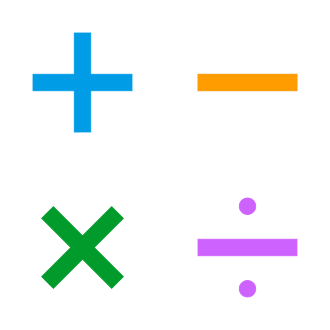
Arithmetic is an elementary branch of mathematics that deals with numerical operations like addition, subtraction, multiplication, and division. In a wider sense, it also includes exponentiation, extraction of roots, and taking logarithms.
"The method of arithmetical teaching is perhaps the best understood of any of the methods concerned with elementary studies."
Arithmetic"What mathematics, therefore are expected to do for the advanced student at the university, Arithmetic, if taught demonstratively, is capable of doing for the children even of the humblest school. It furnishes training in reasoning, and particularly in deductive reasoning. It is a discipline in closeness and continuity of thought. It reveals the nature of fallacies, and refuses to avail itself of unverified assumptions. It is the one department of school-study in which the sceptical and inquisitive spirit has the most legitimate scope; in which authority goes for nothing. In other departments of instruction you have a right to ask for the scholar’s confidence, and to expect many things to be received on your testimony with the understanding that they will be explained and verified afterwards. But here you are justified in saying to your pupil “Believe nothing which you cannot understand. Take nothing for granted.” In short, the proper office of arithmetic is to serve as elementary 268 training in logic. All through your work as teachers you will bear in mind the fundamental difference between knowing and thinking; and will feel how much more important relatively to the health of the intellectual life the habit of thinking is than the power of knowing, or even facility of achieving visible results. But here this principle has special significance. It is by Arithmetic more than by any other subject in the school course that the art of thinking—consecutively, closely, logically—can be effectually taught."
Arithmetic"Arithmetic and geometry are much more certain than the other sciences, because the objects of them are in themselves so simple and so clear that they need not suppose anything which experience can call in question, and both proceed by a chain of consequences which reason deduces one from another. They are also the easiest and clearest of all the sciences, and their object is such as we desire; for, except for want of attention, it is hardly supposable that a man should go astray in them. We must not be surprised, however, that many minds apply themselves by preference to other studies, or to philosophy. Indeed everyone allows himself more freely the right to make his guess if the matter be dark than if it be clear, and it is much easier to have on any question some vague ideas than to arrive at the truth itself on the simplest of all."
Arithmetic"The Eudemian Summary says that "Pythagoras changed the study of geometry into the form of a liberal education, for he examined its principles to the bottom, and investigated its theorems in an immaterial and intellectual manner." His geometry was connected closely with his arithmetic. He was especially fond of those geometrical relations which admitted of arithmetical expression."
Arithmetic"Mathematics is the queen of the sciences and arithmetic the queen of mathematics. She often condescends to render service to astronomy and other natural sciences, but in all relations she is entitled to the first rank."
Arithmetic"A hieratic papyrus, included in the Rhind collection of the British Museum, was deciphered by Eisenlohr in 1877, and found to be a mathematical manual containing problems in arithmetic and geometry. It was written by Ahmes some time before 1700 B.C., and was founded on an older work believed by Birch to date back as far as 3400 B.C.! This curious papyrus -- the most ancient mathematical handbook known to us -- puts us at once in contact with the mathematical thought in Egypt of three or five thousand years ago. It is entitled "Directions for obtaining the Knowledge of all Dark Things." We see from it that the Egyptians cared but little for theoretical results. Theorems are not found in it at all. It contains "hardly any general rules of procedure, but chiefly mere statements of results intended possibly to be explained by a teacher to his pupils."
Arithmetic"The higher arithmetic presents us with an inexhaustible store of interesting truths,—of truths too, which are not isolated, but stand in a close internal connexion, and between which, as our knowledge increases, we are continually discovering new and sometimes wholly unexpected ties. A great part of its theories derives an additional charm from the peculiarity that important propositions, with the impress of simplicity upon them, are often easily discoverable by induction, and yet are of so profound a character that we cannot find their demonstration 273 till after many vain attempts; and even then, when we do succeed, it is often by some tedious and artificial process, while the simpler methods may long remain concealed."
Arithmetic"Arithmetic is the science of the Evaluation of Functions, Algebra is the science of the Transformation of Functions."
Arithmetic"Adde thou upright, reserving every tenne, And write the Digits downe all with thy pen, The proofe (for truth I say,) Is to cast nine away. From the particular summes, and severall Reject the Nines; likewise from the totall When figures like in both chance to remaine Clear light of working right shal be your gain; Subtract the lesser from the great, noting the rest. Or ten to borrow, you are ever prest, To pay what borrowed was thinks it no paine, But honesty redounding to your gaine."
Arithmetic"The late Professor Leslie... [i]n his Philosophy of Arithmetic... entered... into much of its history. ...[O]ne principal, thing to be cautious of is, his almost monomaniac antipathy to every thing Hindoo—a most unfortunate turn... Leslie... generalises... fearfully every now and then. He informs us that it was the practice throughout Europe to reduce the rules of arithmetic to memorial verses, and that [William] Buckleys Arithmetica Memorativa appears at one period to have gained possession of the schools and colleges of England. Now the truth... the verses attributed to Sacrobosco had never... been printed when Leslie wrote; and Buckley... was printed only once... and two or three times as an appendix to a work on logic. Dr. Peacock expresses the truth in saying... before the invention of printing, the practice of writing memorial verses was common, as appears by manuscript libraries. ...[H]ad the practice of using them been common, the presses of the fifteenth and sixteenth centuries would have given them forth in great numbers. But I cannot learn that any metrical work was printed in the fifteenth century, except the Compotus of [Magister] Anianus, and that only once."
Arithmetic"I do hate sums, There is no greater mistake than to call arithmetic an exact science. There are Permutations and Aberrations discernible to minds entirely noble like mine; subtle variations which ordinary accountants fail to discover; hidden laws of Numbers which it requires a mind like mine to perceive. For instance, if you add a sum from the bottom up, and then again from the top down, the result is always different."
Arithmetic"It may fairly be said that the germs of the modern algebra of linear substitutions and concomitants are to be found in the fifth section of the Disquisitiones Arithmeticae; and inversely, every advance in the algebraic theory of forms is an acquisition to the arithmetical theory."
Arithmetic




