SHAWORDS
B

Barbara J. Grosz

Barbara J. Grosz

Barbara J. Grosz

author
9Quotes

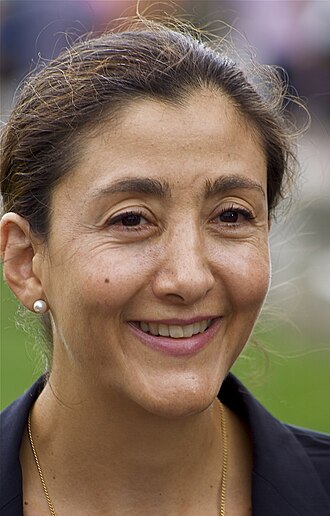
Barbara J. Grosz CorrFRSE is an American computer scientist and Higgins Professor of Natural Sciences at Harvard University. She has made seminal contributions to the fields of natural language processing and multi-agent systems. With Alison Simmons, she is co-founder of the Embedded EthiCS programme at Harvard, which embeds ethics lessons into computer science courses.

Popular Shayari

9 total
Quote
"One of the things I want students to learn is the importance of designing artifacts for the people who will use them. A computer system should make us feel smarter, not dumber and work seamlessly with us, like a human partner. I tell students to look for limitations and cracks in a system and think about the unintended consequences of those limitations. If you’re only focused on what you’re building, you’re blind to what a system may do that you hadn’t thought about."
B
Barbara J. Grosz
Quote
"When I was working on speech understanding systems at SRI in the 1970s, other research team members were responsible for syntax and grammar — determining the structure and building a computer representation of the meaning of an individual sentence. Everyone involved in early speech understanding systems knew that wasn’t enough. When people talk, the context matters. They use pronouns and definite descriptions. They depend on each other to interpret those imprecise expressions appropriately in context. For example, depending on the setting, “the cup” might mean my coffee cup or the cup you received as a gift. We knew that if we were going to have a system that could carry on a dialogue and be able to handle the way people actually spoke, we needed to have a computational model of dialogue that could track context. Many researchers thought if they sat in a chair and thought really hard, they could figure it out. I expected that wouldn’t work and devised a way to capture dialogue about the same topic from many different pairs of people. This was actually the first “Wizard of Oz” experiment in dialogue systems, though that name came later. I placed two people in separate rooms and had one give the other instructions in how to put together a piece of equipment — an air compressor. My analysis of the way they talked led to the first computational model of discourse."
B
Barbara J. Grosz
Quote
"Right. We’re working with a pediatrician at Stanford University Hospital whose patients have complex diseases, many of them seeing 10 to 15 doctors. The cognitive load for coordinating care among 15 people (turning the group into a real team) is enormous — no care giver needs to see everything everyone else is doing but they may need to know something about each other’s work. A key question is when one member of the team learns something new about a patient, who should get that information and when? Our goal is to build the foundations for smart computer care coordination systems to help. To do that, we need to figure how to effectively compute the information to be shared in the absence of detailed models of how people are carrying out their responsibilities. If we do this, we’ll also know how to build computer agents that are good teammates."
B
Barbara J. Grosz
Quote
"These systems are major accomplishments, but they don’t come close to human dialogue capabilities. When Siri first came out people said to me, ‘you have nothing left to do, right?’ So, I borrowed a phone with Siri and it took me two questions to break the system. I asked, “Where are the nearest gas stations,” and then I asked, “Which ones are open?” It replied, “Would you like me to search the web for ‘which ones are open?’” It had no context, no discourse. Siri has improved since then, but it’s still pretty easy to break the system with a question that depends on dialogue context. No current system is thinking to the extent Turing imagined computers might be by now."
B
Barbara J. Grosz
Quote
"The fear of AI systems running amok or taking over the world is greatly exaggerated. Some of the predictions are based on lack of understanding of the current state of AI (or even of what’s actually computable). Also, it’s important not to lose sight of who’s in charge: people design AI systems, and they can design any number of plugs to pull. If we design systems to work with people — which has always been my goal — then the probability of them running amok is greatly lowered."
B
Barbara J. Grosz
Quote
"To clarify: I suggested that the way we use computers had changed so much, as had our knowledge of human cognition, that Turing himself might ask a different question now. My new question is rooted in our now knowing that collaboration is essential to intelligent behavior and seems to play a fundamental role in the ways infants learn. Can we design systems that behave so well that they pass for human? One big challenge, which my team is addressing in our research, is getting delegation to work well. Delegation of particular responsibilities to different team members is a hallmark of teamwork. To make teamwork work (or as we might say in computer science, to make it tractable), team members have to share information but not overwhelm each other with too much information. An enormous challenge for systems is to be able to determine what information to share with whom when."
B
Barbara J. Grosz

Similar Authors & Thinkers