Quote
"Strong joy and grief depend upon the treatment this rudimentary social self receives."
C
Charles CooleyCharles Cooley
Charles Cooley
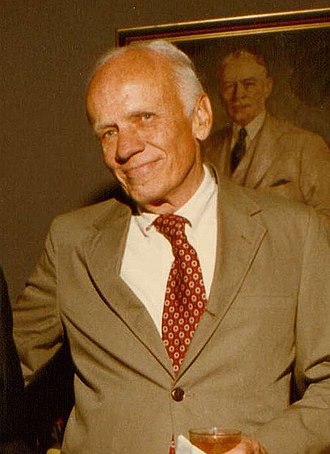
Charles Horton Cooley was an American sociologist. He was the son of Michigan Supreme Court Judge Thomas M. Cooley. He studied and went on to teach economics and sociology at the University of Michigan.
"Strong joy and grief depend upon the treatment this rudimentary social self receives."
"We are ashamed to seem evasive in the presence of a straightforward man, cowardly in the presence of a brave one, gross in the eyes of a refined one, and so on. We always imagine, and in imagining share, the judgments of the other mind. A man will boast to one person of an action — say some sharp transaction in trade-^which he would be ashamed to own to another."
"If failure or disgrace arrives, if one suddenly finds that the faces of men show coldness or contempt instead of the kindliness and deference that he is used to, he will perceive from the shock, the fear, the sense of being outcast and helpless, that he was living in the minds of others without knowing it, just as we daily walk the solid ground without thinking how it bears us up."
"As we see our face, figure, and dress in the glass, and are interested in them because they are ours, and pleased or otherwise with them according as they do or do not answer to what we should like them to be; so in imagination we perceive in anothers mind some thought of our appearance, manners, aims, deeds, character, friends, and so on, and are variously affected by it."
"SOCIETY and the Individual" is really the subject of this whole book, and not merely of Chapter One. It is my general aim to set forth, from various points of view, what the individual is, considered as a member of a social whole ; while the special purpose of this chapter is only to offer a preliminary statement of the matter, as I conceive it, afterward to be unfolded at some length and variously illustrated."
"How is a man to find where he belongs in life? The more original he is, the less likely is he to find his place prepared for him. He must not expect to see from the beginning what mould his life will take... The power to work on faith is what distinguishes great men."
"The group self or "we" is simply an "I" which includes other persons. One identifies himself with a group and speaks of the common will, opinion, service, or the like in terms of "we" and "us." The sense of it is stimulated by co-operation within and opposition without."
"One who shows signs of mental aberration is, inevitably, perhaps, but cruelly, shut off from familiar, thoughtless intercourse, partly excommunicated; his isolation is unwittingly proclaimed to him on every countenance by curiosity, indifference, aversion, or pity, and in so far as he is human enough to need free and equal communication and feel the lack of it, he suffers pain and loss of a kind and degree which others can only faintly imagine, and for the most part ignore."
"A self -idea of this sort seems to have three principal elements: the imagination of our appearance to the other person; the imagination of his judgment of that appearance, and some sort of self-feeling, such as pride or mortification."
"As social beings we live with our eyes upon our reflection, but have no assurance of the tranquillity of the waters in which we see it."
"Society is an interweaving and interworking of mental selves. I imagine your mind and especially what your mind thinks about my mind and what my mind thinks about what your mind thinks about my mind. I dress my mind before you and expect that you will dress yours before mine. Whoever cannot or will not perform these feats is not properly in the game."
"To get away from ones working environment is, in a sense, to get away from ones self; and this is often the chief advantage of travel and change."