SHAWORDS
C

Charles E. Rosenberg

Charles E. Rosenberg

author ·

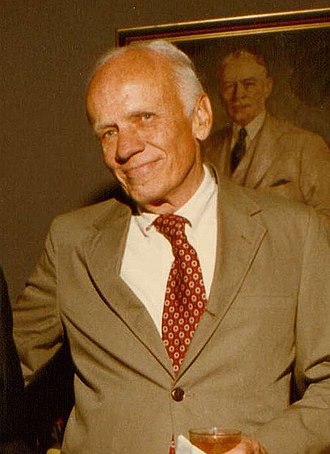
Charles Ernest Rosenberg is an American historian of medicine. He is Professor of the History of Science and Medicine and the Ernest E. Monrad Professor in the Social Sciences at Harvard University.

Popular Shayari & Quotes

Quote
"Even the most optimistic advocate of innovation in medicine cannot ignore ever-increasing , costs associated in some measure with that we so much admire. And, as we are equally well aware, access to clinical services is far from universal or equitable. As I write this introduction, more than forty million Americans lack and medical expenses remain a major cause of bankruptcy. Still another paradox complicates the relationship between society and medicine. Though expectations of therapeutic efficacy have never been more euphoric and patients appear to trust their own physicians, respect for the medical profession has declined ... The is trusted even less."
C
Charles E. Rosenberg

Quote
"... and Hugh Hodge, Philadelphias leading teachers of in the 1840s and 1850s were vociferous in rejecting the suggestion that might be contagious, indeed often spread by the obstetrician himself ... The intensity of their response suggests that something more than mere intellectual difference was involved; one of the roots of their hostility to a contagionist point of view lay in the threat it implied for the physicians status, especially in relation to female patients."
C
Charles E. Rosenberg
Quote
"was the classic epidemic disease of the nineteenth century, as had been of the . When cholera first appeared in the United States in 1832, and smallpox, the great epidemic diseases of the previous two centuries, were no longer truly national problems. Yellow fever had disappeared from the , and had deprived smallpox of much of it menace. Cholera, on the other hand, appeared in almost every part of the country in the course of the century. ... Before 1817, there had probably never been a cholera epidemic outside the ; during the nineteenth century, it spread through almost the entire world ..."
C
Charles E. Rosenberg
Quote
"Medicine has always had its s, but until recently it was a history written by and for practitioners. Until the early nineteenth century, in fact, history and practice could hardly be distinguished. Galen and Hippocrates could be and were used to bolster arguments about the nature of fever or the logic of a particular therapeutic choice. A learned physician read Latin and , not simply to mystify the laity but to work with those master texts that still figured meaningfully in his intellectual life. By the late nineteenth century, of course, the writings of and were no longer alive in the thought and practice of even educated practitioners. History had become quite clearly history — something in the past. This is not to suggest that interest in the medicine of previous eras disappeared. It remained was to become gradually — if even today incompletely — an academic field. But the history of medicine was still populated almost entirely by scholars trained in medical schools, the great majority of whom made their living as physicians."
C
Charles E. Rosenberg
Quote
"Physicians and since the days of Thomas Jefferson and Benjamin Rush have criticized the peculiar tensions of American life. The speculative pathologies which explain precisely how these tensions injured the mind and body have changed in form since the days of Rush, but the ambivalent attitudes which they express toward American life have not. Yet neither Benjamin Rush nor his successors later in the century—, , and , among others—were willing, warn as they might of the psychic perils of American life, to exchange its liberties for the placid tyranny of the Russian or Turkish empires (or, most Americans felt, their Protestantism for the formalistic reassurances of Catholicism)."
C
Charles E. Rosenberg
Quote
"Just as s and s assumed that their research illuminated the glory of God in His works, so did most nineteenth-century American physicians assume that there could be no conflict between their findings and the truths of morality. The human organism was a thing both material and divine, and offenses both physical and moral were necessarily punished with disease. Drinking, overeating, sexual excess, all carried with them inevitable retribution, not because the Lord deigned to intercede directly in human affairs, but because He had created mans body so that infringing on Gods moral law meant disobeying the laws of . Moralism thus drew upon the prestige of science, while medicine was pleased that its findings supported the dictates of morality."
C
Charles E. Rosenberg
Quote
"In an account that both travels over explored territory and covers new ground, Charles Rosenberg provides a vivid and complex history of a key institution. Rosenberg divides The Care of Strangers into two periods: the pre-Civil War era, before the advent of modern medicine, and from the war to the 1920s, by which time the had assumed modern form. The underlying theme of the book is that hospitals are a product of the interaction of and physicians. Hospitals were dominated by reformers as long as medical science was weak. But with its rise and the subsequent power of physicians, reformers and their social welfare goals faded."
C
Charles E. Rosenberg