SHAWORDS
Concentration camp

Concentration camp

Concentration camp

Concentration camp

author
34Quotes

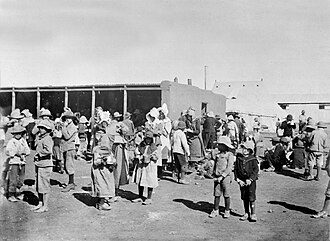
A concentration camp is a prison or other facility used for the internment of political prisoners or politically targeted demographics, such as members of national or ethnic minority groups, on the grounds of national security, or for exploitation or punishment.

Popular Shayari

34 total
Quote
"In a society such as ours, it is almost impossible for a person to be responsible. ...In the whole of our technological society the work is so fragmented and broken up into small pieces that no one is responsible. ...Everyone has his own, specific task. And thats all... The director of the was asked at the Nuremburg trials, “But didn’t you find it horrible? All those corpses?” He replied, “What could I do? I couldn’t process all those corpses. The capacity of the ovens was too small. It caused me many problems. I had no time to think about these people. I was too busy with the technical problem of my ovens.” That is the classic example of an irresponsible person. He carries out his technical task and isn’t interested in anything else."
Concentration campConcentration camp
Quote
"This is a history of the : a history of a vast network of labor camps that were once scattered across the length and breadth of the Soviet Union... Literally, the word GULAG is an acronym, meaning Glavnoe Upravlenie Lagerei, or Main Camp Administration. Over time, the word "Gulag" has also come to signify... the system of Soviet slave labor itself, in all forms and varieties: labor camps, punishment camps, criminal and political camps, womens camps, childrens camps, transit camps. Even, more broadly, "Gulag" had come to mean the Soviet repressive system itself, the set of procedures that prisoners once called the "meat-grinder": the arrests... interrogations... transport in unheated cattle cars... forced labor... destruction of families, the years spent in exile, the early and unnecessary deaths."
Concentration campConcentration camp
Quote
"In Hitlers Germany, when to be a Communist or Socialist or militant trade unionist or liberal... democrat meant arrest, the concentration camp, and often death and torture, when there was institued one of the most thoroughgoing "purges" of literature and burning of books that the world has ever known, when Schillers "Don Carlos", the poems of Heine and the novels of Thomas Mann were banned or burned as "subversive", the writings of Trotsky were widely translated and distributed."
Concentration campConcentration camp
Quote
"[A] high school teacher in Granada, a woman of Navajo ancestry married to a Chicano... related that she had been there when the trains came in and had seen "the people crying and herded like cattle into army trucks and hauled up to the camp." ...[S]he came right up with the tabooed words: "We [Granadians] were the recipients of the concentration camp." But had no one in town protested..? No... "There was a lot of prejudice in here in the Arkansas Valley then. Stores in Lamar... had signs: NO JAPS ALLOWED."
Concentration campConcentration camp
Quote
"The Gulag had antecedents in Czarist Russia, in the forced-labor brigades... in Siberia from the seventeenth century to the beginning of the twentieth. It... took on its modern... familiar form almost immediately after the Russian Revolution. Mass terror against real and alleged opponents was part of the Revolution from the very beginning—and by... 1918, Lenin... had already demanded that "unreliable elements" be locked up in concentration camps outside major towns. A string of aristocrats, merchants, and other people defined as potential "enemies" were duly imprisoned. By 1921, there were... eighty-four camps... mostly designed to "rehabilitate" these first enemies of the people."
Concentration campConcentration camp
Quote
"In the general lurid picture of World War II, with its wrecked cities, uprooted farmland, demolished transportation facilities, and public utilities, starvation, disease, ashes, death, rubble, and dust, one item of horror seems to stand out with particularly dramatic and tragic intensity—the concentration camp. It can be seriously doubted in the world of today, even among the most meagerly informed peoples that there exists a man or woman who in some manner or other has not heard of and recoiled: at the mention of the phrase concentration camp."
Concentration campConcentration camp
Quote
"Anna Akhmatovas first husband... N. Gumilev, was shot in 1921 in Petrograd. In the 1930s her then husband was arrested, and... her son. She stood for hours outside the prison in Leningrad, with many others, and wrote a poem about it, the famous "Requiem". ...When Gorbachev came to power, a skeptical colleague told ... that the changes [could be] real if and when Akhmatovas "Requiem" were published. Published it was... almost fifty years after... written. ...[T]he power of poetry in Russian [is] a power lost in the West. Mandelshtam, who perished in a transit camp... once quipped that only in Russia are poets taken seriously, since only in Russia are poets killed for writing it. His own arrest had been largely due to some verses about Stalin: "He rejoices at every execution." ... Zabolotsky spent ten years in camps and survived. Ogonyok (No. 4 1988) reprinted a powerful poem about two old peasants freezing to death in the Kolyma complex ("On a Road Near Magadan")... [T]he belated appearance of Alexander Tvardovskys... "By Right of Memory", in Novyi mir (No. 3 1987) twelve years after his death... stressed the effects of terror, the universal fear, the falsehoods, the suffering. ...The Ginzburg memoirs are being serialized... also... an interview with her first husband [Pavel] Aksyonov... who also survived seventeen years of labour camp. As for Solzhenitsyn... two works that he wrote when still in Russia, The First Circle and The Cancer Ward, may soon appear."
Concentration campConcentration camp
Quote
"Total loyalty to the movement, which is the psychological basis for total domination, can be expected, Arendt contends, "only from the completely isolated human being" who does not have any social ties. In times of war, revolution, or economic crisis, these masses of isolated people become available for mobilization by totalitarian regimes. Membership... promises... a cure for their "loneliness" and feeling of "not belonging to the world..." The totalitarian propaganda offers "a lying world of consistency which is more adequate to [their] needs... than reality itself." Clinging to the ideology and propaganda of the... movement, these "uprooted masses" can feel at home "through sheer imagination." ...[I]n Arendts conception of total domination, the subjects of this power move in two distinct circles: the wider circle... in society... members... prepared to provide total loyalty to the movement. The narrower circle... inmates of the concentration camps—the "laboratories" in which the experiment of total domination is fully realized."
Concentration campConcentration camp

Similar Authors & Thinkers