SHAWORDS
COVID-19 testing

COVID-19 testing

COVID-19 testing

COVID-19 testing

author
31Quotes

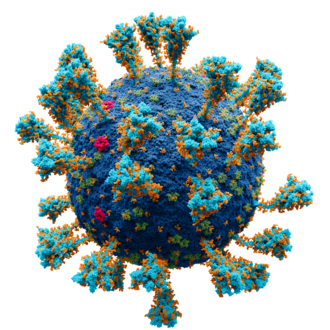
COVID-19 testing involves analyzing samples to assess the current or past presence of SARS-CoV-2, the virus that causes COVID-19 and is responsible for the COVID-19 pandemic. The two main types of tests detect either the presence of the virus or antibodies produced in response to infection. Molecular tests for viral presence through its molecular components are used to diagnose individual cases an

Popular Shayari

31 total
Quote
"Even once a test is working beautifully in the lab, it still faces an arduous journey to mass usage. The first challenge is to verify performance, because quality can vary. “It’s a Wild West out there for assay development,” says Catharina Boehme, chief executive officer of the Foundation for Innovative New Diagnostics (FIND), a non-profit group in Geneva that is collaborating with the World Health Organization and the University Hospitals of Geneva to assess hundreds of SARS-CoV-2 testing options. Most RT-PCR-based tests that FIND has evaluated perform just as well as the gold standard does, whereas antigen tests have so far fallen short of expectations, Boehme says. Another hurdle is scaling up the assays for mass production. Given this constraint, Boehme thinks it is unrealistic that all the new tests will be deployed before the end of the year — although a small number might be. But once they are available, they could work alongside the gold standard to push countries closer to the target of millions of tests per week — and prepare the world for the next pandemic."
COVID-19 testingCOVID-19 testing
Quote
"Another way researchers are trying to bring testing to the masses is to devise assays that could be used in temporary testing facilities, drive-through testing centres and even in people’s homes. At least two teams are taking advantage of the gene-editing technology CRISPR to power such tests. For example, researchers led by Zhang have developed a coronavirus assay that can be run in a single test tube in about an hour4. But it still requires heating the sample to about 65 °C, and it’s not as sensitive as a PCR-based assay. “That’s okay, because it’s much easier to use,” Zhang says. When tested multiple times on samples from 12 people infected with coronavirus, the assay detected the virus on nearly every occasion. The test builds on an approach that Zhang co-developed in 2017, called SHERLOCK5, which relies on the ability of the CRISPR machinery to home in on specific genetic sequences. Researchers program a guide molecule to latch on to a particular stretch of the SARS-CoV-2 genome. If the guide molecule finds a match, a CRISPR enzyme generates a signal that can be detected either as a fluorescent glow or as a dark band on a paper dipstick (see ‘Cut and detect’). On 6 May, the US Food and Drug Administration (FDA) authorized a SHERLOCK coronavirus assay for emergency use. The test is made by biotechnology firm Sherlock BioSciences in Cambridge, Massachusetts (of which Zhang is a co-founder), and the company has partnered with a manufacturer to mass-produce the kits. (See also ‘Coronavirus assays assessed’.)"
COVID-19 testingCOVID-19 testing
Quote
"Guozhen Liu, a bioengineer at the University of New South Wales in Sydney, Australia, says that technologies such as CRISPR could be “a game changer” in the current pandemic. Thanks to their ability to quickly and precisely identify genetic snippets, these approaches “can find a needle in a haystack”, Liu says. They use different reagents from RT-PCR-based assays — useful when there are shortages of chemical supplies for standard tests — and they can be designed to target any pathogen. For example, a team led by computational biologist Pardis Sabeti at the Broad Institute created rubber ‘chips’ about the size of a smartphone that can search 1,000 samples for a single virus, or 5 samples for a panel of 169 viruses that are known to infect humans8."
COVID-19 testingCOVID-19 testing
Quote
"The United States is in a particularly dire situation. “Public-health authorities are struggling to reach cases and contacts” despite aggressive efforts, says John Oeltmann, head of contact-tracing assessment at the US Centers for Disease Control and Prevention (CDC) in Atlanta, Georgia. He and his team evaluated two counties in North Carolina. In June and July, 48% of cases in one county and 35% in the other reported no contacts. Of the contacts whose details were provided, one-quarter in one county and almost half in the other couldn’t be reached on the phone after three attempts over consecutive days. In New Jersey, just 49% of cases between July and November were contacted; only 31% of those provided any contact details. “These results are not rare,” says Oeltmann."
COVID-19 testingCOVID-19 testing
Quote
"In South Korea, authorities use data-surveillance techniques to get around the problem of people being unwilling to disclose — or unable to recall — close contacts. “We need to double-check,” says Daejoong Lee at the South Korean Ministry of Economy and Finance. A law passed in response to an outbreak of Middle East respiratory syndrome (MERS) in 2015 allows authorities to use data from credit cards, mobile phones and closed-circuit television to trace a person’s movements and identify others they might have exposed to the virus. Information about cases is published online, an approach that allowed the country to avoid broad lockdowns and “worked very well”, says Lee. Still, in March, the Korea Centers for Disease Control issued guidelines limiting the release of ‘excessive’ information, after regional governments published maps of infected people’s routes in too much detail. In one case, a person was wrongly accused of having an affair with his sister-in-law because their overlapping maps revealed they dined together at a restaurant. Tracers in Vietnam also use extra data — such as Facebook or Instagram posts and mobile-phone location data — to check a person’s movements against those reported to contact-tracers. But the country’s success was down to “the boots on the ground”, says Todd Pollack, an infectious-disease specialist at the Partnership for Health Advancement in Vietnam, a collaboration that provides training and support for the nation’s health system. Contact-tracers interview people face-to-face and use the extra surveillance data to prod for more details."
COVID-19 testingCOVID-19 testing
Quote
"A survey of attitudes to contact-tracing across 19 countries in August found that nearly three-quarters of respondents would be willing to provide contact information. But rates varied. In Vietnam, only 4% of participants said that they wouldn’t provide this information. In the United States and Germany, the proportion was 21%, and in France, it was 25%. Concerns around data privacy and tracking are partly to blame, says researcher Sarah Jones at Imperial College London, who co-led the survey. “Many health authorities and governments, especially in North America and Western Europe, may need to urgently improve public-health messaging to mitigate concerns about contact-tracing,” she says. “Public trust in all sorts of institutions is declining,” says sociologist Robert Groves, former director of the US Census Bureau, who notes that this is especially the case in large urban areas where social cohesion has also declined. But the low numbers of people providing details of contacts or responding to calls from contact-tracers, while disappointing, are not surprising, says Mary Bassett, a public-health researcher at Harvard University in Cambridge, Massachusetts. Some communities that have been hardest hit by COVID-19 have a long-standing distrust of public-health authorities, she says. “For the African American community, there’s a history of malfeasance on the part of the public-health system,” she says, “and for the Latino community, there’s a problem of members of the community who are undocumented” — and fear deportation.” Systems are often hampered by a lack of support for people who fall ill or need to quarantine, too. Providing adequate financial compensation for personal hardship as a result of quarantine could shift people’s reluctance to comply. The prospect of being without income for two weeks — or losing a job entirely — is a big burden, says Plescia, and might explain people’s reluctance to provide details for their close contacts."
COVID-19 testingCOVID-19 testing
Quote
"For some US allies, the fixation on words at a time when the international order was arguably facing its greatest challenge since the second world war encapsulated the glaring absence of US leadership. And that absence was illustrated just as vividly by news coverage of planes full of medical supplies from China arriving in Italy, at a time when the US was quietly flying in half a million Italian-made diagnostic swabs for use in its own under-equipped health system and Donald Trump was on the phone to the South Korean president pressing him to send test kits."
COVID-19 testingCOVID-19 testing

Similar Authors & Thinkers