SHAWORDS
Daphne Gail Fautin

Daphne Gail Fautin

Daphne Gail Fautin

Daphne Gail Fautin

author
2Quotes

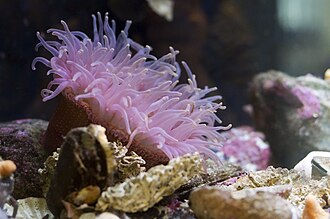
Daphne Gail Fautin was an American professor of invertebrate zoology at the University of Kansas, specializing in sea anemones and symbiosis. She is world-renowned for her extensive work studying and classifying sea anemones and related species.

Popular Quotes

2 total
Quote
"are secreted by the of all ns and only cnidarians. Of the three categories of cnidae (also called cnidocysts), s occur in all cnidarians, and are the means by which cnidarians defend themselves and obtain prey; s and s are restricted to a minority of major . A cnida discharges by eversion of its tubule; venom may be associated with the tubule of a nematocyst. About 30 major morphological types of nematocysts are recognized, but no single nomenclature for them is accepted."
Daphne Gail FautinDaphne Gail Fautin
Quote
"The 25 species of and one of (family ) are obligate s of 10 species of facultatively symbiotic sea anemones. Throughout the tropical Indo-West Pacific range of the relationship, a fish species inhabits only certain of the hosts potentially available to it. This specificity is due to the fishes. Five fishes occupy six sea anemone species at , , Australia. harbors P. biaculeatus, A. melanopus and A. akindynos. ... ns cleared of symbionts disappeared within 24 h, probably having been eaten by reef fishes. Entacmaea, the most abundant and widespread host actinian at Lizard Island and throughout the range of the association, is also arguably the most attractive to es. I believe its vulnerability to predation was a factor in its evolving whatever makes it desirable to fishes. Experimental transfers pitted fish of one species against those of another, controlling for ecophenotype of host, and sex, size and number of fish. Competitive superiority was in the same order as abundance and over-all host specificity: P. biaculeatus, A. melanopus, A. akindynos. At least three factors are necessary to explain patterns of species specificity — innate or learned host preference, competition, and es."
Daphne Gail FautinDaphne Gail Fautin

Similar Authors & Thinkers