Quote
"Doria Shafik had been a traitor to the Revolution and did not merit having a biography written."
 Doria Shafik
Doria Shafik
Doria Shafik
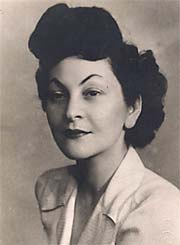
Doria Shafik was an Egyptian feminist, poet and editor, and one of the principal leaders of the women's liberation movement in Egypt in the mid-1940s. As a direct result of her efforts, Egyptian women were granted the right to vote by the Egyptian constitution.
"Doria Shafik had been a traitor to the Revolution and did not merit having a biography written."
Doria Shafik"Eager to be more active in public affairs, Doria began searching for an outlet and in 1945... was offered the position of editor-in-chief of a new magazine... founded by Princess Chewikar... . ...[S]he was not altogether happy in that milieu and became sensitive to popular criticism that she must be in the pay of foreign powers since she was writing ...in French. ...[S]he decided to launch her own Arabic-language magazine, Bint-al-Nil, through which she continued to champion the equal rights of women. Finally, signalling her impatience with the... complacency of the government toward womens political and legal rights, Doria Shafik took the decisive step in March 1948 of establishing her Bint-al-Nil Union on behalf of the complete emancipation of Egyptian women."
Doria Shafik"She... not only founded and edited two prominent womens journals but also authored and coauthored several books... on the history, development, and renaissance of the social and political rights of the Egyptian woman. She established a feminist organization and a political party through which she challenged the very bastions of male authority under both pre-revolutionary and revolutionary regimes, shaping a feminist consciousness through a strategy of confrontation: storming the Egyptian parliament, attempting to run illegally for parliamentary elections, staging sit-ins to protest British occupation of Egypt, and... organizing an eight-day hunger strike for womens rights. She met and spoke openly about "womens rights"... with the heads of state of [Egypt,] India, Ceylon, Lebanon, Iraq, and Iran; she... lectured to audiences in Europe, the United States, and the Far and Middle East... only to lose her own freedom and civil liberties in 1957 following her... protest against the erosion of democracy in Egypt under... Nasser."
Doria Shafik"[T]his interplay between solitude, alienation, and creativity... ran through her life and work and... brought her into continual conflict with her family and society. Although her life is an expression of one womans unique experience... her metaphors reach beyond the borders of Egypt to remind us of other women who... challenged the forces that constrained... autonomy and freedom in an unswerving "courage to be."
Doria Shafik"Doria Shafik took the liberal ideology of the EFU one step further, becoming more militant in her reformist ideas and actions than Huda Sharawi. ...Shafik thought of herself as the symbol of the new Egyptian woman emerging after World War II—highly educated, articulate, internationalist, urbane, attractive, and elegantly dressed... She presented herself... as different from the secluded, traditionally clad, silent majority of Egyptian women. Militant while remaining feminine... out to conquer the male elite sphere of politics. At the beginning of her career she might have defended the upper classes as the "natural" rulers of Egypt... [in] La femme nouvelle. By the end of the 1940s, however, she was... becoming one of the leading spokespersons for the middle class, which she considered eligible to rule."
Doria Shafik"My life began with the First World War and ever since has been a continual struggle."
Doria Shafik