Quote
"I hate doubt, yet I am certain that doubt is the only way to approach anything worth believing in."
E
Edward TellerEdward Teller
Edward Teller
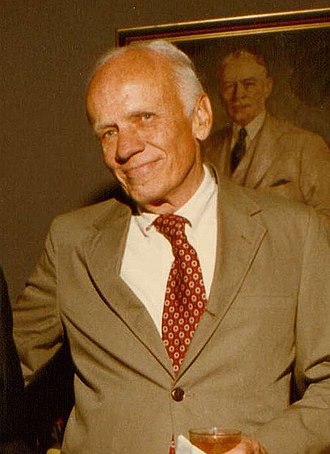
Edward Teller was a Hungarian-American theoretical physicist and chemical engineer who is known colloquially as "the father of the hydrogen bomb" and one of the creators of the Teller–Ulam design inspired by Stanisław Ulam.
"I hate doubt, yet I am certain that doubt is the only way to approach anything worth believing in."
"I believe in good. It is an ephemeral and elusive quality. It is the center of my beliefs, but it cannot be strengthened by talking about it."
"When we came back through the trees to the house, we heared a strange sound coming through the open door. The children stopped their chatter and we all stood outside the door and listened. It was my old friend from long ago, Bachs Prelude No. 8 in E-flat minor. Superbly played. Played just the way my father used to play it. For a moment I was completely disoriented. I thought: What the devil is my father doing here in California? We stood in front of our Berkeley house and listened to that prelude. Whoever was playing it was putting into it his whole heart and soul. The sound floated up to us like a chorus of mourning from the depths, as if the spirits in the underworld were dancing to a slow pavane. We waited until the music came to an end and then walked in. There, sitting at the piano, was Edward Teller. We asked him to go on playing, but he excused himself."
"At the end of the war, most people wanted to stop. I didnt. Because here was more knowledge. And in the coming uncertain period, with a dangerous man like Stalin around, and our incomplete knowledge, I felt that more knowledge is necessary. Among the people who knew a great deal about the hydrogen bomb, I was the only advocate of it. And that is, I think, my contribution. Not that I invented it, others would have — and others in the Soviet Union did. But I was the one person who put knowledge, and the availability of knowledge, above everything else."
"A fact is a simple statement that everyone believes. It is innocent, unless found guilty. A hypothesis is a novel suggestion that no one wants to believe. It is guilty, until found effective."
"Dr. Teller has a mind very different from mine. I think one needs both kinds of minds to make a successful project. I think Dr. Tellers mind runs particularly to making brilliant inventions, but what he needs is some control, some other person who is more able to find out just what is the scientific fact about the matter. Some other person who weeds out the bad from the good ideas."
"The preservation of peace and the improvement of the lot of all people require us to have faith in the rationality of humans. If we have this faith and if we pursue understanding, we have not the promise but at least the possibility of success. We should not be misled by promises. Humanity in all its history has repeatedly escaped disaster by a hairs breadth. Total security has never been available to anyone. To expect it is unrealistic; to imagine that it can exist is to invite disaster. What we do have in our technological capacities is an opportunity to use our inventiveness, our creativity, our wisdom and our understanding of our fellow beings to create a future world that is a little better than the one in which we live today."
"It is not even impossible to imagine that the effects of an atomic war fought with greatly perfected weapons and pushed by the utmost determination will endanger the survival of man."
"Theres no system foolproof enough to defeat a sufficiently great fool."
"On May 7, a few weeks after the accident at Three-Mile Island, I was in Washington. I was there to refute some of that propaganda that Ralph Nader, Jane Fonda and their kind are spewing to the news media in their attempt to frighten people away from nuclear power. I am 71 years old, and I was working 20 hours a day. The strain was too much. The next day, I suffered a heart attack. You might say that I was the only one whose health was affected by that reactor near Harrisburg. No, that would be wrong. It was not the reactor. It was Jane Fonda. Reactors are not dangerous."
"Two paradoxes are better than one; they may even suggest a solution."
"Before Bethe married, he was so often a guest in the Teller home that he became almost one of the family. In April, 1954, that was all over. There could be no real reconciliation. Bethe had lost one of his oldest friends. But Teller had lost more. Teller, by lending his voice to the cause of Oppenheimers enemies, had lost not only the friendship but the respect of many of his colleagues, and he was portrayed by newspaper writers and cartoonists as a Judas, a man who had betrayed his leader for the sake of personal gain."