Quote
"The Elizabethans were passionate admirers of the exotic; eager importers of the new and foreign styles in food and dress as in building."
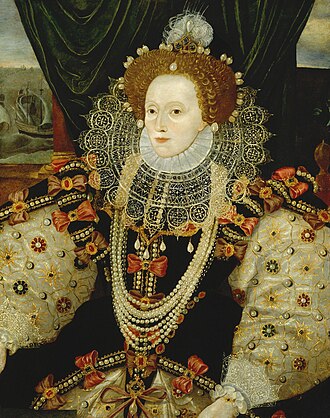 Elizabethan era
Elizabethan era
Elizabethan era
The Elizabethan era is the epoch in the Tudor period of the history of England during the reign of Queen Elizabeth I (1558–1603). Historians often depict it as the golden age in English history, with an effective government, resulting from the reforms of Henry VII and Henry VIII, and a prospering economy boosted by trans-Atlantic trade and privateering. During this time, the Protestant Reformation
"The Elizabethans were passionate admirers of the exotic; eager importers of the new and foreign styles in food and dress as in building."
Elizabethan era"In many respects the Elizabethan era is a turning point in English history. Above all, it was a time of economic expansion in which Shakespeares kinsmen were led to search for new markets in various parts of their contemporary world. It meant the achievement of a greater initiative on the high seas, and a decisive settlement of accounts with Spain, brought about by the defeat of the in 1588. That victory marked the beginning of English domination of the Atlantic. But the Elizabethan era was also a time of enormous progress in the realm of English culture, a time when Renaissance literature flourished and advances were made in the theatre, in the arts and in science, and in the whole field of material and artistic achievement. This noteworthy advance in civilization was to a large extent the result of Englands economic and social development during the sixteenth century."
Elizabethan era"... While the Elizabethan world was still going on — and in some respects it was still continuing, in modified form, until the Second World War — British and American historians were able to see the reign of Queen Elizabeth I as a glory age. This was how the Elizabethans saw themselves. Their great plot, Edmund Spenser, named his Faerie Queene (who was a projection of Elizabeth herself) Gloriana, and her capital, an idealized London, he named Cleopolis — the Greek for Glory-ville. Modern historians from, let us say, James Anthony Froude (1819–84) to (1903–97) wrote about the Elizabethan Age with celebratory brio. They note, correctly, that this was the age when the history of modern England (and Wales) really began."
Elizabethan era




