Quote
"Exceptionally good memory exhibited by some people may stem from genetic differences in CREB-2 that limit the activity of this repressor protein in relation to CREB-1."
E
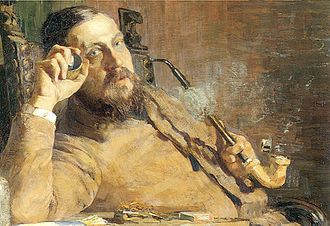
Eric KandelEric Kandel
Eric Kandel
Eric Richard Kandel is an Austrian-born American medical doctor who specialized in psychiatry. He was also a neuroscientist and a professor of biochemistry and biophysics at the College of Physicians and Surgeons at Columbia University. He was a recipient of the 2000 Nobel Prize in Physiology or Medicine for his research on the physiological basis of memory storage in neurons. He shared the prize
"Exceptionally good memory exhibited by some people may stem from genetic differences in CREB-2 that limit the activity of this repressor protein in relation to CREB-1."
"In the period from 1920 to 1960, psychiatry derived its main intellectual impetus from psychoanalysis. During this phase, its most powerful antidisciplines were philosophy and the social sciences. Since 1960, psychiatry has begun (again) to derive its main intellectual challenge from biology, with the result that neurobiology has been thrust into the position of the new antidiscipline for psychiatry."
"Even though I had long been taught that the genes of the brain are the governors of behavior, the absolute masters of our fate, our work showed that, in the brain as in bacteria, genes are also servants of the environment. ...An environmental stimulus... activates modulatory interneurons that release serotonin. The serotonin acts on the sensory neuron to increase cyclic AMP and to cause protein kinase A and MAP kinase to move to the nucleus and activate CREB. The activation of CREB, in turn, leads to the expression of genes that changes the function and the structure of the cell."
"The Age of Insight is a product of my... fascination with the intellectual history of Vienna from 1890 to 1918, as well as my interest in Austrian modernist art, psychoanalysis, art history, and the brain science that is my lifes work. ...I examine the ongoing dialogue between art and science that had its origins in fin-de-siècle Vienna and document its three major phases."
"Five separate pulses of serotonin, designed to simulate five shocks to the tail, strengthened the synaptic connection for days and led to the growth of new synaptic connections... that did involve the synthesis of new protein."
"What is learning but a set of sensory signals from the environment, with different forms of learning resulting from different types or patterns of sensory signals?"
"In the near future, neurobiology will address a matter of more general and fundamental importance: the biology of human mental processes. ...Psychology and psychiatry can illuminate and define for biology the mental functions that need to be studied if we are to have a meaningful and sophisticated understanding of the biology of the human mind."
"CREBs opposing regulatory actions provide a threshold for memory storage, presumably to ensure that only important, life-serving experiences are learned. Repeated shocks to the tail are a significant learning experience for an Aplysia, just as, say, practicing the piano or conjugating French verbs are to us: practice makes perfect, repetition is necessary for long-term memory. In principle, however, a highly emotional state... could bypass the normal restraints on long-term memory. In such a situation, enough MAP kinase molecules would be sent into the nucleus rapidly enough to inactivate all of the CREB-2 molecules, thereby making it easy for protein kinase A to activate CREB-1 and put the experience directly into long-term memory."
"As knowledge advances and scientific disciplines change, so do the disciplines impinging on them."
"CPEB is the first self-propogating form of a prion known to serve a physiological function... perpetuation of synaptic facilitation and memory storage."
"Implicit memory is responsible not only for simple perceptual and motor skills but also, in principle, for the pirouettes of Margot Fonteyn, the trumpeting techniques of Wynton Marsalis, the accurate ground strokes of Andre Agassi, and the leg movements of an adolescent. Implicit memory guides us through well-established routines that are not consciously controlled."
"Throughout his career, Kandel has also been a student of the history of neuroscience. ...Kandels fascination with the "giants" of neuroscience, as he calls them, became ironic when Kandel himself became a part of the history of neuroscience..."