Quote
"You are not to disbelieve human science or think human reason invalid except when they venture outside their province."
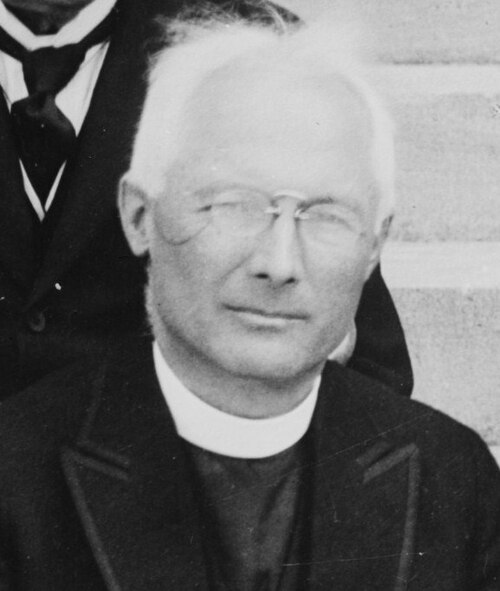 Ernest Dimnet
Ernest Dimnet
Ernest Dimnet
Abbe Ernest Dimnet, was a French priest, writer and lecturer, and the author of The Art of Thinking, a popular book on thinking and reasoning during the 1930s.
"You are not to disbelieve human science or think human reason invalid except when they venture outside their province."
Ernest Dimnet"The happiness of most people we know is not ruined by great catastrophes or fatal errors, but by the repetition of slowly destructive little things."
Ernest Dimnet"Architecture, of all the arts, is the one which acts the most slowly, but the most surely, on the soul."
Ernest Dimnet"All men saved from the scattering influences of society by a powerful incentive, a cause, or an ideal of individual perfection, seldom fear the danger of being distracted by comers and goers."
Ernest Dimnet"The more a man thinks the better adapted he becomes to thinking, and education is nothing if it is not the methodical creation of the habit of thinking. Precisely. Theoretically, education is a mental training aiming at greater intellectual elasticity, but the question is whether education does not often strain, instead of train, a mind."
Ernest Dimnet"Too often we forget that genius, too, depends upon the data within its reach, that even Archimedes could not have devised Edisons inventions. We also forget that genius is not genius all the time, although it is superior all the time."
Ernest Dimnet"Where the writer produces that combination of perfect technique, human interest, and thruth, and can add to it that supreme touch, the perfection of art has been attained."
Ernest Dimnet"A book, like a landscape, is a state of consciousness varying with readers. There exists some book, pamphlet, article in an encyclopaedia, or possibly an old clipping from a newspaper that once set you thinking; there may be many; indeed you may be one of those rare beings with whom a few lines of print are food enough or thought because, as Lamartine says, their thoughts think themselves. The sometimes evocative for you may be poetry, history, philosophy, the sciences, or moral sciences, i.e. the progress of mankind. Some people who go to sleep over a volume will be interested by a review which they think more condensed or better within their reach. Read reviews if they help you to think, that is. to say if they leave in your mind images that will go on living when you have forgotten where they came from. Read a Shakespeare calendar at the rate of four lines a day, if Shakespeare quotations have on you the magic influence they have on some people; read algebra, read the lives of great inventors or of great businessmen, read that kind of books which you and nobody else know to be thought-productive for you."
Ernest Dimnet"Social intercourse, with its … hypocrisy … is highly productive of thought-hindering insincerity."
Ernest Dimnet"Personality is the knowledge that we are apart from the rest of the universe."
Ernest Dimnet"We all more or less consciously note this. We cannot help observing that all serious conversations gravitate towards philosophy."
Ernest Dimnet"Ideas are the root of creation."
Ernest Dimnet




