Quote
"The nature of fairy tales is to evolve over time and to portray eternal themes that resonate with people of all cultures and time periods."
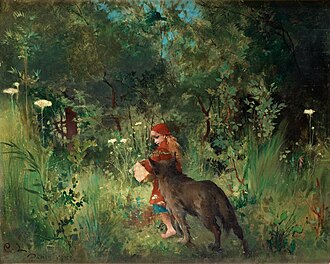 Fairy tale
Fairy tale
Fairy tale
A fairy tale is a short story that belongs to the folklore genre. Such stories typically feature magic, enchantments, and mythical or fanciful beings. In most cultures, there is no clear line separating myth from folk or fairy tale; all these together form the literature of preliterate societies. Fairy tales may be distinguished from other folk narratives such as legends and explicit moral tales,
"The nature of fairy tales is to evolve over time and to portray eternal themes that resonate with people of all cultures and time periods."
Fairy tale"I have a dream, a song to sing, To help me cope with anything. If you see the wonder of a fairy tale You can take the future even if you fail. I believe in angels, something good in everything I see. I believe in angels, when I know the time is right for me, Ill cross the stream, I have a dream."
Fairy tale"The enduring appeal of fairy tales is not just due to their fantastical elements—dragons, enchanted sleeping princesses, fairy godmothers—or the wish-fulfillment of happily-ever-after, but their encapsulation of truths about man and morality. Indeed, beneath the fluff, fairy tales are often brutally realistic about the world. This is why so many modern efforts to write (or rewrite) fairy tales fall flat: they are being written by those with a poor grasp of reality."
Fairy tale"Fairy tales, then, are not responsible for producing in children fear, or any of the shapes of fear; fairy tales do not give the child the idea of the evil or the ugly; that is in the child already, because it is in the world already. Fairy tales do not give the child his first idea of bogey. What fairy tales give the child is his first clear idea of the possible defeat of bogey. The baby has known the dragon intimately ever since he had an imagination. What the fairy tale provides for him is a St. George to kill the dragon. Exactly what the fairy tale does is this: it accustoms him for a series of clear pictures to the idea that these limitless terrors had a limit, that these shapeless enemies have enemies in the knights of God, that there is something in the universe more mystical than darkness, and stronger than strong fear."
Fairy tale"Even the tyrant never rules by force alone; but mostly by fairy tales. And so it is with the modern tyrant, the great employer."
Fairy tale"I have a duty to my people and that is something you can never understand. I loved living in Louisiana and I wish my life could be like this everyday. But this is not reality. You think my life as a princess is some fairytale? This here is a fairytale and I cannot hide here anymore. Soon Ill be queen of Costa Luna. My country needs me."
Fairy tale"The best thing you can do for your fellow, next to rousing his conscience, is — not to give him things to think about, but to wake things up that are in him; or say, to make him think things for himself. The best Nature does for us is to work in us such moods in which thoughts of high import arise. Does any aspect of Nature wake but one thought? Does she ever suggest only one definite thing? Does she make any two men in the same place at the same moment think the same thing? Is she therefore a failure, because she is not definite? Is it nothing that she rouses the something deeper than the understanding — the power that underlies thoughts? Does she not set feeling, and so thinking at work? Would it be better that she did this after one fashion and not after many fashions? Nature is mood-engendering, thought-provoking: such ought the sonata, such ought the fairytale to be."
Fairy tale"When I was ten, I read fairy tales in secret and would have been ashamed if I had been found doing so. Now that I am fifty I read them openly. When I became a man I put away childish things, including the fear of childishness and the desire to be very grown up."
Fairy tale"Im in love with a fairytale, even though it hurts. Cause I dont care if I lose my mind; Im already cursed."
Fairy tale"Believable fairy-stories must be intensely practical. You must have a map, no matter how rough. Otherwise you wander all over the place. In The Lord of the Rings I never made anyone go farther than he could on a given day. The reader must approach Faerie with a willing suspension of disbelief. If a thing can be technologically controlled, it ceases to be magical."
Fairy tale"The dogmas we really hold are far more fantastic, and, perhaps, far more beautiful than we think. In the course of these essays I fear that I have spoken from time to time of rationalists and rationalism, and that in a disparaging sense. Being full of that kindliness which should come at the end of everything, even of a book, I apologize to the rationalists even for calling them rationalists. There are no rationalists. We all believe fairy-tales, and live in them. Some, with a sumptuous literary turn, believe in the existence of the lady clothed with the sun. Some, with a more rustic, elvish instinct, like Mr. McCabe, believe merely in the impossible sun itself. Some hold the undemonstrable dogma of the existence of God; some the equally undemonstrable dogma of the existence of the man next door."
Fairy tale"Doctor Who has never pretended to be hard science fiction … At best Doctor Who is a fairytale, with fairytale logic about this wonderful man in this big blue box who at the beginning of every story lands somewhere where there is a problem."
Fairy tale