SHAWORDS
Ferdinand de Saussure

Ferdinand de Saussure

Ferdinand de Saussure

Ferdinand de Saussure

author
19Quotes

Ferdinand Mongin de Saussure was a Swiss linguist, semiotician and philosopher. His ideas laid a foundation for many significant developments in both linguistics and semiotics in the 20th century. He is widely considered one of the founders of 20th-century linguistics and one of two major founders of semiotics, or semiology, as Saussure called it.

Popular Quotes

19 total
Quote
"The characteristic role of language with respect to thought is not to create a material phonic means for expressing ideas but to serve as a link between thought and sound, under conditions that of necessity bring about the reciprocal delimitations of units. Thought, chaotic by nature, has to become ordered in the process of its decomposition. Neither are thoughts given material form nor are sounds transformed into mental entities; the somewhat mysterious fact is rather that "thought-sound" implies division, and that language works out its units while taking shape between two shapeless masses. Visualize the air in contact with a sheet of water; if the atmospheric pressure changes, the surface of the water will be broken up into a series of divisions, waves; the waves resemble the union or coupling of thought with phonic substance."
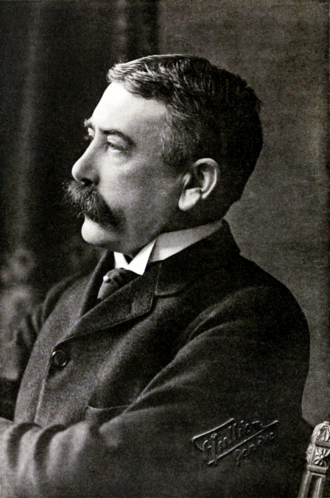
Ferdinand de SaussureFerdinand de Saussure
Quote
"As long as the activity of linguists was limited to comparing one language with another, this general utility cannot have been apparent to most of the general public, and indeed the study was so specialised that there was no real reason to suppose it of possible interest to a wider audience. It is only since linguistics has become more aware of its object of study, i.e. perceives the whole extent of it, that it is evident that this science can make a contribution to a range of studies that will be of interest to almost anyone. It is by no means useless, for instance, to those who have to deal with texts. It is useful to the historian, among others, to be able to see the commonest forms of different phenomena, whether phonetic, morphological or other, and how language lives, carries on and changes over time."
Ferdinand de SaussureFerdinand de Saussure
Quote
"With de Saussure, the concept of meaning is inseparably connected with his concepts of sign and language... According to de Saussure, a linguistic sign is a psychic whole with two aspects: sound image and notion. Thus the sign is a specific combination of these two elements. Following from de Saussures analysis, that two-sided relationship between sound and notion is meaning. This is why de Saussure suggests that the term "sound image" should be replaced by the term "signifiant" (that which means), and the term "notion" by the term "signifié" (that which is the object of meaning). The sign fulfils its function only by virtue of that relationship of meaning, the members of which are connected inseparably. The breaking of that unity would result in the destruction of the sign."
Ferdinand de SaussureFerdinand de Saussure
Quote
"Thus we may found the science for the study of the life of signs against the background of social life; it would form part of social psychology, and consequently of general psychology; we shall call it semiology (from Greek sēmeion — sign). That science would explain to us in what signs consist of and by what laws they are governed. Since it is a science which does not yet exist, we do not know what it will be like; it has, however, a reason for its existence, its place is allocated in advance. Linguistics is only a part of that general science ; the laws which semiology will discover, will be applicable also to linguistics, which in turn will be linked with a domain clearly defined throughout the entirety of human affairs."
Ferdinand de SaussureFerdinand de Saussure
Quote
"Lacans most widely quoted maxim is, “The unconscious is structured like a language,” and like that sentence, Lacans whole oeuvre rests on a certain idea of language. His proclaimed "return to Freud" meant remedying Freuds failure to use "modern" linguistics. "Modern" linguistics for Lacan, however, means turn-of-the-century linguistics---specifically, Ferdinand de Saussures. The trouble is that very little of Saussures linguistics stands up today, after nearly a centurys work in linguistics. [...] In writing this essay, for example, I had trouble finding linguistic texts that even refer to Saussure. Saussures views are not held, so far as I know, by modern linguists, only by literary critics, Lacanians, and the occasional philosopher."
Ferdinand de SaussureFerdinand de Saussure
Quote
"Language is no longer regarded as peripheral to our grasp of the world we live in, but as central to it. Words are not mere vocal labels or communicational adjuncts superimposed upon an already given order of things. They are collective products of social interaction, essential instruments through which human beings constitute and articulate their world. This typically twentieth-century view of language has profoundly influenced developments throughout the whole range of human sciences. It is particularly marked in linguistics, philosophy, psychology, sociology and anthropology."
Ferdinand de SaussureFerdinand de Saussure

Similar Authors & Thinkers



