SHAWORDS
Finno-Ugric languages

Finno-Ugric languages


Finno-Ugric languages

Finno-Ugric languages

author
6Quotes

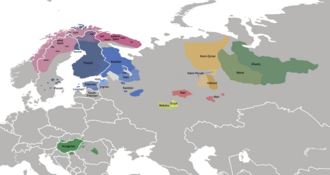
Finno-Ugric is a traditional linguistic grouping of all languages in the Uralic language family except for the Samoyedic languages. Its once commonly accepted status as a subfamily of Uralic is based on criteria formulated in the 19th century and is criticized by contemporary linguists such as Tapani Salminen and Ante Aikio. The three most spoken Uralic languages, Hungarian, Finnish, and Estonian,

Popular Quotes

6 total
Quote
"Misra draws attention to one rather significant feature regarding these loanwords, which he believes is decisive in determining the direction of language flow corresponding to Indo-Aryan movements: the loans are from Indo-Iranian into Finno-Ugric. There are no loans from Finno- Ugric into Indo-Iranian. This is a crucial point. Misra argues that had the Indo-Iranians been neighbors with the Finno-Ugrians in the regions to the north of the Caspian Sea for so many centuries, then both languages would have borrowed from each other. If the Indo-Iranians, as per the standard view of things, had, then, journeyed on toward their historic destinations in the East, they should have brought some Finno-Ugric loans with them in their lexicons, at least a few of which should reasonably be expected to have surfaced in the earliest textual sources of India and Iran. But, as Burrow noted some time ago, it is usually quite clear that these words have been borrowed by Finno- Ugric from Indo-Iranian and not vice versa (1973b, 26).10"
Finno-Ugric languagesFinno-Ugric languages
Quote
"The earliest layer of Indo-Iranian borrowing consists of common Indo-Iranian, Proto-Indo-Aryan and Proto-Iranian words relating to three cultural spheres: economic production, social relations and religious beliefs Economic terms comprise words for domestic animals (sheep, ram, Bactrian camel, stallion, colt, piglet, calf), pastoral processes and products (udder, skin, wool, cloth, spinner), farming (grain, awn, beer, sickle), tools (awl, whip, horn, hammer or mace), metal (ore) and, probably, ladder (or bridge) A large group of loanwords reflects social relations (man, sister, orphan, name) and includes such important Indo-Iranian terms like daasa ̳non- Aryan, alien, slave‘ and asura ̳god, master, hero‘ Finally a considerable number of the borrowed words reflect religious beliefs and practices: heaven, below (the nether world), god/happiness, vajra/ ̳Indra‘s weapon‘, dead/mortal, kidney (organ of the body used in the Aryan burial ceremony) There are also terms related to ecstatic drinks used by Indo-Iranian priests as well as Finno-Ugric shamans: honey, hemp and fly-agaric"
Finno-Ugric languagesFinno-Ugric languages

Similar Authors & Thinkers