SHAWORDS
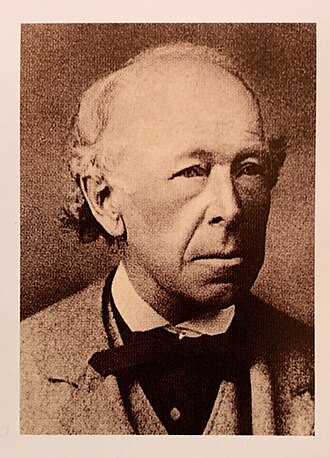
George Long (scholar)

George Long (scholar)

George Long (scholar)

George Long (scholar)
author
63Quotes

George Long was an English writer and classical scholar. He is best known for his books Meditations of Marcus Aurelius (1862) and Discourses of Epictetus (1877). Alongside Charles Knight, he was the editor of the Penny Cyclopaedia, and he was widely known throughout England.

Popular Quotes

63 total
Quote
"The power of attending to what is spoken, or in other words the power of listening, is one of the most useful habits that we can acquire; it keeps the mind active, and we can thus learn not only by hearing, but by reading and reflection, by fixing our minds steadily on the matter which we wish to master. It is... in a great degree, the sure means of success in all that we undertake; and if the power is not acquired early in life, great labour will be necessary to acquire it afterwards."
George Long (scholar)George Long (scholar)
Quote
"The preparation for these examinations is a forcing system, a straining of the memory, a loading of the head with more than it can hold, and much more than it can understand, followed, as in bodily excesses, by disorder of function, addling of the brain, and the stoppage of healthy mental growth. The weak, who work hard to obtain their object, are damaged; the strong may suffer little or nothing, but they do not gain much. Those do best who do not trouble themselves about the matter, but do as well as they can and care not about success or failure."
George Long (scholar)George Long (scholar)
Quote
"If anything is well taught—I will take Latin for example—a boy is easily led to see, indeed he cannot help seeing, certain resemblances in words. The first part of words may differ from one another, but the tails or endings may be the same; and a boy easily learns to observe these like endings and to see also that they add to or qualify the meaning of the words to which they are attached. This fact appears in our own language, and the observation of likeness and unlikeness of this kind may be taught in the humblest schools. It is a very potent method of forming boys to observe, to distinguish and to classify."
George Long (scholar)George Long (scholar)
Quote
"This is his [Marcus Aurelius Antoninus] conclusion (II. 17): "What then is that which is able to conduct a man? One thing and only one, Philosophy. But this consists in keeping the divinity within a man free from violence and unharmed, superior to pains and pleasures, doing nothing without a purpose nor yet falsely and with hypocrisy, not feeling the need of another mans doing or not doing anything; and besides, accepting all that happens and all that is allotted, as coming from thence, wherever it is, from whence he himself came; and, finally, waiting for death with a cheerful mind as being nothing else than a dissolution of the elements of which every living being is compounded. But if there is no harm to the elements themselves in each continually changing into another, why should a man have any apprehension about the change and dissolution of all the elements [himself]? for it is according to nature; and nothing is evil that is according to nature."
George Long (scholar)George Long (scholar)
Quote
"Besides the fact of the Christians rejecting all the heathen ceremonies, we must not forget that they plainly maintained that all the heathen religions were false. The Christians thus declared war against the heathen rites, and it is hardly necessary to observe that this was a declaration of hostility against the Roman government, which tolerated all the various forms of superstition that existed in the empire, and could not consistently tolerate another religion, which declared that all the rest were false and all the splendid ceremonies of the empire only a worship of devils."
George Long (scholar)George Long (scholar)
Quote
"A mans greatness lies not in wealth and station, as the vulgar believe, not yet in his intellectual capacity, which is often associated with the meanest moral character, the most abject servility to those in high places and arrogance to the poor and lowly; but a mans true greatness lies in the consciousness of an honest purpose in life, founded on a just estimate of himself and everything else, on frequent self-examination, and a steady obedience to the rule which he knows to be right, without troubling himself, as the emperor [Marcus Aurelius] says he should not, about what others may think or say, or whether they do or do not do that which he thinks and says and does."
George Long (scholar)George Long (scholar)

Similar Authors & Thinkers