Quote
"It is evident that one cannot say anything demonstrable about the problem before having resolved these preliminary questions, and yet we hardly possess the necessary information to solve some of them."
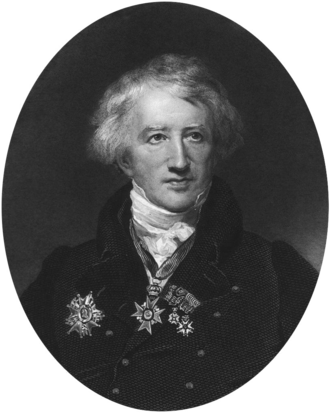 Georges Cuvier
Georges Cuvier
Georges Cuvier
Jean Léopold Nicolas Frédéric, baron Cuvier, known as Georges Cuvier, was a French naturalist and zoologist, sometimes referred to as the "founding father of paleontology". Cuvier was a major figure in natural sciences research in the early 19th century and was instrumental in establishing the fields of comparative anatomy and paleontology through his work in comparing living animals with fossils.
"It is evident that one cannot say anything demonstrable about the problem before having resolved these preliminary questions, and yet we hardly possess the necessary information to solve some of them."
Georges Cuvier"To spread healthy ideas among even the lowest classes of people, to remove men from the influence of prejudice and passion, to make reason the arbiter and supreme guide of public opinion; that is the essential goal of the sciences; that is how science will contribute to the advancement of civilization, and that is what deserves protection of governments who want to insure the stability of their power."
Georges Cuvier"Cuvier advanced his doctrine on methodological as well as scientific grounds. Although his work was far from empirical, Cuvier adopted and promulgated an empiricist ideology in order to combat opposing points of view."
Georges Cuvier"The synthesis of paleontology, taxonomy, and comparative anatomy that Cuvier achieved was based on a teleological approach to nature, one that gave primacy to functional purpose over structural affinity."
Georges Cuvier"Why has not anyone seen that fossils alone gave birth to a theory about the formation of the earth, that without them, no one would have ever dreamed that there were successive epochs in the formation of the globe."
Georges Cuvier"The works which this man leaves behind him occupy a few pages only; their importance is not greatly superior to their extent."
Georges Cuvier"Linnaeus and Cuvier have been my two gods, though in very different ways, but they were mere school-boys to old Aristotle."
Georges Cuvier




