Quote
"We have not put our trust in Kings; let us not put it in natural resources, but grasp the truth that exhaustless wealth lies in the latent and as yet undeveloped capacities of individuals, of corporations, of States."
H
Harrington EmersonHarrington Emerson
Harrington Emerson
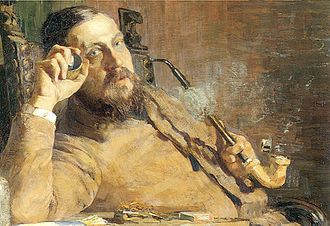
Harrington Emerson was an American efficiency engineer and business theorist, who founded the management consultancy firm Emerson Institute in New York City in 1900. Known for his pioneering contributions to scientific management, Emerson may have done more than anyone else to popularize the topic: His public testimony in 1910 to the Interstate Commerce Commission that the railroads could save $1,
"We have not put our trust in Kings; let us not put it in natural resources, but grasp the truth that exhaustless wealth lies in the latent and as yet undeveloped capacities of individuals, of corporations, of States."
"In selecting human assistants such superficialities as education, as physical strength, even antecedent morality, are not as important as the inner attitudes, proclivities, character, which after all determine the man or woman."
"The schedule is a moral contract or agreement with the men as to a particular machine operation, rate of wages and time. Any change in men [etc.] calls for a new schedule."
"It is psychology, not soil or climate, that enables a man to raise five times as many potatoes per acre as the average in his own state."
"The individual effort method of increasing the reward of the wage-earner includes all that is best in other methods, and attempts to exclude all that is objectionable. Its good points are summed up as follows:"
"Staff standards are not theological abstractions, but scientific approximations, and are evolved for the use of the line, the sole justification of the standards being that they will make line work more efficient. Staff standards being for the benefit of the line and often entrusted to line officials, must be put in the form of permanent instructions so that all may understand what is being aimed at, and deviations by the line be noted and reprimanded."