Quote
"Henry Leland had a profound influence not only on GM, but also on many later automakers. His nickname became “the Grand Old Man of Detroit.”"
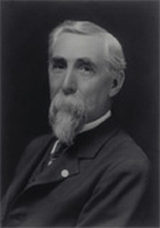 Henry M. Leland
Henry M. Leland
author ·
Henry Martyn Leland was an American machinist, inventor, engineer, and automotive entrepreneur. He founded the two premier American luxury automotive marques, Cadillac and Lincoln.
"Henry Leland had a profound influence not only on GM, but also on many later automakers. His nickname became “the Grand Old Man of Detroit.”"
Henry M. Leland"Mr. Sloan, are made to run, not just to sell."
Henry M. Leland"The teams at times could go but a short distance every day. In bad weather at night there would be as many as 150 horses at one of the small frame inns which were not more than five or eight miles apart. Each driver had to care for his eight horses, feed, clean, card, harness and unharness. For all this work my father received the wages of $15 per month."
Henry M. Leland"At first we were of necessity slow in putting out those motors, but after we had gotten under way we delivered them so rapidly that Mr. Olds said we must have a motor incubator at our place."
Henry M. Leland"Henry M. Leland was the guiding genius of the Cadillac Motor Car Company. He was the company’s founder and became the Divisions first general manager when it was purchased by Billy Durant and in 1909. Religiously devoted to accuracy of machining and quality construction, Leland recognized that in true interchangeability of parts lays the key to a great future automobile industry."
Henry M. Leland"There always was and there always will be conflict between Good and Good Enough, and in opening up a new business or a new department one can count upon meeting resistance to a high standard of workmanship. It is easy to get cooperation for mediocre work, but one must sweat blood for a chance to produce a superior product."
Henry M. Leland"If they had made that longer six-cylinder strong enough and had supported it well enough, they would have obtained the smoother action they talks about in their advertisements. But they could not do that, and those early sixes had a very undesirable period vibration at certain speeds. That vibration more than offset the gain that they would have realized, if they had treated the crankshaft properly."
Henry M. Leland"On the train I was going over the problem of Sixes versus Fours and the disturbing periodic vibrations with which the six-cylinder manufacturers were contending. I realized the emphasis our competitors were placing on the fact that six smaller cylinders, producing the same maximum power as four larger ones, would result in smaller individual impulses, and consequent smoother action."
Henry M. Leland"Our car was an Oldsmobile, delivered to our home by Mr. Olds himself. I recall how our family went out to the street curb to look at it. Mr. Olds worked quite a while cranking it, muttering something about each car having an individuality of its own. But after we began to make motors for him, father took the individuality out of them. After our own little Oldsmobile was properly equipped, it acted in quite an exemplary fashion."
Henry M. Leland"After getting to know the young Daytonians () Henry Leland told them about a friend of his who had stopped to help a woman whose car had stalled. As he cranked the starter, it kicked back and broke his jaw. The man later died from an infection as a result of that accident. This led Leland to ask Kettering and Deeds if they could use electricity to start a car. Of course, they accepted the challenge. A self-starter would not only prevent such accidents but would also open up the car market to women who were unable to crank a car. They returned to the Barn to try and make the first self-starter for automobiles..."
Henry M. Leland