SHAWORDS
Holy Roman Empire

Holy Roman Empire

Holy Roman Empire

Holy Roman Empire

author
5Quotes

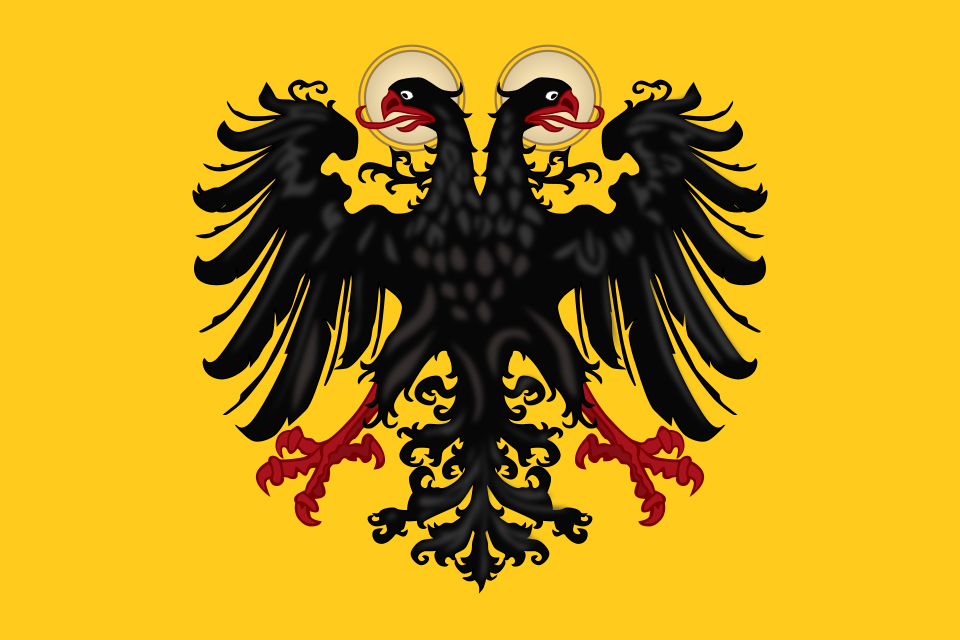
The Holy Roman Empire, also known as the Holy Roman Empire of the German Nation after 1512, was a polity comprising and controlling much of Central and Western Europe, headed by the Holy Roman Emperor and characterized by a decentralized political structure. It developed in the Early Middle Ages, and lasted for a millennium until its dissolution in 1806 during the Napoleonic Wars. Initially, it co

Popular Quotes

5 total
Quote
"The sheer heterogeneity and diffusion of these lands, which will be examined further below, might suggest that the Habsburg imperium could never be a real equivalent to the uniform, centralized empires of Asia. Even in the 1520s, Charles was handing over to his younger brother Ferdinand the administration and princely sovereignty of the Austrian hereditary lands, and also of the new acquisitions of Hungary and Bohemia—a recognition, well before Charles’s own abdication, that the Spanish and Austrian inheritances could not be effectively ruled by the same person. Nonetheless, that was not how the other princes and states viewed this mighty agglomeration of Habsburg power. To the Valois kings of France, fresh from consolidating their own authority internally and eager to expand into the rich Italian peninsula, Charles V’s possessions seemed to encircle the French state—and it is hardly an exaggeration to say that the chief aim of the French in Europe over the next two centuries would be to break the influence of the Habsburgs. Similarly, the German princes and electors, who had long struggled against the emperor’s having any real authority within Germany itself, could not but be alarmed when they saw Charles V’s position was buttressed by so many additional territories, which might now give him the resources to impose his will. Many of the popes, too, disliked this accumulation of Habsburg power, even if it was often needed to combat the Turks, the Lutherans, and other foes."
Holy Roman EmpireHoly Roman Empire
Quote
"But despite the occasional rhetoric of some Habsburg ministers about a “world monarchy,” there was no conscious plan to dominate Europe in the manner of Napoleon or Hitler. Some of the Habsburg dynastic marriages and successions were fortuitous, at the most inspired, rather than evidence of a long-term scheme of territorial aggrandizement. In certain cases—for example, the frequent French invasions of northern Italy—Habsburg rulers were more provoked than provoking. In the Mediterranean after the 1540s, Spanish and imperial forces were repeatedly placed on the defensive by the operations of a revived Islam. Nevertheless, the fact remains that had the Habsburg rulers achieved all of their limited, regional aims—even their defensive aims—the mastery of Europe would virtually have been theirs. The Ottoman Empire would have been pushed back, along the North African coast and out of eastern Mediterranean waters. Heresy would have been suppressed within Germany. The revolt of the Netherlands would have been crushed. Friendly regimes would have been maintained in France and England. Only Scandinavia, Poland, Muscovy, and the lands still under Ottoman rule would not have been subject to Habsburg power and influence—and the concomitant triumph of the Counter-Reformation. Although Europe even then would not have approached the unity enjoyed by Ming China, the political and religious principles favored by the twin Habsburg centers of Madrid and Vienna would have greatly eroded the pluralism that had so long been the continent’s most important feature."
Holy Roman EmpireHoly Roman Empire
Quote
"I touch with reverence the laws of Charlemagne, so highly applauded by a respectable judge. They compose not a system, but a series, of occasional and minute edicts, for the correction of abuses, the reformation of manners, the œconomy of his farms, the care of his poultry, and even the sale of his eggs. He wished to improve the laws and the character of the Franks; and his attempts, however feeble and imperfect, are deserving of praise: the inveterate evils of the times were suspended or mollified by his government; but in his institutions I can seldom discover the general views and the immortal spirit of a legislator, who survives himself for the benefit of posterity. The union and stability of his empire depended on the life of a single man: he imitated the dangerous practice of dividing his kingdoms among his sons; and, after his numerous diets, the whole constitution was left to fluctuate between the disorders of anarchy and despotism."
Holy Roman EmpireHoly Roman Empire
Quote
"There was nothing farcical about the institution of the Empire, as Voltaire would have it when he remarked that it was neither Holy nor Roman nor an Empire. Even when its existence became fictional it still served the purpose of giving to its inhabitants an appeal to a spiritual mission and bestowing on them a certain supranational character which restrained them from making efforts to germanize the French of Lorraine or the Slavs of Bohemia and Lusatia. The name Germany (Germania) had almost disappeared from common usage and the word Deutschland, propagated by Luther, hardly became popular before the end of the First Reich (1806). There was a great diversity within the boundaries of the Empire, diversity of language, dialect, customs, dresses, and traditions. It was a world in itself; it was the heart of Europe and its most respected realm. The only fixed part of the Empire was Rome and the Urbs was also the metropolis of Christendom."
Holy Roman EmpireHoly Roman Empire

Similar Authors & Thinkers



