Quote
"In the act of creating, people argue. They have heated dialogue. They get upset! Without real exchange, you can’t create knowledge. Knowledge creation is a human activity"
I
Ikujiro NonakaIkujiro Nonaka
author ·
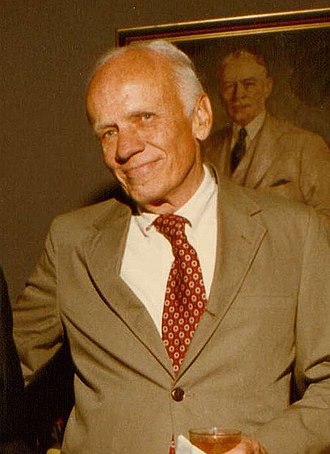
Ikujiro Nonaka was a Japanese organizational theorist and Professor at the Graduate School of International Corporate Strategy of the Hitotsubashi University. Known for developing the Theory of Organizational Knowledge Creation, which explains how organizations generate continuous and sustainable innovation through the creation and conversion of individual, group, and organizational knowledge. He
"In the act of creating, people argue. They have heated dialogue. They get upset! Without real exchange, you can’t create knowledge. Knowledge creation is a human activity"
"Why is ultimately a question of purpose: Why do we exist? In most organizations, people are not encouraged to keep asking questions."
"Any organization that deals with a changing environment ought not only to process information efficiently, but also create information and knowledge."
"Companies and leaders who treat knowledge management as just another branch of IT don’t understand how human beings learn and create... Unlike land, capital, energy, labor, and technology — the conventional “inputs” into business practice — knowledge is innately self-renewing. “It is produced and consumed simultaneously. Its value increases with use, rather than being depleted as with industrial goods or commodities. Above all, it is a resource created by humans acting in relationship with one another."
"As for the epistemological dimension, we draw on Michael Polanyis (1966) distinction between tacit knowledge and explicit knowledge. Tacit knowledge is personal, context-specific, and therefore hard to formalize and communicate. Explicit or "codified" knowledge, on the other hand, refers to knowledge that is transmittable in formal, systematic language."
"Ikujiro Nonaka and his co-workers created a consistent body of theory concerning knowledge creation in organizations based on four main ideas:"
"In an economy where the only certainty is uncertainty, the one sure source of lasting competitive advantage is knowledge."