Quote
"We become obsessed with "truth" when discussing statements, just as we become obsessed with "freedom" when discussing conduct...Like freedom, truth is a bare minimum or an illusory ideal."
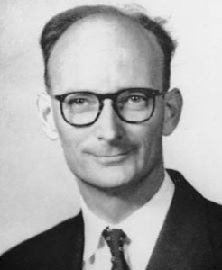 J. L. Austin
J. L. Austin
J. L. Austin
John Langshaw Austin was an English philosopher of language and leading proponent of ordinary language philosophy, best known for developing the theory of speech acts.
"We become obsessed with "truth" when discussing statements, just as we become obsessed with "freedom" when discussing conduct...Like freedom, truth is a bare minimum or an illusory ideal."
J. L. Austin"Let us distinguish between acting intentionally and acting deliberately or on purpose, as far as this can be done by attending to what language can teach us."
J. L. Austin"John Langshaw Austin... made a number of contributions in various areas of philosophy, including important work on knowledge, perception, action, freedom, truth, language, and the use of language in speech acts. Distinctions that Austin draws in his work on speech acts — in particular his distinction between locutionary, illocutionary, and perlocutionary acts — have assumed something like canonical status in more recent work. His work on knowledge and perception places him in a broad tradition of “Oxford Realism”, running from Cook Wilson and Harold Arthur Prichard through to J. M. Hinton, M. G. F. Martin, John McDowell, Paul Snowdon, Charles Travis, and Timothy Williamson. His work on truth has played an important role in recent discussions of the extent to which sentence meaning can be accounted for in terms of truth-conditions."
J. L. Austin"Like "real", "free" is only used to rule out the suggestion of some or all of its recognized antitheses. As "truth" is not a name of a characteristic of assertions, so "freedom" is not a name for a characteristic of actions, but the name of a dimension in which actions are assessed."
J. L. Austin"What is truth? said jesting Pilate, and would not stay for an answer."
J. L. Austin"Going back into the history of a word, very often into Latin, we come back pretty commonly to pictures or models of how things happen or are done. These models may be fairly sophisticated and recent, as is perhaps the case with "motive" or "impulse", but one of the commonest and most primitive types of model is one which is apt to baffle us through its very naturalness and simplicity."
J. L. Austin"Sentences are not as such either true or false."
J. L. Austin"The Nicomachean Ethics is only intended as a guide for politicians, and they are only concerned to know what is good, not what goodness means ... and in any case one can know what things are good without knowing the analysis of "good"."
J. L. Austin"Infelicity is an ill to which all acts are heir which have the general character of ritual or ceremonial, all conventional acts."
J. L. Austin"We speak of people "taking refuge" in vagueness — the more precise you are, in general the more likely you are to be wrong, whereas you stand a good chance of not being wrong if you make it vague enough."
J. L. Austin"There are more ways of killing a cat than drowning it in butter; but this is the sort of thing (as the proverb indicates) we overlook: there are more ways of outraging speech than contradiction merely."
J. L. Austin"Why should it not be the whole function of a word to denote many things?"
J. L. Austin




