Quote
"Truth! stark naked truth, is the word, and I will not so much as take the pains to bestow the strip of a gauze-wrapper on it."
 John Cleland
John Cleland
John Cleland
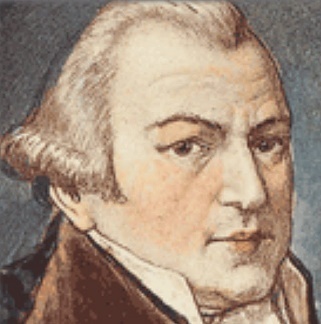
John Cleland was an English novelist best known for his fictional Fanny Hill: or, the Memoirs of a Woman of Pleasure, whose eroticism led to his arrest. James Boswell called him "a sly, old malcontent".
"Truth! stark naked truth, is the word, and I will not so much as take the pains to bestow the strip of a gauze-wrapper on it."
John Cleland"All my foundation in virtue was no other than a total ignorance of vice."
John Cleland"Your Grace ordered a prosecution against the Printer and publisher of The Memoires of a Lady of Pleasure, the same Bookseller, on Griffiths (as I apprehend) has published within a few Days a book called Memoires of Fanny Hill, the Lewdest thing I ever saw.... I beg of your Grace to give proper orders to stop the progress of this vile Book which is an open insult upon Religion and good manners, and a reproach to the Honour of the Government and the Law of the Country."
John Cleland"Cleland, curious figure. Thought how ’twould have struck you some years ago…"
John Cleland"[T]hat most licentious and inflaming book"
John Cleland"Found him in an old house in the Savoy, just by the waterside. A coarse, ugly old man for his servant. His room, filled with books in confusion and dust was like Dupont’s and old Lady Eglinton’s, at least old ideas were suggested to me as if I were in a castle. He was drinking tea and eating biscuits. I joined him. He had a rough cap like Rousseau, and his eyes were black and piercing.... He had resolutely persisted. There was something genteel in his manner amidst this oddity."
John Cleland"I imagined, indeed, that you would have been cloyed and tired with the uniformity of adventures and expressions, inseparable from a subject of this sort, whose bottom or groundwork being, in the nature of things, eternally one and the same, whatever variety of forms and modes the situations are susceptible of, there is no escaping a repetition of near the same images, the same figures, the same expressions."
John Cleland"I feeling pretty sensibly that it was not going by the right door and knocking desperately at the wrong one, I told him of it: "Pooh," says he "my dear, any port in a storm."
John Cleland"[He] went as consul to Smyrna, where, perhaps, he first imbibed those loose principles which, in a subsequent publication, too infamous to be particularised, tarnished his reputation as an author…. In this situation [debtors’ prison], one of the booksellers who disgrace the profession, offered him a temporary relief for writing the work above alluded to, which brought a stigma on his name, which time has not obliterated, and which will be consigned to his memory whilst its poisonous contents are in circulation…. In conversation he was very pleasant and anecdotal, understanding most of the living languages, and speaking them all very fluently. As a writer, he shewed himself best in novels, song-writing, and the lighter species of authorship; but when he touched politics, he touched it like a torpedo, he was cold, benumbing, and soporific."
John Cleland