SHAWORDS
Kenneth Waltz

Kenneth Waltz

Kenneth Waltz

Kenneth Waltz

author
29Quotes

Kenneth Neal Waltz was an American political scientist who was a member of the faculty at both the University of California, Berkeley, and Columbia University and one of the most prominent scholars in the field of international relations. He was a veteran of both World War II and the Korean War.

Popular Quotes

29 total
Quote
"Like any truly great thinker, Ken Waltz defied stereotypes. The preeminent hard-headed theorist of power politics, he savaged the hopes of those who believe that moral energy, liberal principles, or democratic crusades can end war. But he belied the common assumption that realists are callous hawks who relish the use of force. He opposed the Vietnam War, the Reagan military buildup, and the 2003 invasion of Iraq as overreactions to threats that were exaggerated and could be handled by calm containment and deterrence."
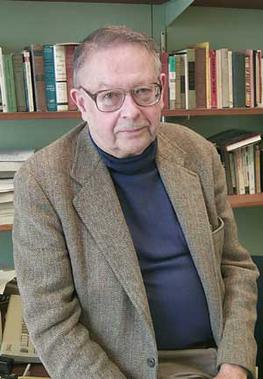
Kenneth WaltzKenneth Waltz
Quote
"I am not saying that such a theory cannot be constructed, but only that I cannot see how to do it in any way that might be useful. The decisive point, anyway, is that a macrotheory of international politics would lack the practical implications of macroeconomic theory. National governments can manipulate system-wide economic variables. No agencies with comparable capabilities exist internationally. Who would act on the possibilities of adjustment that a macrotheory of international politics might reveal?"
Kenneth WaltzKenneth Waltz
Quote
"Waltz is to the study of international relations what Darwin is to the study of biology. I make this claim in terms of the sheer intellectual significance of his theoretical contribution. One cannot make sense of the biological world apart from Darwin’s theory of evolution: equally, Waltz’s structural framework for understanding how states interact under anarchy, with an uneven distribution of power and a desire to survive, offers a powerful theory for making sense of the international system. Neither theory explains everything in their domain — one always needs to know more about particularities — but both provide compelling big-picture explanations of their domains."
Kenneth WaltzKenneth Waltz

Similar Authors & Thinkers



