SHAWORDS
Leon Kass

Leon Kass

Leon Kass

Leon Kass

author
18Quotes

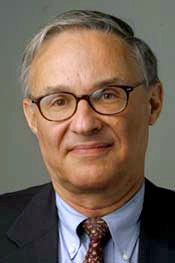
Leon Richard Kass is an American physician, biochemist, educator, and public intellectual. Kass is best known as a proponent of liberal arts education via the "Great Books," as a critic of human cloning, life extension, euthanasia and embryo research, and for his tenure as chairman of the President's Council on Bioethics from 2001 to 2005. Although Kass is often referred to as a bioethicist, he es

Popular Quotes

18 total
Quote
"In a certain sense the dietary laws push the Children of Israel back in the direction of the "original" "vegetarianism" of the pristine and innocent Garden of Eden. Although not all flesh is forbidden, everything that is forbidden is flesh. Thus any strict vegetarian, one could say, never violates the Jewish dietary laws. Yet though he does not violate them, he could not be said to follow them. For only unknowingly does he not violate them, and, more to the point, he refrains indiscriminately, that is, without regard to the distinctions among the kinds of living things that might and might not be edible. In this sense the strict vegetarian, though he rejects the Noachic permission to eat meat, shares exactly the indiscriminate Noachic grouping-together of all the animals and its concentration only on the blood, which is the life."
Leon KassLeon Kass
Quote
"Many lonely women, more than can safely admit it, secretly hope to meet a gentleman; but the vast majority steadfastly refuse to be ladies—indeed, no longer know what it means. Small wonder, then, so much sexual harassment and even rape. When power becomes the name of the game, the stronger will get his way. Under such circumstances, one cannot exactly blame women for wanting to learn how to defend themselves against sexual attack. But, addressing the symptom not the cause, the remedies of karate and “take back the night”—and, still more, the shallow beliefs about sexual liberation that support these practices—can only complete the destruction of healthy relations between man and woman. For, truth to tell, the night never did and never can belong to women, except for the infamous women-of-the-night. Only a restoration of sexual self-restraint and sexual self-respect—for both men and women—can reverse our rapid slide toward Shechem."
Leon KassLeon Kass
Quote
"Ours is the age of atomic power but also of nuclear proliferation, of globalized trade but also worldwide terrorism, of instant communication but also fragmented communities, of free association but also marital failure, of limitless mobility but also homogenized destinations, of open borders but also confused identities, of astounding medical advances but also greater worries about health, of longer and more vigorous lives but also protracted and more miserable deaths, of unprecedented freedom and prosperity but also remarkable anxiety about our future, both personal and national. In our age of heightened expectations, many Americans fear that their children’s lives will be less free, less prosperous, or less fulfilling than their own, a fear that is shared by the young people themselves. Like their forebears, our youth still harbor desires for a worthy life. They still hope to find meaning in their lives and to live a life that makes sense. But they are increasingly confused about what a worthy life might look like, and about how they might be able to live one."
Leon KassLeon Kass
Quote
"Even the modern word "concept" means "a grasping together," implying that the mind itself, in its act of knowing, functions like the intervening hand (in contrast to its ancient counterpart, “idea,” “that which can be beheld,” which implies that the mind functions like the receiving eye). And modern science rejects, as meaningless or useless, questions that cannot be answered by the application of method. Science becomes not the representation and demonstration of truth, but an art: the art of finding the truth—or, rather, that portion of truth that lends itself to be artfully found."
Leon KassLeon Kass
Quote
"Francis Bacon, in his New Atlantis, could charge his elite scientists in Salomon’s House with practicing self-censorship to avoid publicizing dangerous knowledge. Here is how the Father of Salomon’s House describes their practice: “We have consultations, which of the inventions and experiences which we have discovered shall be published, and which not: and take all a oath of secrecy for the concealing of those which we think fit to keep secret: though some of those we do reveal sometime to the State, and some not.” Bacon, the first prophet of the new relation between science and society and of the “conquest of nature for the relief of man’s estate,” knew better than we that knowledge is dangerous, that publication is a public and politically relevant act, and that self-censorship on the part of scientists is necessary and desirable. The passage is also remarkable for its wonderful ambiguity regarding whether scientists or the State has ultimate authority over dangerous knowledge."
Leon KassLeon Kass
Quote
"Grappling with real-life concerns — from cloning to courtship, from living authentically to dying with dignity — has made me a better reader. Reciprocally, reading in a wisdom-seeking spirit has helped me greatly in my worldly grapplings. Not being held to the usual dues expected of a licensed humanist — professing specialized knowledge or publishing learned papers — I have been able to wander freely and most profitably in all the humanistic fields. I have come to believe that looking honestly for the human being, following the path wherever it leads, may itself be an integral part of finding it. A real question, graced by a long life to pursue it among the great books, has been an unadulterated blessing."
Leon KassLeon Kass
Quote
"Fifty years ago, when Europeans and Americans still distinguished high culture from popular culture, and when classical learning was still highly esteemed in colleges and universities, C. P. Snow delivered his famous Rede Lecture at Cambridge University, "The Two Cultures and the Scientific Revolution." Snow did more than warn of the growing split between the old culture of the humanities and the rising culture of science. He took Britains literary aristocracy to task for its dangerous dismissal of scientific and technological progress, which Snow believed offered the solutions to the worlds deepest problems. In a vitriolic response to Snow, the literary critic F. R. Leavis defended the primacy of the humanities for a civilizing education, insisting that science must not be allowed to operate outside of the moral norms that a first-rate humanistic education alone could provide."
Leon KassLeon Kass
Quote
"Diogenes … refuses to be taken in by complacent popular belief that we already know human goodness from our daily experience, or by confident professorial claims that we can capture the mystery of our humanity in ­definitions. But mocking or not, and perhaps speaking better than he knew, Diogenes gave elegantly simple expression to the humanist quest for self-knowledge: I seek the human being — my human being, your human being, our humanity. In fact, the embellished version of Diogenes question comes to the same thing: To seek an honest man is, at once, to seek a human being worthy of the name, an honest-to-goodness exemplar of the idea of humanity, a truthful and truth-speaking embodiment of the animal having the power of articulate speech."
Leon KassLeon Kass
Quote
"According to Lewis, the dehumanization threatened by the mastery of nature has, at its deepest cause, less the emerging biotechnologies that might directly denature bodies and flatten souls, and more the underlying value-neutral, soulless, and heartless accounts that science proffers of living nature and of man. By expunging from its account of life any notion of soul, aspiration, and purpose, and by setting itself against the evidence of our lived experience, modern biology ultimately undermines our self-understanding as creatures of freedom and dignity, as well as our inherited teachings regarding how to live — teachings linked to philosophical anthropologies that science has now seemingly dethroned."
Leon KassLeon Kass
Quote
"For most Americans, ethical matters are usually discussed either in utilitarian terms of weighing competing goods or balancing benefits and harms, looking to the greatest good for the greatest number, or in moralist terms of rules, rights and duties, "thou shalts" and "thou shalt nots." Our public ethical discourse is largely negative and "other-directed": We focus on condemning and avoiding misconduct by, or on correcting and preventing injustice to, other people, not on elevating or improving ourselves. How liberating and encouraging, then, to encounter an ethics focused on the question, "How to live?" and that situates what we call the moral life in the larger context of human ­flourishing. How eye-opening are arguments that suggest that happiness is not a state of passive feeling but a life of fulfilling activity, and especially of the unimpeded and excellent activity of our specifically human powers—of acting and making, of thinking and learning, of loving and befriending. How illuminating it is to see the ethical life discussed not in terms of benefits and harms or rules of right and wrong, but in terms of character, and to understand that good character, formed through habituation, is more than holding right opinions or having "good values," but is a binding up of heart and mind that both frees us from enslaving passions and frees us for fine and beautiful deeds. How encouraging it is to read an account of human life—the only such account in our philosophical tradition—that speaks at length and profoundly about friendship, culminating in the claim that the most fulfilling form of friendship is the sharing of speeches and thoughts."
Leon KassLeon Kass
Quote
"Perhaps the most remarkable feature of Aristotles teaching concerns the goals of ethical conduct. Unlike the moralists, Aristotle does not say that morality is a thing of absolute worth or that the virtuous person acts in order to adhere to a moral rule or universalizable maxim. And unlike the utilitarians, he does not say morality is good because it contributes to civic peace or to private gain and reputation. Instead, Aristotle says over and over again that the ethically excellent human being acts for the sake of the noble, for the sake of the beautiful. The human being of fine character seeks to display his own fineness in word and in deed, to show the harmony of his soul in action and the rightness of his choice in the doing of graceful and gracious deeds. The beauty of his action has less to do with the cause that his action will serve or the additional benefits that will accrue to himself or another — though there usually will be such benefits. It has, rather, everything to do with showing forth in action the beautiful soul at work, exactly as a fine dancer dances for the sake of dancing finely. As the ballerina both exploits and resists the downward pull of gravity to rise freely and gracefully above it, so the person of ethical virtue exploits and elevates the necessities of our embodied existence to act freely and gracefully above them. Fine conduct is the beautiful and intrinsically fulfilling being-at-work of the harmonious or excellent soul."
Leon KassLeon Kass

Similar Authors & Thinkers



