SHAWORDS
Mahmud of Ghazni

Mahmud of Ghazni

Mahmud of Ghazni

Mahmud of Ghazni

author
15Quotes

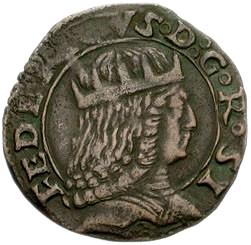
Abu al-Qasim Mahmud ibn Sabuktigin, usually known as Mahmud of Ghazni or Mahmud Ghaznavi, was Sultan of the Ghaznavid Empire, ruling from 998 to 1030.

Popular Quotes

15 total
Quote
"At that date, the Mohammedan conqueror, Mahmoud of Ghizni, crossed India; seized on the holy city of Somnauth; and stripped of its treasures the famous temple, which had stood for centuries--the shrine of Hindoo pilgrimage, and the wonder of the Eastern world. Of all the deities worshipped in the temple, the moon-god alone escaped the rapacity of the conquering Mohammedans. Preserved by three Brahmins, the inviolate deity, bearing the Yellow Diamond in its forehead, was removed by night, and was transported to the second of the sacred cities of India--the city of Benares."
Mahmud of GhazniMahmud of Ghazni
Quote
"The Sultan then departed from the environs of the city, in which was a temple of the Hindus. The name of this place was Maharatu-l Hind. He saw there a building of exquisite structure, which the inhabitants said had been built, not by men, but by Genii, and there he witnessed practices contrary to the nature of man, and which could not be believed but from evidence of actual sight. The wall of the city was constructed of hard stone, and two gates opened upon the river flowing under the city, which were erected upon strong and lofty foundations to protect them against the floods of the river and rains. On both sides of the city there were a thousand houses, to which idol temples were attached, all strengthened from top to bottom by rivets of iron, and all made of masonry work; and opposite to them were other buildings, supported on broad wooden pillars, to give them strength. In the middle of the city there was a temple larger and firmer than the rest, which can neither be described nor painted. The Sultan thus wrote respecting it: - "If any should wish to construct a building equal to this, he would not be able to do it without expending an hundred thousand, thousand red dinars, and it would occupy two hundred years even though the most experienced and able workmen were employed."... The Sultan gave orders that all the temples should be burnt with naptha and fire, and levelled with the ground."
Mahmud of GhazniMahmud of Ghazni
Quote
"[T]he demonization of Mahmud and the portrayal of his raid on Somnath as an assault on Indian religion by Muslim invaders dates only from the early 1840s. In 1842 the suffered the annihilation of an entire army of some 16,000 in the (1839-42). Seeking to regain face among their Hindu subjects after this humiliating defeat, the British contrived a bit of self-serving fiction, namely that Mahmud, after sacking the temple of Somnath, carried off a pair of the temples gates on his way back to Afghanistan. By discovering these fictitious gates in Mahmuds former capital of Ghazni, and by restoring them to their rightful owners in India, British officials hoped to be admired for heroically rectifying what they construed as a heinous wrong that had caused centuries of distress among Indias Hindus. Though intended to win the latters gratitude while distracting all Indians from Britains catastrophic defeat just being the Khyber, this bit of colonial mischief has stoked Hindus ill-feeling toward Muslims ever since. From this point on, Mahmuds 1025 sacking of Somnath acquired a distinct notoriety, especially in the early twentieth century when nationalist leaders drew on history to identify clear-cut heroes and villains for the purpose of mobilizing political mass movements. By contrast, Rajendra Cholas raid on Bengal remained largely forgotten outside the Chola country."
Mahmud of GhazniMahmud of Ghazni
Quote
"The chief of Tanesar was on this account obstinate in his infidelity and denial of Allah. So the Sultan marched against him with his valiant warriors, for the purpose of planting the standards of Islam and extirpating idolatry... The Sultan adopted the stratagem of ordering some of his troops to cross the river by two different fords, and to attack the enemy on both sides; and when they were all engaged in close conflict, he ordered another body of men to go up the bank of the stream, which was flowing through the pass with fearful impetuosity, and attack the enemy amongst the ravines, where they were posted in the greatest number. The battle raged fiercely, and about evening, after a vigorous attack on thepart of the Musulmans, the enemy fled, leaving their elephants, which were all driven into the camp of the Sultan, except one, which ran off and could not be found. The largest were reserved for the Sultan. The blood of the infidels flowed so copiously that the stream was discoloured, and people were unable to drink it. Had not night come on and concealed the traces of their flight, many more of the enemy would have been slain. The victory was gained by Allahs grace, who has established Islam forever as the best of religions, notwithstanding that idolators revolt against it. The Sultan returned with plunder which it is impossible to recount - Praise be to Allah, the protector of the world, for the honour he bestows upon Islam and Musulmans!..."
Mahmud of GhazniMahmud of Ghazni
Quote
"No honest historian should seek to hide, and no Musalman acquainted with his faith will try to justify, the wanton destruction of temples that followed in the wake of the Ghaznavid army. Contemporary as well as later historians do not attempt to veil the nefarious acts but relate them with pride. It is easy to twist one’s conscience; and we know only too well how easy it is to find a religious justification for what people wish to do from worldly motives. Islam sanctioned neither the vandalism nor the plundering motives of the invader; no principle known to the Shariat justified the uncalled for attack on Hindu princes who had done Mahmud and his subjects no harm; the shameless destruction of places of worship is condemned by the law of every creed. And yet Islam, though it was not an inspiring motive, could be utilised as an a posteriori justificiation for what had been done. It was not difficult to mistake the spoliation of non-Muslim populations for a service to Islam, and persons to whom the argument was addressed found it too much in consonance with the promptings of their own passions to examine it critically. So the precepts of Quran were misinterpreted or ignored and the tolerant policy of the Second Caliph was cast aside in order that Mahmud and his myrmidons might be able to plunder Hindu temples with a clear and untroubled conscience."
Mahmud of GhazniMahmud of Ghazni

Similar Authors & Thinkers