Quote
"Beware of over-great pleasure in being popular or even beloved."
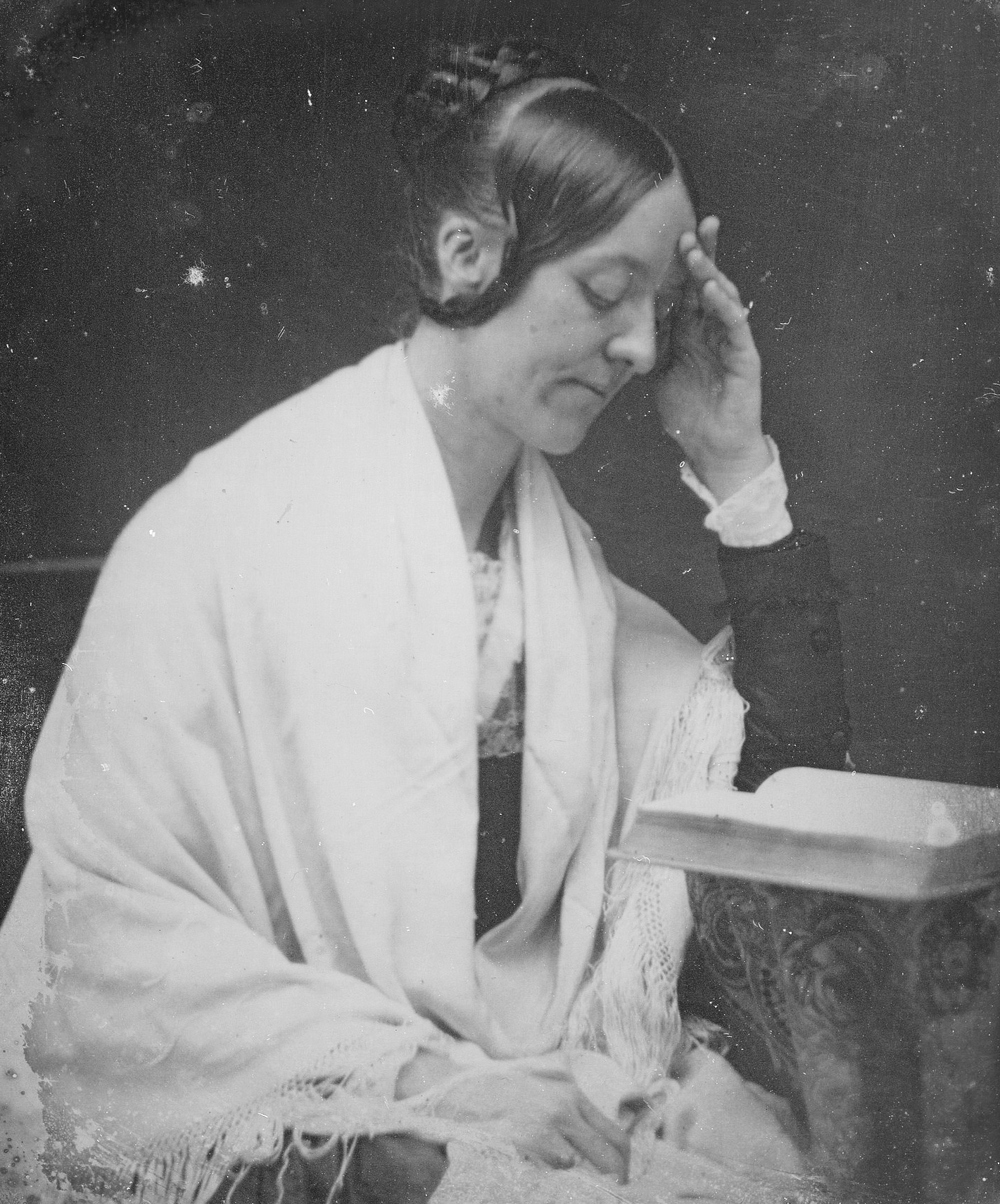 Margaret Fuller
Margaret Fuller
Margaret Fuller
Sarah Margaret Fuller, sometimes referred to as Margaret Fuller Ossoli, was an American journalist, editor, critic, translator, and women's rights advocate associated with the American transcendentalism movement. She was the first American female war correspondent and full-time book reviewer in journalism. Her book Woman in the Nineteenth Century is considered the first major feminist work in the
"Beware of over-great pleasure in being popular or even beloved."
Margaret Fuller"It is astonishing what force, purity, and wisdom it requires for a human being to keep clear of falsehoods."
Margaret Fuller"The pass-word now is lost To that initiation full and free; Daily we pay the cost Of our slow schooling for divine degree. We know no means to feed an undying lamp; Our lights go out in every wind or damp."
Margaret Fuller"How many persons must there be who cannot worship alone since they are content with so little."
Margaret Fuller"Let no one dare to call another mad who is not himself willing to rank in the same class for every perversion and fault of judgment. Let no one dare aid in punishing another as criminal who is not willing to suffer the penalty due to his own offenses."
Margaret Fuller"Women are the best helpers of one another. Let them think; let them act; till they know what they need. But if you ask me what offices they may fill, I reply-any. Let them be sea-captains if you will."
Margaret Fuller"The use of criticism, in periodical writing, is to sift, not to stamp a work."
Margaret Fuller"Genius will live and thrive without training, but it does not the less reward the watering-pot and pruning-knife."
Margaret Fuller"Very early, I knew that the only object in life was to grow."
Margaret Fuller"It does not follow because many books are written by persons born in America that there exists an American literature. Books which imitate or represent the thoughts and life of Europe do not constitute an American literature. Before such can exist, an original idea must animate this nation and fresh currents of life must call into life fresh thoughts along its shores."
Margaret Fuller"Essays, entitled critical, are epistles addressed to the public, through which the mind of the recluse relieves itself of its impressions."
Margaret Fuller"Knights of the Rosy Cross, they bore Its weight within the heart, but wore Without, devotions sign in glistening ruby bright; The gall and vinegar they drank alone, But to the world at large would only own The wine of faith, sparkling with rosy light."
Margaret Fuller




