SHAWORDS
N

Neil Postman

Neil Postman

author ·

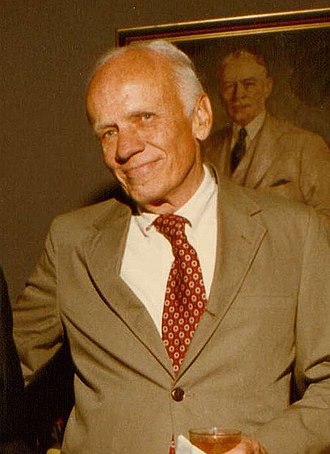
Neil Postman was an American author, educator, media theorist, and cultural critic who eschewed digital technology, including personal computers and mobile devices, and was critical of the use of personal computers in schools. He is best known for 20 books about technology and education, including Teaching as a Subversive Activity (1970), The Disappearance of Childhood (1982), Amusing Ourselves to

Popular Shayari & Quotes

Quote
"The new education has as its purpose the development of a new kind of person, one who — as a result of internalizing a different series of concepts — is an actively inquiring, flexible, creative, innovative, tolerant, liberal personality who can face uncertainty and ambiguity without disorientation, who can formulate viable new meanings to meet changes in the environment which threaten individual and mutual survival. The new education, in sum, is new because it consists of having students use the concepts most appropriate to the world in which we all must live. All of these concepts constitute the dynamics of the quest-questioning, meaning-making process that can be called "learning how to learn."
N
Neil Postman
Quote
"In the development of intelligence nothing can be more "basic" than learning how to ask productive questions. Many years ago, in Teaching as a Subversive Activity, Charles Weingartner and I expressed our astonishment at the neglect shown in school toward this language art. ...The "back to the basics" philosophers rarely mention it, and practicing teachers usually do not find room for it in their curriculums. …all our knowledge results from questions, which is another way of saying that question-asking is our most important intellectual tool… There are at present no reading tests anywhere that measure the ability of students to address probing questions to the particular texts they are reading... What students need to know are the rules of discourse which comprise the subject, and among the most central of such rules are those which govern what is and what is not a legitimate question."
N
Neil Postman
Quote
"It may come as a surprise to our technocrat philosophers, but people do not read, write, speak, or listen primarily for the purpose of achieving a test score. They use language in order to conduct their lives, and to control their lives, and to understand their lives. An improvement in ones language abilities is therefore ...observed in changes in ones purposes, perceptions, and evaluations. Language education... may achieve what George Bernard Shaw asserted is the function of art. "Art," he said in Quintessence of Ibsenismn, "should refine our sense of character and conduct, of justice and sympathy, greatly heightening our self knowledge, self-control, precision of action and considerateness, and making us intolerant of baseness, cruelty, injustice, and intellectual superficialty and vulgarity." …For my purposes, if you replace the word "art" with the phrase "language education," you will have a precise statement of what I have been trying to say."
N
Neil Postman
Quote
"Definitions, like questions and metaphors, are instruments for thinking. Their authority rests entirely on their usefulness, not their correctness. We use definitions in order to delineate problems we wish to investigate, or to further interests we wish to promote. In other words, we invent definitions and discard them as suits our purposes. And yet, one gets the impression that... God has provided us with definitions from which we depart at the risk of losing our immortal souls. This is the belief that I have elsewhere called "definition tyranny," which may be defined... as the process of accepting without criticism someone elses definition of a word or a problem or a situation. I can think of no better method of freeing students from this obstruction of the mind than to provide them with alternative definitions of every concept and term with which they must deal in a subject. Whether it be "molecule," "fact," "law," "art," "wealth," "gene," or whatever, it is essential that students understand that definitions are hypotheses, and that embedded in them is a particular philosophical, sociological, or epistemological point of view."
N
Neil Postman
Quote
"Since most subjects studied in school consist largely of theories... language education must include not only the serious study of what truth and falsehood mean in the context of a subject, but also what is meant by a fact, an inference, an assumption, a judgment, a generalization... In this way students will be learning both the language of a subject and the methods of inquiry in that subject, since inquiry consists of nothing else but the generation of questions, the invention of definitions and metaphors, the separation of facts from inferences, the forming of generalizations..."
N
Neil Postman
Quote
"In plain, what passes for a curriculum in todays schools is little else than a strategy of distraction... It is largely defined to keep students from knowing themselves and their environment in any realistic sense; which is to say, it does not allow inquiry into most of the critical problems that comprise the content of the world outside the school (...one of the main differences between the "advantaged" student and the "disadvantaged" is that the former has an economic stake in giving his attention to the curriculum while the latter does not. In other words, the only relevance of the curriculum for the "advantaged" student is that, if he does what he is told, there will be a tangible payoff.)"
N
Neil Postman
Quote
"In order to understand what kind of behaviors classrooms promote, one must become accustomed to observing what, in fact, students actually do in them. What students do in a classroom is what they learn (as Dewey would say), and what they learn to do is the classrooms message (as McLuhan would say). Now, what is it that students do in the classroom? Well, mostly they sit and listen to the teacher. Mostly, they are required to believe in authorities, or at least pretend to such belief when they take tests. Mostly they are required to remember. They are almost never required to make observations, formulate definitions, or perform any intellectual operations that go beyond repeating what someone else says is true. They are rarely encouraged to ask substantive questions, although they are permitted to ask about administrative and technical details. (How long should the paper be? Does spelling count? When is the assignment due?) It is practically unheard of for students to play any role in determining what problems are worth studying or what procedures of inquiry ought to be used. Examine the types of questions teachers ask in classrooms, and you will find that most of them are what might technically be called "convergent questions," but what might more simply be called "Guess what I am thinking " questions."
N
Neil Postman
Quote
"I dont think any of us can do much about the rapid growth of new technology. A new technology helps to fuel the economy, and any discussion of slowing its growth has to take account of economic consequences. However, it is possible for us to learn how to control our own uses of technology. The "forum" that I think is best suited for this is our educational system. If students get a sound education in the history, social effects and psychological biases of technology, they may grow to be adults who use technology rather than be used by it."
N
Neil Postman
Quote
"We can justify the list we will submit on several grounds. First, many of these questions have literally been asked by children and adolescents when they are permitted to respond freely to the challenge of "Whats Worth Knowing?" Second, some of these questions are based on careful listening to students, even though they were not at the time asking questions. Very often children make declarative statements about things when they really mean only to elicit an informative response. In some cases, they do this because they have learned from adults that it is "better" to pretend that you know than to admit that you dont. (An old aphorism describing this process goes: Children enter school as question marks and leave as periods.) In other cases they do this because they do not know how to ask certain kinds of questions. In any event, a simple translation of their declarative utterances will sometimes produce a great variety of deeply felt questions."
N
Neil Postman