Quote
"In some minds the defence of the human spirit was sincerely identified with the defence of a particular nation, conceived as the home of all enlightenment."
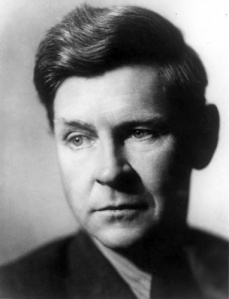 Olaf Stapledon
Olaf Stapledon
Olaf Stapledon
William Olaf Stapledon was an English philosopher and author of science fiction. In 2014, he was inducted into the Science Fiction and Fantasy Hall of Fame.
"In some minds the defence of the human spirit was sincerely identified with the defence of a particular nation, conceived as the home of all enlightenment."
Olaf Stapledon"Socrates woke to the ideal of dispassionate intelligence, Jesus to the ideal of passionate yet self-oblivious worship. Socrates urged intellectual integrity, Jesus integrity of will. Each, of course, though starting with a different emphasis, involved the other. Unfortunately both these ideals demanded of the human brain a degree of vitality and coherence of which the nervous system of the First Men was never really capable."
Olaf Stapledon"The governments hated the peace party even more than each other, since their existence now depended on war."
Olaf Stapledon"Long before the human spirit awoke to clear cognizance of the world and itself, it sometimes stirred in its sleep, opened bewildered eyes, and slept again."
Olaf Stapledon"At first it had been youths ideal of what youth should be, a pattern woven of fanatical loyalty, irresponsible gaiety, comradeship, physical gusto, and not a little pure devilry."
Olaf Stapledon"Thus it was that America sank further and further into Americanism. Vast wealth and industry, and also brilliant invention, were concentrated upon puerile ends. In particular the whole of American life was organized around the cult of the powerful individual, that phantom ideal which Europe herself had only begun to outgrow in her last phase. Those Americans who wholly failed to realize this ideal, who remained at the bottom of the social ladder, either consoled themselves with hopes for the future, or stole symbolical satisfaction by identifying themselves with some popular star, or gloated upon their American citizenship, and applauded the arrogant foreign policy of their government. Those who achieved power were satisfied so long as they could merely retain it, and advertise it uncritically in the conventionally self-assertive manners."
Olaf Stapledon"Nations appeared, and all the phobias that make up nationalism."
Olaf Stapledon"There was, indeed, a time when China had mentally less in common with India than with the West, but fear of America had drawn the two great Eastern peoples together. They agreed at least in earnest hate of that strange blend of the commercial traveller, the missionary, and the barbarian conqueror, which was the American abroad."
Olaf Stapledon"Individuals of the earlier species had suffered from an almost insurmountable spiritual isolation from one another. Not even lovers, and scarcely even the geniuses with special insight into personality, ever had anything like accurate vision of one another."
Olaf Stapledon"The finds were of extreme interest to the Second Men, but not in the manner which the Siberian party had intended, not as a store of scientific and philosophic truth, but as a vivid historical document. The view of the universe which the tablets recorded was both too naïve and too artificial; but the insight which they afforded into the mind of the earlier species was invaluable."
Olaf Stapledon"Little by little it became evident that those who used great gifts, and even genius, to establish the truth of the after life, or to seek contact with their beloved dead, suffered from a strange blindness, and obtuseness of the spirit."
Olaf Stapledon"Today we should welcome, and even study, every serious attempt to envisage the future of our race; not merely in order to grasp the very diverse and often tragic possibilities that confront us, but also that we may familiarize ourselves with the certainty that many of our most cherished ideals would seem puerile to more developed minds. To romance of the far future, then, is to attempt to see the human race in its cosmic setting, and to mould our hearts to entertain new values."
Olaf Stapledon




