Quote
"The directing motive, the end and aim of capitalist production, is to extract the greatest possible amount of surplus value, and consequently to exploit labor-power to the greatest possible extent."
 Organization
Organization
Organization
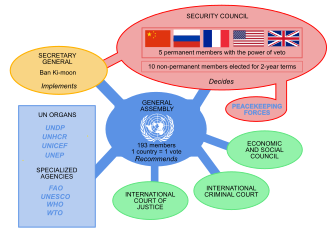
An organization or organisation is an entity—such as a company, or corporation or an institution, or an association—comprising one or more people and having a particular purpose.
"The directing motive, the end and aim of capitalist production, is to extract the greatest possible amount of surplus value, and consequently to exploit labor-power to the greatest possible extent."
Organization"According to Taylor, the principles of Efficiency are:"
Organization"Through all the years that I have been in business I have never yet found our business bad as a result of any outside force. It has always been due to some defect in our own company, and whenever we located and repaired that defect our business became good again - regardless of what anyone else might be doing. And it will always be found that this country has nationally bad business when business men are drifting, and that business is good when men take hold of their own affairs, put leadership into them, and push forward in spite of obstacles. Only disaster can result when the fundamental principles of business are disregarded and what looks like the easiest way is taken. These fundamentals, as I see them, are:"
Organization"Organization is the arrangement of personnel for facilitating the accomplishment of some agreed purpose through the allocation of functions and responsibilities."
Organization"The estimate that at least $1,000,000 a day could be saved by the pursuit of methods of scientific management was first made by Mr. Harrington Emerson. It is submitted that, with aggregate operating expenses by the railroads in 1908 of $1,669,938,717, of which $1,035,437,528 was for labor, this estimate appears moderate."
Organization"The test of any scheme of factory organization is the extent to which it creates and fosters the atmosphere and spirit of cooperation and good-will, without in any sense lessening the loyalty of the worker to his own class and its organizations."
Organization"Modern industry is stated by some writers to have begun in 1738 when brought out a . Others place the period as between 1750 and 1800, when the and steam engine came into being. It was marked by the development of labor-saving machinery. It was brought about by the change from handicraft to manufacture."
Organization"The new industrial methods have greatly accelerated certain tendencies that had already manifested themselves in the old domestic factories and some of these deserve more than passing notice as they are affecting not only productive processes but our social organization as well. Perhaps the most important of these influences are those that tend toward"
Organization"The magnitude of the business of this road, its numerous and important connections, and. the large number of employés engaged in operating it, have led many, whose opinions are entitled to respect, to the conclusion, that a proper regard to details, which enter so largely into the elements of success in the management of all railroads, cannot possibly be attained by any plan that contemplates its organization as a whole ; and in proof of this position, the experience of shorter roads is referred to, the business operations of which have been conducted much more economically."
Organization"It isnt the incompetent who destroy an organization. The incompetent never get into a position to destroy it. It is those who have achieved something and want to rest upon their achievements who are forever clogging things up."
Organization"Tektology must clarify the modes of organization that are perceived to exist in nature and human activity; then it must generalize and systematize these modes; further it must explain them, that is, propose abstract schemes of their tendencies and laws; finally, based on these schemes, determine the direction of organizational methods and their role in the universal process. This general plan is similar to the plan of any natural science; but the objective of tektology is basically different. Tektology deals with organizational experiences not of this or that specialized field, but of all these fields together. In other words, tektology embraces the subject matter of all the other sciences and of all the human experience giving rise to these sciences, but only from the aspect of method, that is, it is interested only in the modes of organization of this subject matter."
Organization"I firmly believe that any organization, in order to survive and achieve success, must have a sound set of beliefs on which it premises all its policies and actions. Next I believe that the most important single factor in corporate success is faithful adherence to those beliefs. And, finally I believe if an organization is to meet the challenge of a changing world, it must be prepared to change everything about itself except those beliefs as it moves through corporate life. Basic philosophy, spirit and drive of an organization have far more to do with its relative achievements than do technological or economic resources, organizational structure, innovation and timing..."
Organization