SHAWORDS
Oussama Khatib

Oussama Khatib

Oussama Khatib

Oussama Khatib

author
3Quotes

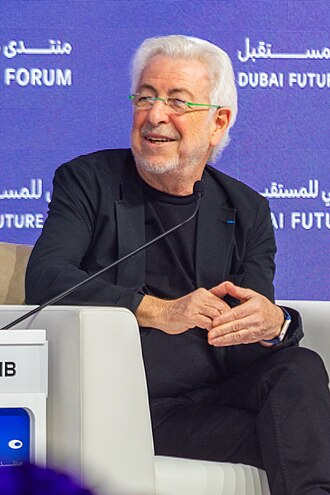
Oussama Khatib is a roboticist and a professor of computer science at Stanford University, and a Fellow of the IEEE. He is credited with seminal work in areas ranging from robot motion planning and control, human-friendly robot design, to haptic interaction and human motion synthesis. His work's emphasis has been to develop theories, algorithms, and technologies, that control robot systems by usin

Popular Quotes

3 total
Quote
"Now, if we are really to think about robots that would interact with human or move in the human environment, we would need to have those robots not fixed but mobile. So we started to look at mobile manipulation, and that brings a lot of interesting issues in the dynamic of macro mini-structures. The properties of dynamics in relation to reduce effective inertias, redundancy, and all kind of things that were amazingly interesting to analyze and work on. As we pursued this work, we discovered that, “Well, there’s more.” When we got to humanoid robotics we have the branching, complex branching structure, with multiple tasks that need to be simultaneously achieved while maintaining constraints, while maintaining balance, given the fact that these robots are under-actuated. It’s amazing. You have one problem after the other. It’s so rich, so exciting. So that was one line of the work that I was really interested in, dynamic control and control structures."
Oussama KhatibOussama Khatib
Quote
"So this is the interesting part, is the robots at the time were mostly hydraulic robots. Very large robot, heavy robots. There was a robot from Renault that I think it was called the R80. Huge. Eighty kilograms it can carry. And I really didn’t implement my approach on that robot, but I used this cable-driven robot called the MA23 manipulator that was designed and developed by Jean Vertut. Jean Vertut is probably the father of robotics, robot design, in France. And there is a number of very, very influential people in my early career in robotics, and Jean Vertut was one of them. Jean Vertut developed most of the concept that led to cable-driven actuation. The three-fingered hand Kenneth Salisbury developed was based on a lot of those concepts. Many of the robots that were later developed were based on ideas and concepts that Jean Vertut developed. Jean Vertut passed away very quickly years back, and the whole robotics field missed him. But I had this privilege to know him. And also the privilege of having my paper selected by him, my first paper, to be then – the introduction to me to know Professor Roth, who eventually invited me too to come to Stanford."
Oussama KhatibOussama Khatib
Quote
"Yeah. It is really, to say, that we get a lot of inspiration from the human. But we are not trying to just record human motion and replay the motion. What we are trying to do is to really to understand what is behind this motion, what is the strategy, and how can we encode that strategy in something that the robot can use as a strategy so we can generalize? But this is, again, part of the whole approach. We are seeking solution that can address a versatile number of problems. We’re not just looking for finding or engineering the solution to a specific problem. Because robotics is about ultimately all kind of task in all kind of environment, and we really need to look at this versatility."
Oussama KhatibOussama Khatib

Similar Authors & Thinkers



