Quote
"Whenever I have to speak on the subject of moral instruction and the conduct of a holy life, it is my practice first to demonstrate the power and quality of human nature."
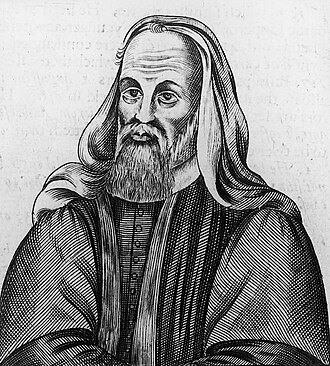 Pelagius
Pelagius
Pelagius
Pelagius was a Christian theologian known as an ascetic monk and promoting a system of doctrines which emphasized human choice in salvation and denied original sin. Pelagius was accused of heresy at the Synod of Diospolis in 415 and his doctrines were harshly criticized by Augustine of Hippo, especially the Pelagian views about mankind's good nature and individual responsibility for choosing ascet
"Whenever I have to speak on the subject of moral instruction and the conduct of a holy life, it is my practice first to demonstrate the power and quality of human nature."
Pelagius"Unless a man has despised worldly things, he shall not receive those which are divine."
Pelagius"Their faith alone will not profit them, because they have not done works of righteousness."
Pelagius"Do you consider a man to be a Christian by whose bread no hungry man is ever filled?"
Pelagius"Let no man judge himself to be a Christian, unless he is one who both follows the teaching of Christ and imitates his example."
Pelagius"Love of wealth is insatiable, desire for honour knows no fulfilment; possessions destined to meet with a speedy end are sought endlessly. But divine wisdom, heavenly riches, immortal honours we neglect in our indifference and sloth, and, as for spiritual riches, either we do not touch them at all or, if we get a slight taste of them, we at once suppose that we have had enough. The divine Wisdom invites us to its feasts in quite different terms: Those who eat me, she says, will hunger for more, and those who drink me will thirst for more (Sir.24.21). No one can have enough of such feasts or ever suffers from squeamishness because he has had too much: the more he drinks from that source the greater will be each mans capacity and eagerness for more."
Pelagius"It was because God wished to bestow on the rational creature the gift of doing good of his own free will and the capacity to exercise free choice, by implanting in man the possibility of choosing either alternative. ... He could not claim to possess the good of his own volition, unless he was the kind of creature that could also have possessed evil. Our most excellent creator wished us to be able to do either but actually to do only one, that is, good, which he also commanded, giving us the capacity to do evil only so that we might do His will by exercising our own. That being so, this very capacity to do evil is also good – good, I say, because it makes the good part better by making it voluntary and independent, not bound by necessity but free to decide for itself."
Pelagius"The best incentive for the mind consists in teaching it that it is possible to do anything which one really wants to do."
Pelagius"Nothing impossible has been commanded by the God of justice and majesty. ... Why do we indulge in pointless evasions, advancing the frailty of our own nature as an objection to the one who commands us? No one knows better the true measure of our strength than he who has given it to us nor does anyone understand better how much we are able to do than he who has given us this very capacity of ours to be able; nor has he who is just wished to command anything impossible or he who is good intended to condemn a man for doing what he could not avoid doing."
Pelagius"Under the plea that it is impossible not to sin, they are given a false sense of security in sinning ... Anyone who hears that it is not possible for him to be without sin will not even try to be what he judges to be impossible, and the man who does not try to be without sin must perforce sin all the time, and all the more boldly because he enjoys the false security of believing that it is impossible for him not to sin ... But if he were to hear that he is able not to sin, then he would have exerted himself to fulfil what he now knows to be possible when he is striving to fulfil it, to achieve his purpose for the most part, even if not entirely."
Pelagius




