SHAWORDS
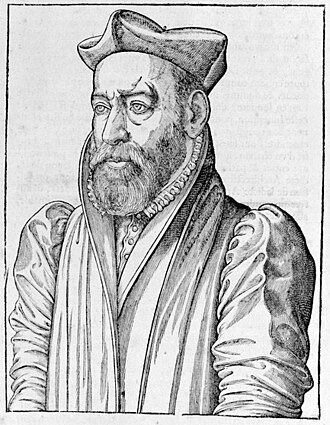
Philibert de l'Orme

Philibert de l'Orme


Philibert de l'Orme

Philibert de l'Orme

author
9Quotes

Philibert de l'Orme was a French architect and writer, and one of the great masters of French Renaissance architecture. His surname is also written De l'Orme, de L'Orme, or Delorme.

Popular Quotes

9 total
Quote
"Have I not also done a great service in having brought into France the fashion of good building, done away with barbarous manners, and great gaping joints in masonry, shown to all how one should observe the measures of architecture, and made the best workmen of the day, as they admit themselves? Let people recollect how they built when I began Saint-Maur for my lord the Cardinal du Bellay ...Moreover, let it be recollected that all I have ever done has been found to be very good and to give great contentment to all."
Philibert de l'OrmePhilibert de l'Orme
Quote
"French architects and engineers in the 16th, 17th, and 18th centuries occupied themselves a good deal with roofs with curved ribs, and two systems of constructing the rib were worked out. In the most modern of them, that invented by Colonel Emy, the ribs were constructed of a series of thicknesses of bent timber, one on the back of another, and held together by bolts. In the older system that of Philibert de lOrme, the ribs were also built up, but the pieces composing them are placed side by side, and either form a polygon approaching a semicircle or are cut to bring them to a curve. In fact, the ribs are very much such as... used for the great dome of the Paris Corn Market. There is, however, a great difference between a dome—the strongest of all forms—and one permitting the introduction of as many rings of ties as may be desired; and a roof over an ordinary oblong space, where no such binding together is admissible, and where straight rafters may have to be used, which loads the rib at certain points only. In the latter case, a good many precautions have, generally speaking, to be taken to prevent the rib from being unequally loaded, and so either spreading or losing its shape in some other way. The rib made of unbent timber, side by side, on De lOrmes plan, is admitted to be stronger than the one made of bent timbers laid one on the back of the other; but both have been largely used, and good examples of both may be met with..."
Philibert de l'OrmePhilibert de l'Orme
Quote
"Mr. G. Rennie said, he believed that few, if any, examples of oblique bridges existed in England prior to those which had been mentioned, and the extreme obliquity of Mr. Storeys bridge rendered it very interesting; such bridges had long been constructed in Italy, and in France. Vasari mentioned an oblique bridge over the Mugnone near Florence, erected in 1530. In a curious old work intituled "LArchitecture des Voutes," [a treatise on stereotomy] par Derand, (folio, 1645) diagrams were given of the oblique, as well as of almost every other kind of arch. Philibert de LOrme, and subsequent French architects, seemed also to have been fond of oblique arches. Nicholson, who was quoted by Mr. Buck as having first explained the method of constructing the oblique arch must, Mr. Rennie conceived, have seen Derands work."
Philibert de l'OrmePhilibert de l'Orme
Quote
"On January 8, I570, Philibert Delorme died in his canons house of Notre-Dame. He had played a considerable part in the life of his times, he had written an immense book, and he had designed some of the most notable buildings in France. In his own opinion he had simply re-established architecture in France. ...There are two woodcuts at the conclusion of Philibert Delormes Livre darchitecture. One shows a figure without eyes and hands moving aimlessly across a Gothic landscape. Behind him stands a medieval castle with its moat and turrets, a cloudburst filling the sky above it. This is his concept of the Bad Architect. The other is a scene of classic architecture, fruitful vines, and playing fountains. The sky is serene, and in the ordered court stands the Good Architect, triple-eyed and double-handed, presenting a roll of plans to a willing workman. ...Could it have been a sketch for a self-portrait that Messer Philibert Delorme was setting before our eyes?"
Philibert de l'OrmePhilibert de l'Orme
Quote
"Fortunate indeed is the man who has found wisdom and who is full of that discretion which is better than all the acquiring, trafficking, and possession of gold and silver. ... I dwell (so says Wisdom) in good and salutary counsel, and am present at learned and wise cogitations. Therefore must a man seek this Wisdom and, having found it, take care to hold it well, that in its time and place it may be of help to him. The ensuing representation will set before your eyes the treatise which I have propounded."
Philibert de l'OrmePhilibert de l'Orme
Quote
"[T]he work by two sixteenth century masters of stereotomic architecture – the Spanish architect (1505-1575) and the French architect Philibert De l’Orme (1515-1570) – is paradigmatic. Their cut-stone vaults and domes are an expression of the quest for the formal identification and definition of construction elements in keeping with the technical know-how and aesthetic canons of stereotomy. A comparison of two of their works is particularly interesting: the dome of the chapel of Salvador at Úbeda by Andrés de Vandelvira, built between 1536 and 1542, and the dome of the chapel at Anet by Philibert De l’Orme, built between 1548 and 1553. ...[T]he figurative solution adopted by De l’Orme... On a technical level, the juxtaposition of the decorative and the construction pattern is not casual, but geometrically controlled in order to optimise the production of the s by reducing to a minimum the number of “panneaux” needed to cut them. The system of ribbing, conceived according to the logic of this production process, is commensurate with the “metre” used in the wall assemblage and is consequently segmented in strict relation to the shape and dimension of the curved surface of the voussoirs that define the intrados of the dome."
Philibert de l'OrmePhilibert de l'Orme
Quote
"[Catharine] Randall, Building Codes, argues that Philibert de lOrme was, if not a Calvanist, someone with a strongly evangelical stance and perhaps Calvanist sympathies... Such Calvinist sympathies, according to Randall, are detectable in his stylistic idiosyncracies, which compose the architectural vocabulary of the late Calvinist architects,... his use (like Calvin) of the biblical text as a textual template for his building activity in general,... in his creation of a Protestant architectural genealogy... etc. No direct evidence exists, however, to support claims that De lOrme was anything but Catholic—he was, after all, a priest (diocese of Lyons) and later canon (Potié, Philibert De lOrme, 23). As Andrew Spicer notes, in his review of Randalls book, much of [her] evidence would seem to be circumstantial, and there are problems in equating the terms "evangelical" with "crypto-" or "proto-" Calvinist (Catholic Historical Review, 89/1 (2003), 106). I do not propose to resolve this debate here..."
Philibert de l'OrmePhilibert de l'Orme
Quote
"If the use of iron in building does not enable us to exceed these dimensions at a decidedly less cost, then indeed we are inferior to our ancestors. In fact the great builders of the Middle Ages, like those of the Renaissance, were eminently men of subtle, active, and inventive intellect. I say inventive intellect, for that is the ruling characteristic of the works bequeathed to us by those old builders. It is apparent in the structure of our mediaeval buildings, and only ceases to manifest itself when the material becomes inadequate. It is apparent in the attempts of the Renaissance; for apart from the superficial imitation of classic forms which the architects of the latter period affected, they did not adhere to this imitation in the construction of their buildings and in the methods they employed. Without reference to the buildings of that epoch, we may find the proof of this fact in the written works of several of those architects, such as Albert Dürer, Serlio, Philibert de lOrme, etc. On every page of their writings we find some original idea, or new adaptation; and as in the case of their predecessors, their ingenuity is circumscribed only by the inadequacy of their materials."
Philibert de l'OrmePhilibert de l'Orme

Similar Authors & Thinkers