SHAWORDS
Sculpture

Sculpture

Sculpture

Sculpture

author
22Quotes

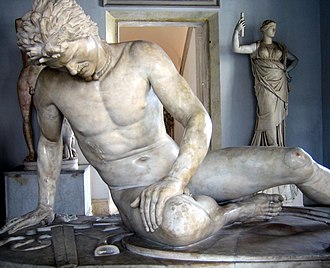
Sculpture is the branch of the visual arts that operates in three dimensions. Sculpture is the three-dimensional artwork which is physically presented in the dimensions of height, width and depth. It is one of the plastic arts. Durable sculptural processes originally used carving and modelling, in stone, metal, ceramics, wood and other materials but, since Modernism, there has been almost complete

Popular Quotes

22 total
Quote
"A means of display highly characteristic of the Roman empire was the arrangement of statues in tiers of niches adorning public buildings, including baths theaters, and amphitheaters. Several of the most impressive surviving statuary displays come from ornamental facades constructed in the Eastern provinces. Bolstered by wealth drawn from around the Mediterranean, the imperial families established their own palace culture that was later emulated by kings and emperors throughout Europe."
SculptureSculpture
Quote
"A friend peering up at early-20th-century polychrome terra cottas of mythological figures at the Philadelphia Museum of Art once remarked to me: “There is no way the Greeks were that gauche.” How did color become gauche? Where does this aesthetic disgust come from? To many, the pristine whiteness of marble statues is the expectation and thus the classical ideal. But the equation of white marble with beauty is not an inherent truth of the universe. Where this standard came from and how it continues to influence white supremacist ideas today are often ignored. Most museums and art history textbooks contain a predominantly neon white display of skin tone when it comes to classical statues and sarcophagi. This has an impact on the way we view the antique world."
SculptureSculpture
Quote
"Pioneers in the field of sexology in the early 20th century such as Iwan Bloch, Havelock Ellis, Richard von Krafft-Ebing, and Magnus Hirschfeld, have referenced statue love in their research. A French journal dated March 4th, 1877 published a story which describes the case of a gardener who falls in love with a statue of Venus de Milo and was found attempting coitus with it (Krafft-Ebing, 1965/1978). Krafft-Ebing describes these types of acts: “Violation of statues...they always give the impression of being pathological...these cases stand in etiological relation with abnormally intense libido and defective virility or courage, or lack of opportunity for normal sexual gratification” (p. 351). Hirschfeld’s Sexual Pathology (1940) considers Pygmalionism as inclusive of more “primitive” human simulacra than statues: To be sure the nature of Pygmalionism does not exhaust itself in love of statues as such, but also in the artificial, and occasionally artistic, construction of a figure corresponding to the inner desire whose sight and contact, which may go so far as actions similar to cohabitation, bring about physical and psychic relief...I have seen dolls which a prisoner made as a substitute for a woman. We are justified only to a certain extent in speaking of hypereroticism in such makeshift intercourse. (p. 226) Hirschfeld goes on to differentiate between a type of “makeshift intercourse” and fetish: “hypererotic excitation is evoked usually not only through the similarity to humanity alone, but through some special property of the statue, much as the necrophile is attracted to the course by the cool skin...” (Hirschfeld, 1940, p. 227)."
SculptureSculpture

Similar Authors & Thinkers