Quote
"Henri Poincaré thought the theory of infinite sets a grave malady and pathologic. "Later generations," he said in 1908, "will regard set theory as a disease from which one has recovered."
 Set theory
Set theory
Set theory
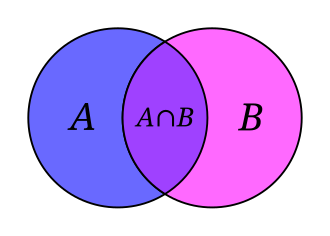
Set theory is the branch of mathematical logic that studies sets, which can be informally described as collections of objects. Although objects of any kind can be collected into a set, set theory – as a branch of mathematics – is mostly concerned with those that are relevant to mathematics as a whole.
"Henri Poincaré thought the theory of infinite sets a grave malady and pathologic. "Later generations," he said in 1908, "will regard set theory as a disease from which one has recovered."
Set theory"Modern descriptive set theory builds on both the classical descriptive set theory and on recursion theory. It has become clear in the 1950’s that the topological approach of classical descriptive set theory and the recursion theoretic techniques of logical definability describe the same phenomena. Modern descriptive set theory unified both approaches, as well as the notation."
Set theory"Does set theory, once we get beyond the integers, refer to an existing reality, or must it be regarded, as formalists would regard it, as an interesting formal game? ... A typical argument for the objective reality of set theory is that it is obtained by extrapolation from our intuitions of finite objects, and people see no reason why this has less validity. Moreover, set theory has been studied for a long time with no hint of a contradiction. It is suggested that this cannot be an accident, and thus set theory reflects an existing reality. In particular, the Continuum Hypothesis and related statements are true or false, and our task is to resolve them."
Set theory