Quote
"Should the computer program the kid or should the kid program the computer?"
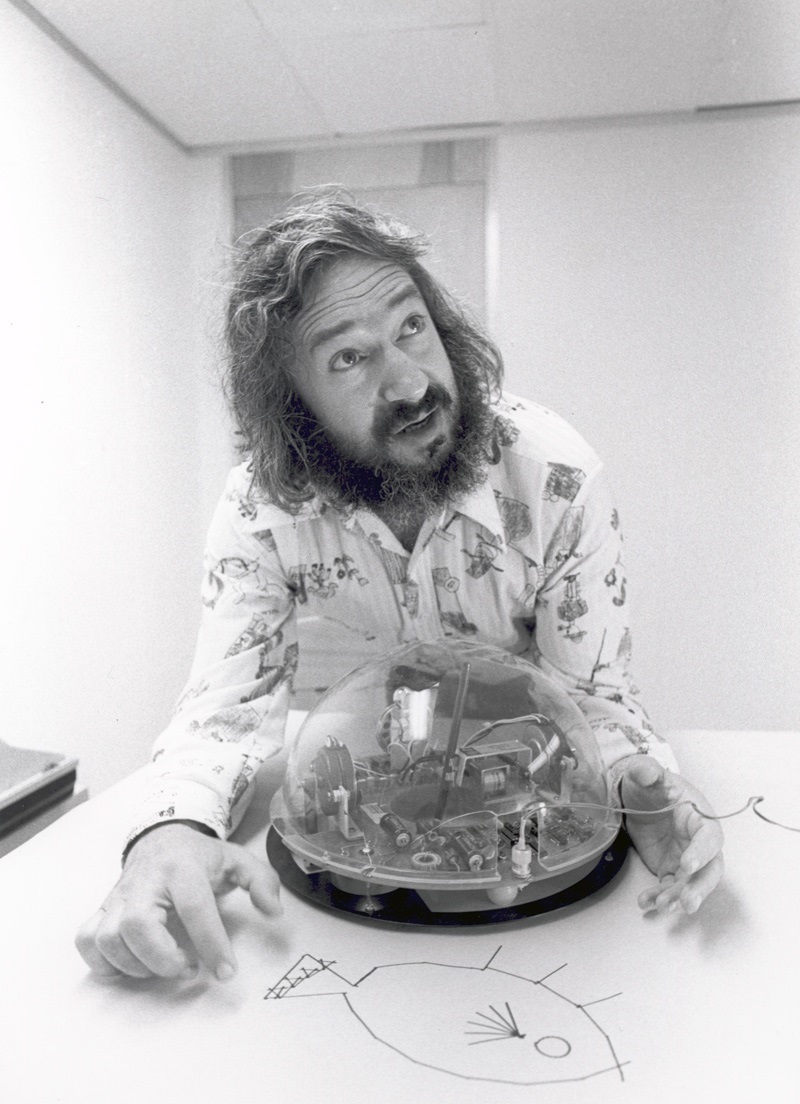 Seymour Papert
Seymour Papert
Seymour Papert
Seymour Aubrey Papert was a South African-born American mathematician, computer scientist, and educator, who spent most of his career teaching and researching at the Massachusetts Institute of Technology. He was one of the pioneers of artificial intelligence, and of the constructionist movement in education. He was co-inventor, with Wally Feurzeig and Cynthia Solomon, of the Logo programming langu
"Should the computer program the kid or should the kid program the computer?"
Seymour Papert"Many children who grow up in our cities are surrounded by the artifacts of science but have good reason to see them as belonging to "the others"; in many cases they are perceived as belonging to the social enemy."
Seymour Papert"In many schools today, the phrase "computer-aided instruction" means making the computer teach the child. One might say the computer is being used to program the child. In my vision, the child programs the computer and, in doing so, both acquires a sense of master over a piece of the most modern and powerful technology and establishes an intimate contact with some of the deepest ideas from science, from mathematics, and from the art of intellectual model building."
Seymour Papert"BASIC is to computation what QWERTY is to typing. Many teachers have learned BASIC, many books have been written about it, many computers have been built in such a way that BASIC is "hardwired" into them. In the case of the typewriter, we noted how people invent "rationalizations" to justify the status quo. In the case of BASIC, the phenomenon has gone much further, to the point where it resembles ideology formation. Complex arguments are invented to justify features of BASIC that were originally included because the primitive technology demanded them or because alternatives were not well enough known at the time the language was designed."
Seymour Papert"One might ask why the teachers do not notice the difficulty children have in learning BASIC. The answer is simple: Most teachers do not expect high performance from most students, especially in a domain of work that appears to be as "mathematical" and "formal" as programming. Thus the cultures general perception of mathematics as inaccessible bolsters the maintenance of BASIC, which in turn confirms these perceptions."
Seymour Papert"Now, given that picture of a rapid change of society, one would expect to see a rapid evolution of the institutions charged with preparing the young for it. We do not see this. We see a much slower rate of evolution of the school and that means were seeing a bigger and bigger gap between school and society. This gap is what I believe is responsible for the deterioration of performance in our schools and our educational systems. Because the children can see this; they can see that school is irrelevant. They feel that the pace of school and the mood of the school culture is out of sync with the society in which they live. And so it becomes harder and harder to get them to buy into the idea that school is satisfying their needs, that school is a bridge to the 21st century, as our political leaders keep on reiterating."
Seymour Papert




