Quote
"Shah Jahan, who proved an emperor to be shorter than a lover, who turned a grave into a temple who gave his beloved a place of God and converted love into a prayer."
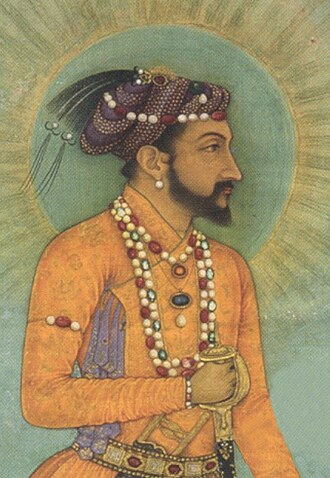 Shah Jahan
Shah Jahan
Shah Jahan
Shah Jahan I, also called Shah Jahan the Magnificent, was the fifth Mughal Emperor from 1628 until his deposition in 1658. His reign marked the zenith of Mughal architectural and cultural achievements.
"Shah Jahan, who proved an emperor to be shorter than a lover, who turned a grave into a temple who gave his beloved a place of God and converted love into a prayer."
Shah Jahan"Shah Jahan was an orthodox Muslim. In 1632, while returning from Kashmir, he found that some Hindus of Rajauri, Bhimbar and Gujarat accepted Mushm girls as wives and converted them to their own faith. The emperor stopped such marriages and Muslim women, already married, were seized from their husbands who were fined and, in certain cases, even executed. They could retain their wives only on their embracing Islam. As many as 4,500 such women were recovered. In 1635, it was reported to the emperor that a Muslim girl, Zinab, had been converted, given the new name of Ganga and was taken as a wife by Dalpat, a Hindu of Sirhind. The woman, along with her seven children—one son and six daughters—was taken away and the man was executed. Kaulan, a daughter of the qazi of Lahore, had also run away from home, embraced Sikhism and taken shelter with Guru Har Govind, who immortalised her by constructing a new tank at Amritsar named after her, Kaulsar. (311ff)"
Shah Jahan"If Id ever grown prosperous like Shah Jahan was, Id not have waited for my beloveds death before I erected a Taj Mahal."
Shah Jahan"Begum Sahib, the elder daughter of Shah Jahan was very handsome... Rumour has it that his attachment reached a point which it is difficult to believe, the justification of which he rested on the decision of the Mullas, or doctors of their law. According to them it would have been unjust to deny the king the privilege of gathering fruit from the tree he himself had planted."
Shah Jahan"To sum up, Shah Jahan was a more orthodox king than his two predecessors. During the sixth to tenth years of his reign he embarked upon the active career of a persecuting king. Several orders were issued during these years for the purpose of achieving his end. New temples were destroyed, conversions were stopped, several Hindus were persecuted for religious reasons, and probably the pilgrimage tax was reimposed. Soon however his religious zeal seems to have spent itself. Shah Jahan’s ardour as a great proselytizing king cooled down when he discovered in the heir-apparent, and his deputy in many state affairs, a religious toleration equalling that of his grandfather Akbar. Of course the discontinuance of certain court ceremonies which smacked of Hindu practices was permanent.... It is not wholly true to say that Shah Jahan’s reign was a prelude to what followed under Aurangzeb. Much of what his successor did constituted a vote of censure on Shah Jahan for failing to do, in its entirety, what the Muslim law and tradition demanded of a Muslim king. It is true that the five years from the sixth to the tenth of his reign gave the Hindus a foretaste of what might happen if the Mughal throne happened to be filled by an orthodox king who insisted on following in their entirety the contemporary Muslim practices. Shah Jahan — despite the praises showered on him by his court poets and annalists — was never consistently or for long a persecutor. Towards the end of his reign, we actually find him restraining the religious zeal of Aurangzeb and overriding him in many important matters. It must, however, be admitted that Akbar’s ideal of a comprehensive state’, was gradually being lost sight of, although only partially."
Shah Jahan"Under Shahjahan, Akbars Sulehkul was almost reversed. During his reign temples were destroyed in Gujarat, Banaras and Allahabad, and at Orchha. Like Jahangir he stopped marriages between Muslim girls and Hindu men. Apostasy from Islam again became a capital crime in accordance with the tenets of the Shariat. During the reign of Shahjahan titles in use among Khalifas and Ghaznavids were revived."
Shah Jahan"His majesty desired to go by boat up to the Kathbal bridge where the navigation of the stream ceases. He accordingly traversed the distance on board a boat, after which he mounted an open litter and arrived at Anantnag. In this pargana was an ancient idol-temple which the monarch, the bulwark of true religion and the destroyer of paganism, ordered to be demolished. And to the pargana itself, which was held in jagir by Islam Khan, he gave the appellation of Islamabad."
Shah Jahan




