SHAWORDS
Shon Faye

Shon Faye

Shon Faye

Shon Faye

author
77Quotes

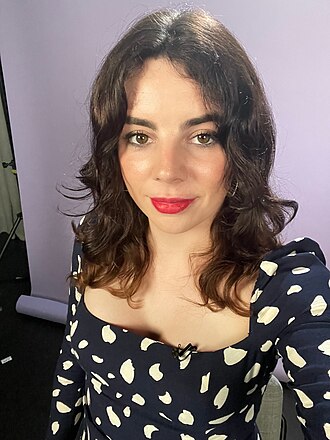
Shon Faye is an English writer, editor, journalist, and presenter, known for her commentary on LGBTQ+, women's, and mental health issues. She hosts the podcast Call Me Mother and is the author of the 2021 book The Transgender Issue: An Argument for Justice. She was an editor-at-large at Dazed and has contributed features and comment journalism to The Guardian, The Independent, VICE, n+1, Attitude,

Popular Quotes

77 total
Quote
"Dysphoria, it should be said, is not a precondition of being trans. According to some research, as many as 10 per cent of those who positively identify as trans men, trans women, non-binary people and various other terms do so without any feelings of dysphoria. It is sometimes incorrectly assumed that trans men and women experience dysphoria and non-binary people do not, when in fact some non-binary people feel themselves to be in great need of medical assistance, and some trans men and women seek none at all. Nevertheless, most trans people experience dysphoria to some degree."
Shon FayeShon Faye
Quote
"The majority of trans people are working class, and the oppression of trans people is specifically rooted in capitalism. In short, capitalism across the world still relies heavily on the idea of different categories of men’s work and women’s work, in which ‘women’s work’ (such as housework, child-rearing and emotional labour) is either poorly paid or not paid at all. In order for this categorization to function, it needs to rest on a clear idea of how to divide men and women. Capitalism also requires a certain level of unemployment to function. If there were enough work to go round, no worker would worry about losing their job, and all workers could demand higher wages and better conditions. The ever-present spectre of unemployment, on the other hand, enables employers to dictate conditions. Equally, in times of severe crisis this ‘reserve army’ of unemployed people can be called into employment as and when the economy requires it. This system of deliberate unemployment needs ways to mark who will work and who will be left unemployed. In our society this is principally achieved through race, class, gender and disability. and revulsion at the existence of trans people usefully provides another class of people more likely to be left in the ranks of the unemployed (even more so if they are trans and poor, black or disabled – which is why unemployment is highest among these trans people)."
Shon FayeShon Faye
Quote
"In the media, much of the focus on ‘trans rights’ in recent years has been on legislative rights (such as streamlining the process for legal gender recognition or having a gender-neutral passport), and on social conduct, such as checking a person’s pronouns. This emphasis stems in part from a media agenda set by cisgender people, often – as we’ve seen – for the purposes of creating controversy and fuelling a culture war. As a result, like many movements formed around an aspect of personal identity, class politics and a broader critique of capitalism have become sidelined in the trans movement. Besides the time and energy trans people have to spend defending civil rights and social courtesies, there’s a pretty straightforward reason for this. In any minority group, those who have the time, resources and political access to lead the charge for recognition and better treatment tend to be the middle-class members, who don’t appreciate the urgent issues of poverty and homelessness that for many can impede participation in activist movements. This representational imbalance leads to ‘single issue’ priorities, which emphasize the personal freedoms of the individual over the economic liberation of the entire minority group. Trans politics is no different. Poverty and homelessness are rarely framed as ‘trans issues’ in the media – or even by large LGBTQ+ lobby groups."
Shon FayeShon Faye
Quote
"‘Trans’ [...] is an umbrella term that describes people whose (their personal sense of their own gender) varies from, does not sit comfortably with, or is different from, the biological sex recorded on their birth certificate based on the appearance of their external . The standard view of how sex and gender manifest in the world is as follows. Babies born with observable penises are recorded as male, referred to and raised as boys, and as adults are men; babies born with observable vulvas are recorded as female, referred to and raised as girls, and as adults are women. To be trans is, on some level, to feel that this standardized relationship between one’s genitalia at birth and the assignment of one of two fixed gender identities that are supposed to accurately reflect your feelings about your own body has been interrupted. How the person who experiences this interruption reacts to it can vary hugely – which is why ‘trans’ is a catch-all word for a diverse range of identities and experiences."
Shon FayeShon Faye
Quote
"While the media seems all too happy to focus on trans children’s right to participate in activities alongside their peers (or, indeed, on trans children’s very existence), there is little coverage of one of the most pressing problems: the fact that they are significantly more likely to experience discrimination, harassment and violence at home or at school. Sometimes, horrific stories hit local news headlines, such as the trans teenage boy whose face was slashed by a gang of teenagers in Witham, Essex, or the eleven-year-old trans girl in Manchester who, after months of bullying, was shot with a BB gun at school. To date, though, the national media has more or less completely failed to explore the ways in which such egregious incidents form part of a wider pattern of abuse of trans children."
Shon FayeShon Faye

Similar Authors & Thinkers



