Quote
"Qui veut être un linguiste conséquent doit appliquer de manière conséquente les critères linguistiques, et non les bricoler pour les conformer aux besoins de la politique, créant l’illusion qu’on se place encore sur le terrain de la science."
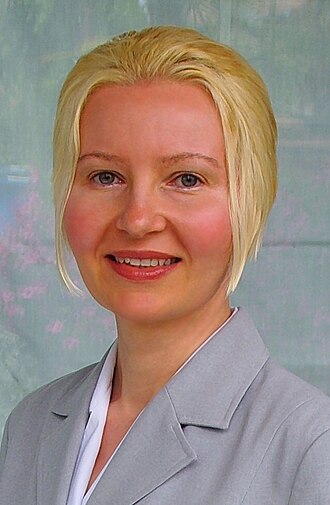
Snježana Kordić
Snježana Kordić

Snježana Kordić is a Croatian linguist. In addition to her work in syntax, she has written on sociolinguistics. Kordić is known among non-specialists for her numerous articles against the puristic and prescriptive language policy in Croatia. Her 2010 book Jezik i nacionalizam popularised the theory of pluricentric languages in the Balkans.
"Qui veut être un linguiste conséquent doit appliquer de manière conséquente les critères linguistiques, et non les bricoler pour les conformer aux besoins de la politique, créant l’illusion qu’on se place encore sur le terrain de la science."
"El purismo aumenta el nacionalismo porque enseina a clasificar todo como croata o no croata, y a que todo lo que supuestamente proceda del propio país se diga que es bueno, mientras que de lo que proceda de otras naciones se diga que es perjudical y malo"
"The long-form endings have pushed away the short-form endings completely in the oblique cases. In the last few years, there are attempts in Croatia to bring back again the short forms in the usage. This attempts are the part of the new sociolinguistic politics to bring back the archaic words and forms in the usage and to construct new words, neologisms, in place of customary words - all that with the aim to make the language in the west of the Serbo-Croatian language community as different as possible from the language in the east of the Serbo-Croatian language community. Leaders of the new language politics proclaim as incorrect what was customary, and as correct what was rare, archaic or even did not exist in the usage, and then they carry it out in practice through the control of the media, text-books etc. Such inversion of the criteria for what is correct and what is not correct in the language usage makes the native speakers unsure and frustrated."
"I linguisti croati rifiutano le parole in uso presso la maggior parte della popolazione solo per dare artificiosamente corpo ad una diversità nei confronti della lingua parlata in Serbia."
"Fälle, in denen mehrere Nationen eine Sprache sprechen, werden in der Sprachwissenschaft als plurizentrische Sprachen behandelt."
"There is a large discrepancy between the linguistic reality and the language politics and relevant legislation in South Slavic countries. On the one hand, according to all criteria, the linguistic reality can be described as a typical pluricentric standard language with four standardized varieties. On the other hand, school children are being segregated in Bosnia-Herzegovina as if they speak different languages. In Croatia and Serbia, the segregation takes place in the name of minority language rights, ignoring that the European Charter for Regional or Minority Languages gives a clear definition of a minority language that excludes the term ‘minority language’ in this case."