SHAWORDS
Special relativity

Special relativity
Special relativity

Special relativity
author
11Quotes

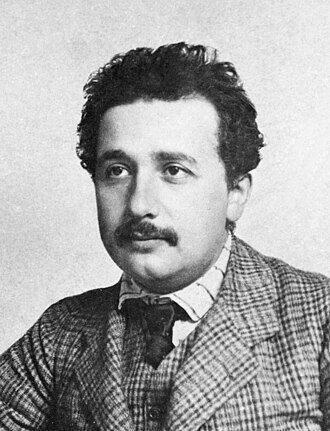
In physics, the special theory of relativity, or simply special relativity, is a scientific theory of the relationship between space and time. In Albert Einstein's 1905 paper,

Popular Quotes

11 total
Quote
"Another thing I have learned since 1968 is that one should emphasize as early as possible that although objects moving at the speed of light famously behave in some very strange ways, the behavior of objects moving at speeds comparable to the speed of light can be just as peculiar. The peculiarity of motion at the speed of light is just a special case of a more general peculiarity of all motion, which becomes prominent only at extremely high speeds. That more general peculiarity can be expressed by an elementary but precise rule that it is possible and useful to formulate at a very early stage of the subject."
Special relativitySpecial relativity
Quote
"Based on Faradays earlier work, Maxwell stressed the notion of fields, in contrast to Newtons emphasis on the direct action of bodies on each other across empty space (). Faraday and Maxwell regarded the effect of an electrically charged body as giving rise to stresses in its immediate surroundings... [and] in ever widening circles, gradually diminishing... These stresses... [i.e.,] the fields are intermediaries between the material particles and assume the burden of Newtons action at a distance. ...[O]ne set of Maxwells equations is to the effect that, in the presence of a magnetic field which changes in the course of time, an electric field arises which is not caused by the presence of any electric charge. This [is] the law of electromagnetic induction... From his theory, Maxwell... predicted that magnetic fields propogate at... the speed of light. ...The laws of mechanics involve only accelerations, not velocities: the laws of electromagnetism involve a universal velocity [c]..."
Special relativitySpecial relativity
Quote
"If there is such a thing as a universal speed... Newtonian physics... must be reviewed. As long as the laws of physics were concerned only with accelerations... no conceivable experiment... would lead to the selection of one particular frame of reference as fundamental. But if in empty space light propogates at the universal speed... then a careful determination of the apparent speed of light relative to laboratory apparatus should reveal the [absolute] velocity of that apparatus.... There should exist one frame of reference with respect to which light does travel everywhere at the speed c. Call this... the frame of absolute rest. ...[W]ith respect to any other frame...the apparent speed of light should be less than c in the direction in which the frame is traveling relative to the frame of absolute rest; it should be greater than c in the opposite direction."
Special relativitySpecial relativity
Quote
"All [of Newtons] fundamental laws of mechanics involved statements concerning accelerations, changes in the velocities... rather than the velocities themselves. These accelerations were tied to the distances between the bodies... [F]or collecting data relevant to an experimental confirmation of Newtons laws... one may consider equivalent all observers who, relative to one another, are engaged in straight-line and unaccelerated motion. ...Such an observer will be called an inertial observer; relative to him, the motion of a forcefree body will be unaccelerated. If an inertial observer is considered the hub of a scaffolding... one calls the whole framework an inertial frame of reference, or for short, an inertial frame. ...The equal validity of all inertial frames... and the non-existence of one frame representing absolute rest, is known as the principle of relativity. [It] remained unquestioned for about two hundred years. ...[T]here was no such thing as absolute rest, or absolute motion, for that matter, but only absolute acceleration... governed by the forces resulting from the proximity of other bodies."
Special relativitySpecial relativity
Quote
"The great merit of Minkowski was to show that an absolute world could nevertheless be imagined, although it was a far different world from that of classical physics. In Minkowskis world the absolute which supersedes the absolute length and duration of classical physics is the Einsteinian interval. ... Thus suppose that, as measured in our Galilean frame of reference, two flashes occur at points A and B, situated at a distance l apart, and suppose the flashes are separated in time by an interval t. If we change our frame of reference, both l and t will change in value, becoming l and t respectively, exhibiting by their changes the relativity of length and duration. In Minkowskis words, "Henceforth space and time themselves are mere shadows." On the other hand, the mathematical construct l^2 - c^2t^2 will remain invariant, and so we shall have l^2 - c^2t^2 = l^2 - c^2t^2. It is this invariant expression, which involves both length and duration, or both space and time, which constitutes the Einsteinian interval; and the objective world which it cannotes is the world of four-dimensional space-time. The Einsteinian interval... remains the same for all observers, just as distance alone or duration alone were mistakenly believed to remain the same for all observers in classical physics. ...the Einsteinian interval still remains an invariant as measured for all frames of reference, whether accelerated or not."
Special relativitySpecial relativity
Quote
"For over 200 years the equations of motion enunciated by Newton were believed to describe nature correctly, and the first time that an error in these laws was discovered, the way to correct it was also discovered. Both the error and its correction were discovered by Einstein in 1905.Newton’s Second Law, which we have expressed by the equation F=\frac {d\left({mv}\right)}{dt} was stated with the tacit assumption that m is a constant, but we now know that this is not true, and that the mass of a body increases with velocity. In Einstein’s corrected formula m has the value m=\frac {{m}_}{\sqrt} where the “rest mass” m0 represents the mass of a body that is not moving and c is the speed of light, which is about 3×10⁵ km⋅sec−1 or about 186,000 mi⋅sec−1."
Special relativitySpecial relativity
Quote
"The strangest explanation [for the Michelson–Morley experiment] was put forth by an Irish physicist, . Perhaps, he said, the ether wind puts pressure on a moving object, causing it to shrink a bit in the direction of motion. To determine the length of a moving object, its length at rest must be multiplied by the following simple formula, in which \scriptstyle v^2 is the velocity of the object multiplied by itself, \scriptstyle c^2 is the velocity of light multiplied by itself: \scriptstyle \sqrt{1-\frac{v^2}{c^2}}."
Special relativitySpecial relativity

Similar Authors & Thinkers