SHAWORDS
Stoicism

Stoicism

Stoicism

Stoicism

author
16Quotes

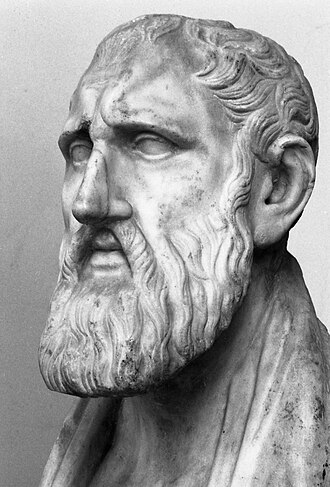
Stoicism is a philosophical movement and practical guide to living, emphasizing daily self-discipline and moral improvement, which originated in the Hellenistic period of ancient Greece and proliferated well into the Roman Imperial period. The ancient Stoics believed that the universe operated according to reason, or logos, providing a unified account of the world, constructed from ideals of ratio

Popular Quotes

16 total
Quote
"There goes with this a certain coldness in the Stoic conception of virtue. Not only bad passions are condemned, but all passions. The sage does not feel sympathy: when his wife or his children die, he reflects that this event is no obstacle to his own virtue, and therefore he does not suffer deeply. Friendship, so highly prized by Epicurus, is all very well, but it must not be carried to the point where your friends misfortunes can destroy your holy calm. As for public life, it may be your duty to engage in it, since it gives opportunities for justice, fortitude, and so on; but you must not be actuated by a desire to benefit mankind, since the benefits you can confer — such as peace, or a more adequate supply of food — are no true benefits, and, in any case, nothing matters to you except your own virtue. The Stoic is not virtuous in order to do good, but does good in order to be virtuous. It has not occurred to him to love his neighbour as himself; love, except in a superficial sense, is absent from his conception of virtue."
StoicismStoicism
Quote
"To a modern mind, it is difficult to feel enthusiastic about a virtuous life if nothing is going to be achieved by it. We admire a medical man who risks his life in an epidemic of plague, because we think illness is an evil, and we hope to diminish its frequency. But if illness is no evil, the medical man might as well stay comfortably at home. To the Stoic, his virtue is an end in itself, not something that does good. And when we take a longer view, what is the ultimate outcome? A destruction of the present world by fire, and then a repetition of the whole process. Could anything be more devastatingly futile? There may be progress here and there, for a time, but in the long run there is only recurrence. When we see something unbearably painful, we hope that in time such things will cease to happen; but the Stoic assures us that what is happening now will happen over and over again. Providence, which sees the whole, must, one would think, ultimately grow weary through despair."
StoicismStoicism
Quote
"[H]ighly favorable to the development of a systematic natural science... first and foremost, the Stoics believed in determinism... nothing willful... everything... according to law. The secret of human life was to fathom the general character of this universal order and to live in harmony with it. ...[A]strological divination... was justified by appealing to the harmony and interaction between celestial and terrestrial events. ...Greek atomists implied [that] atoms... by chance, happened to stay interlocked [in human bodies] for... seventy years... [T]he Stoics... preferred to start at... organized systems [having] integral properties... not derived from the... parts. ...This ...we call the ... a continuous dynamic agency... maintaining... cohesion... As we tighten a drum-head, the sound... rises in pitch. ...Now tension is not an additional ingredient... it is a state... The pneuma... exists in various... states of tension or tones... In some respects... an extension of the Pythagorean theory of musical harmonies. ...Several kinds of pneuma existed... The cohesive... responsible for the unity of a body, and for the fixed pattern of properties... the vital... gave it animation; while... rational... was only present in... thinking beings."
StoicismStoicism
Quote
"The Pythagoreans had found in the astral order the proportions of the concordant musical scale... a harmonia... Thereby they created the most enchanting symbol of Greek cosmic piety: "harmony," issuing in the inaudible "music of the spheres," [as] the idealizing expression for the same fact of irrefragable order that astrology stresses less optimistically... Stoic philsophy strove to integrate the idea of destiny as propounded by contemporary astrology with the Greek concept of harmony: to the Stoics is the practical aspect of the harmony, i.e., its action as it affects terrestrial conditions and the short-lived beings here. And since the stellar movements are actuated by the cosmic and this logos functions in the world-process as providence (pronoia), it follows that in this wholly monistic system heimarmene itself is pronoia, that is, fate and divine providence are the same. The understanding of and willing consent to this fate... as the reason of the whole distinguishes the wise man, who bears adversity... as the price... for the harmony of the whole. The existence of the whole... is the ultimate and no further questionable, self-justifying end in this teleological scheme: for the sake of the cosmos its constituent parts exist... for the sake of the whole organism. Man... is by no means the highest mode of being, he is not the end of nature, and the cosmos is not for his sake."
StoicismStoicism

Similar Authors & Thinkers