SHAWORDS
S

Stuart Kauffman

Stuart Kauffman

Stuart Kauffman

author
11Quotes

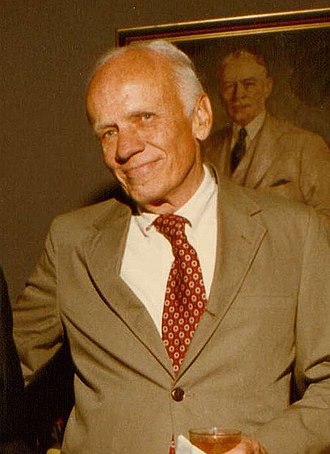
Stuart Alan Kauffman is an American medical doctor, theoretical biologist, and complex systems researcher who studies the origin of life on Earth. He was a professor at the University of Chicago, University of Pennsylvania, and University of Calgary. He is currently emeritus professor of biochemistry at the University of Pennsylvania and affiliate faculty at the Institute for Systems Biology. He h

Popular Shayari

11 total
Quote
"As I thought about this, I noted that the bacterium is just a physical system; its just a bunch of molecules that hang together and do things to one another. So, I wondered, what characteristics are necessary for a physical system to be an autonomous agent? After thinking about this for a number of months I came up with a tentative definition. My definition is that an autonomous agent is something that can both reproduce itself and do at least one thermodynamic work cycle. It turns out that this is true of all free-living cells, excepting weird special cases. They all do work cycles, just like the bacterium spinning its flagellum as it swims up the glucose gradient. The cells in your body are busy doing work cycles all the time."
S
Stuart Kauffman
Quote
"Stephen Jay Gould is extremely bright, inventive. He thoroughly understands paleontology; he thoroughly understands evolutionary biology. He has performed an enormous service in getting people to think about punctuated equilibrium, because you see the process of stasis/sudden change, which is a puzzle. Its the cessation of change for long periods of time. Since you always have mutations, why dont things continue changing? You either have to say that the particular form is highly adapted, optimal, and exists in a stable environment, or you have to be very puzzled. Steve has been enormously important in that sense. Talking with Steve, or listening to him give a talk, is a bit like playing tennis with someone whos better than you are. It makes you play a better game than you can play. For years, Steve has wanted to find, in effect, what accounts for the order in biology, without having to appeal to selection to explain everything—that is, to the evolutionary "just-so stories." You can come up with some cockamamie account about why anything you look at was formed in evolution because it was useful for something. There is no way of checking such things. Were natural allies, because Im trying to find sources of that natural order without appealing to selection, and yet we all know that selection is important."
S
Stuart Kauffman
Quote
"In his famous book, What is Life?, Erwin Schrödinger asks, "What is the source of the order in biology?" He arrives at the idea that it depends upon quantum mechanics and a microcode carried in some sort of aperiodic crystal—which turned out to be DNA and RNA—so he is brilliantly right. But if you ask if he got to the essence of what makes something alive, its clear that he didnt. Although today we know bits and pieces about the machinery of cells, we dont know what makes them living things. However, it is possible that Ive stumbled upon a definition of what it means for something to be alive. For the better part of a year and a half, Ive been keeping a notebook about what I call autonomous agents. An autonomous agent is something that can act on its own behalf in an environment. Indeed, all free-living organisms are autonomous agents. Normally, when we think about a bacterium swimming upstream in a glucose gradient we say that the bacterium is going to get food. That is to say, we talk about the bacterium teleologically, as if it were acting on its own behalf in an environment. It is stunning that the universe has brought about things that can act in this way. How in the world has that happened?"
S
Stuart Kauffman
Quote
"If biologists have ignored self-organization, it is not because self-ordering is not pervasive and profound. It is because we biologists have yet to understand how to think about systems governed simultaneously by two sources of order. Yet who seeing the snowflake, who seeing simple lipid molecules cast adrift in water forming themselves into cell-like hollow lipid vesicles, who seeing the potential for the crystallization of life in swarms of reacting molecules, who seeing the stunning order for free in networks linking tens upon tens of thousands of variables, can fail to entertain a central thought: if ever we are to attain a final theory in biology, we will surely, surely have to understand the commingling of self-organization and selection. We will have to see that we are the natural expressions of a deeper order. Ultimately, we will discover in our creation myth that we are expected after all."
S
Stuart Kauffman

Similar Authors & Thinkers