SHAWORDS
Swami Shraddhanand

Swami Shraddhanand

Swami Shraddhanand

Swami Shraddhanand

author
8Quotes

Shraddhanand, born Munshi Ram, was an Indian independence activist and Arya Samaj sannyasi who propagated the teachings of Dayananda Saraswati. This included the establishment of educational institutions, like the Gurukul Kangri University, and played a key role on the Sangathan and the Shuddhi (purification), a Hindu reform movement in the 1920s.

Popular Quotes

8 total
Quote
"The expected has happened. Swami Shraddhanandji passed a day or two at the Satyagraha Ashram at Sabarmati, now about six months ago, and told me, in the course of his conversations that he often received letters threatening his life. Where is the refoimer who has not a price put upon his head ? Swamiji was a reformer, he was a man of action not of words. His was a living belief. He had suffered for it. He was bravery personified. He never quailed before danger. He was a warrior. And a warrior loves to die, not on a sick-bed, but on the battlefield. God had willed for him a martyr’s death and so, though he was still on the sick-bed, he died at the hands of an assassin. In the language of the Gita, therefore, ‘happy the warrior who achieves such a blessed death.’ Death is at any time blessed, but it is twice blessed for a warrior who dies for his cause, i.e. truth. Death is no fiend, he is the truest of friends. He delivers us from agony. He helps us against ourselves. He ever gives us new chances, new hopes. He is like sleep a sweet restorer. Yet it is customary to mourn when a friend dies. The custom has no operation when the death is that of a martyr. I cannot, therefore, mourn over his death. He and his are to be envied. For though Shraddhanandji is dead, he is yet living. He is living in a truer sense than when he moved about in our midst in his giant body. The family in which he was born, the nation to which he belonged are to be congratulated upon so glorious a death as this. He lived a hero. He has died a hero."
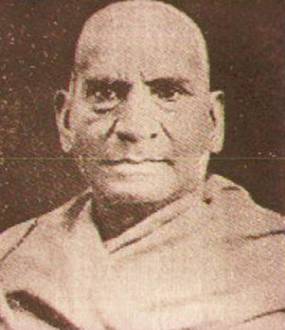
Swami ShraddhanandSwami Shraddhanand
Quote
"Swamiji had written a pamphlet, The Hour of Danger, in which he had warned Hindu society to be on its guard against mischievous Muslim machinations. According to his biographer, J.T.F. Jordens, “In his pamphlet the Swami went on to show how Nizami in his own introduction referred to his consultations with many Muslim leaders, including the Agha Khan, and how all had agreed that the publication of his work should remain a carefully kept secret, within the Muslim community. The single purpose of the pamphlet was to describe all the means, fair and foul, by which Hindus could be induced to become Muslims.... The Swami felt that he had uncovered a giant conspiracy. His pamphlet consisted practically entirely of quotations from Nizami’s work, showing how all Muslims should be involved in the fight for the spread of Islam: how pirs, fakirs, politicians, peasants, zamindars, hakims, etc. could be used and what their allotted task should be. It also stressed the need for secrecy and for an extensive spy network.’"
Swami ShraddhanandSwami Shraddhanand
Quote
"I cannot close the reminiscences of the life of a great reformer without recalling his last visit to the Satyagraha Ashram only a few months ago. Let me assure my Musalman friends that he was no hater of Musalmans,. He undoubtedly distrusted many Musalmans. But he bore them no ill-will. He thought that Hindus were cowed down and he wanted them to be brave and be able to defend themselves and their honour. In this connection he told me that he was much misunderstood and that he was absolutely innocent of many things that were said against him. He told me he had several threatening letters. He was warned by friends not to travel alone. But this man of faith said, "What protection shall I seek but of God ? Not a blade: of grass perishes without His will. I know therefore that nothing can happen to me so long He wishes me to serve through this body."
Swami ShraddhanandSwami Shraddhanand
Quote
"The end of that year 1926 was darkened by a great tragedy, which sent a thrill of horror all over India. It showed to what depths communal passion could reduce our people. Swami Shraddhanand was assassinated by a fanatic as he lay in bed. What a death for a man who had bared his chest to the bayonets of the Gurkhas and marched to meet their fire! Nearly eight years earlier he, an Arya Samajist leader, had stood in the pulpit of the great Jame Masjid of Delhi and preached to a mighty gathering of Muslims and Hindus of unity and India’s freedom. And that great multitude had greeted him with loud cries of Hindu-Musalman-ki-jai, and outside in the streets they had jointly sealed that cry with their blood. And now he lay dead, killed by a fellow-countryman, who thought, no doubt, that he was doing a meritorious deed, which would lead him to paradise. Always I have admired sheer physical courage, the courage to face physical suffering in a good cause, even unto death. Most of us, I suppose, admire it. Swami Shraddhanand had an amazing amount of that fearlessness. His tall and stately figure, wrapped in a, sanyasin’s robe, perfectly erect in spite of advanced years, eyes flashing, sometimes a shadow of irritation or anger at the weakness of others passing over his face — how I remember that vivid picture, and how often it has come back to me!"
Swami ShraddhanandSwami Shraddhanand
Quote
"The Times of India of 30th November 1927 carried the news item: ‘‘It is reported that for earning merit for the soul of Abdul Rashid, the murderer of Swami Shraddhananda, in the next world, the students and professors of the famous theological collage of Deoband finished five complete recitations of the Koran and had planned to finish a daily lakh and a quarter recitations of Koranic verses. Their prayer was ‘God Almighty may give the marhoom (i.e., Rashid) a place in the a ala-e-illeeyeen (the summit of the seventh heaven).‘‘"
Swami ShraddhanandSwami Shraddhanand

Similar Authors & Thinkers



