Quote
"In order to carry out orders from the southern army I sent 50,000 troops to Leyte, but due to air and submarine attacks half of them were lost."
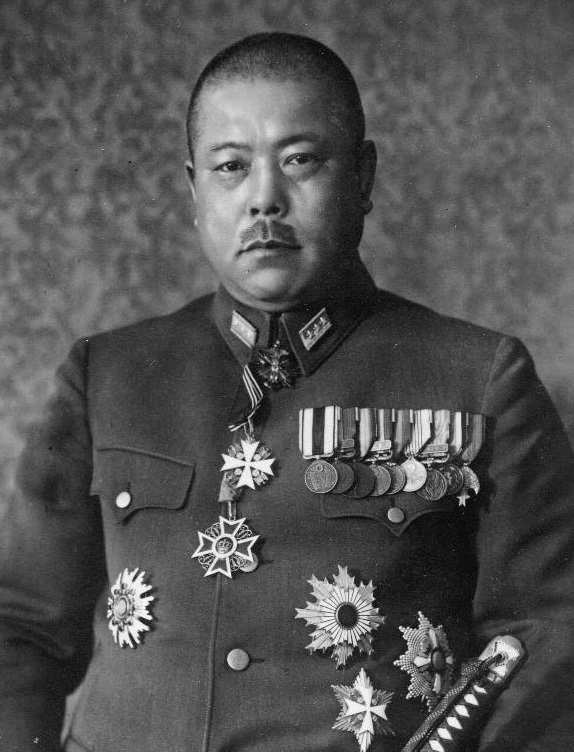 Tomoyuki Yamashita
Tomoyuki Yamashita
Tomoyuki Yamashita
Tomoyuki Yamashita was a general in the Imperial Japanese Army during World War II. Yamashita led Japanese forces during the invasion of Malaya and Battle of Singapore. His conquest of Malaya and Singapore in 70 days earned him the sobriquet "The Tiger of Malaya". He was assigned to defend the Philippines from the advancing Allies later in the war. Although he was unable to prevent the superior A
"In order to carry out orders from the southern army I sent 50,000 troops to Leyte, but due to air and submarine attacks half of them were lost."
Tomoyuki Yamashita"All I want to hear from you is Yes or No!"
Tomoyuki Yamashita"I was carrying out my duty, as the Japanese high commander of the Japanese Army in the Philippine Islands, to control my army with the best of my ability during wartime. Until now, I believe that I have tried my best for my army. As I said in the Manila Supreme Court that I have done everything with all my capacity, so I wouldnt be ashamed in front of the Gods for what I have done when I have died. But if you say to me "you do not have any ability to command the Japanese Army," I should say nothing in response, because it is my own nature. Now, our war criminal trial is going on in the Manila Supreme Court, so I wish to be justified under your kindness and righteousness. I know that all your American military affairs always have had tolerant and rightful judgment. When I had been investigated in the Manila court, I have had good treatment, a kind attitude from your good-natured officers who protected me all the time. I will never forget what they have done for me even if I die. I dont blame my executioners. Ill pray that the Gods bless them. Please send my thankful word to Col. Clarke and Lt. Col. Feldhaus, Lt. Col. Hendrix, Maj. Guy, Capt. Sandburg, Capt. Reel, at Manila court, and Col. Arnard. I thank you. I pray for the Emperors long life and prosperity forever."
Tomoyuki Yamashita"We have just received your reply. The Japanese Army will consider nothing but surrender."
Tomoyuki Yamashita"How could we win when you had all that?"
Tomoyuki Yamashita"And [the attack on Pearl Harbor] was merely the opening salvo. Thereafter, Japanese forces fanned out across the Pacific and South-East Asia in a vast centrifugal offensive that achieved breathtaking speed and success. On December 8, the first Japanese troops landed on the eastern side of the Malay peninsula, followed two days later by the rest of General Yamashita Tomoyukis 25th Army. Naval aircraft based in Saigon smashed the British naval force off Malaya, sinking the battleships Prince of Wales and Repulse. Lieutenant-General Iida Shôjirôs 15th Army stormed up the Kra isthmus into the heart of Burma, routing better-armed but less mobile British forces. British Borneo was invaded on December 16; a month and three days later it surrendered. Hong Kongs garrison of 12,000 held out for barely a week after Japanese troops landed there on December 18; it surrendered on Christmas Day. Meanwhile the 25th Army was advancing down the Malayan peninsula towards Singapore, using bicycles to speed down the well-tended plantation roads. On February 15 Lieutenant-General Arthur E. Percival and his garrison of 16,000 Britons, 14,000 Australians and 32,000 Indians surrendered, unaware of the exhausted condition of their 30,000 adversaries, who had all but run out of food and ammunition. Here was a humiliation even worse than that of May 1940, and there was more to come. Rangoon fell in March, despite Chinese attempts to assist Burmas beleaguered British-Indian defenders; Mandalay followed on May 1, along with the Andaman Islands in the Bay of Bengal. As General Henry Pownall admitted, the British had been out-generalled, outwitted and outfought . . . by better soldiers."
Tomoyuki Yamashita




