SHAWORDS

A mirror does not develop because an historical pageant passes in fron — E. M. Forster

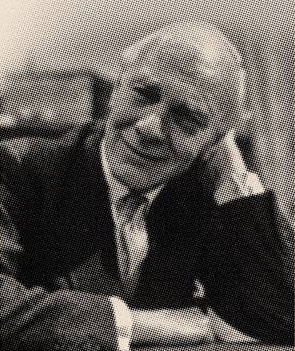
"A mirror does not develop because an historical pageant passes in front of it. It only develops when it gets a fresh coat of quicksilver — in other words, when it acquires new sensitiveness; and the novels success lies in its own sensitiveness, not in the success of its subject matter."
E
E. M. Forster
E. M. Forster
author76 quotes

Edward Morgan Forster was an English author. He is best known for his novels, particularly A Room with a View (1908), Howards End (1910) and A Passage to India (1924). He also wrote numerous short stories, essays, speeches and broadcasts, as well as biographies and pageant plays. His short story "The Machine Stops" (1909) is often viewed as the beginning of technological dystopian fiction. He also

More by E. M. Forster

View all →
Quote
"As for my politics, you will have guessed that I am not a Fascist — Fascism does evil that evil may come. And I am not a Communist, though perhaps I might be one if I was a younger and braver man, for in Communism I see hope. It does many things which I think evil, but I know that it intends good. I am actually what my age and my upbringing have made me — a bourgeois who adheres to the British constitution, adheres to it rather than supports it, and the fact that this isnt dignified doesnt worry me. I do care about the past. I do care about the preservation and extension of freedom."
E
E. M. Forster
Quote
"I never expect anything to happen now, and so I am never disappointed. You would be surprised to know what my great events are. Going to the theatre yesterday, talking to you now — I dont suppose I shall ever meet anything greater. I seem fated to pass through the world without colliding with it or moving it — and Im sure I cant tell you whether the fates good or evil. I dont die — I dont fall in love. And if other people die or fall in love they always do it when Im just not there. You are quite right; life to me is just a spectacle, which — thank God, and thank Italy, and thank you — is now more beautiful and heartening than it has ever been before."
E
E. M. Forster
Quote
"This woman was a goddess to the end. For her no love could be degrading: she stood outside all degradation. This episode, which she thought so sordid, and which was so tragic for him, remained supremely beautiful. To such a height was he lifted, that without regret he could now have told her that he was her worshipper too. But what was the use of telling her? For all the wonderful things had happened. "Thank you," was all that he permitted himself. "Thank you for everything.""
E
E. M. Forster
Quote
"He remembered his wifes even goodness during thirty years. Not anything in detail — not courtship or early raptures —but just the unvarying virtue, that seemed to him a womans noblest quality. So many women are capricious, breaking into odd flaws of passion or frivolity. Not so his wife. Year after year, summer and winter, as bride and mother, she had been the same, he had always trusted her. Her tenderness! Her innocence! The wonderful innocence that was hers by the gift of God. Ruth knew no more of worldly wickedness and wisdom than did the flowers in her garden, or the grass in her field. Her idea of business — "Henry, why do people who have enough money try to get more money?" Her idea of politics — "I am sure that if the mothers of various nations could meet, there would be no more wars," Her idea of religion — ah, this had been a cloud, but a cloud that passed. She came of Quaker stock, and he and his family, formerly Dissenters, were now members of the Church of England. The rectors sermons had at first repelled her, and she had expressed a desire for "a more inward light," adding, "not so much for myself as for baby" (Charles). Inward light must have been granted, for he heard no complaints in later years. They brought up their three children without dispute. They had never disputed. She lay under the earth now. She had gone, and as if to make her going the more bitter, had gone with a touch of mystery that was all unlike her."
E
E. M. Forster

More on Success

View all →
Quote
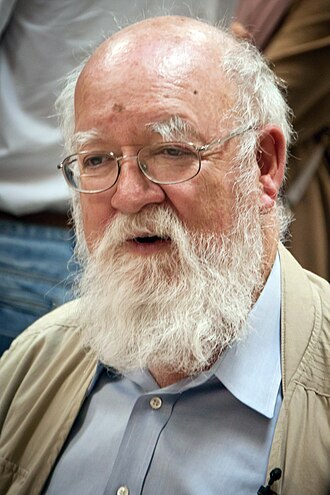
"In a Thumbnail Sketch here is [the Multiple Drafts theory of consciousness] so far:There is no single, definitive "stream of consciousness," because there is no central Headquarters, no Cartesian Theatre where "it all comes together" for the perusal of a Central Meaner. Instead of such a single stream (however wide), there are multiple channels in which specialist circuits try, in parallel pandemoniums, to do their various things, creating Multiple Drafts as they go. Most of these fragmentary drafts of "narrative" play short-lived roles in the modulation of current activity but some get promoted to further functional roles, in swift succession, by the activity of a virtual machine in the brain. The seriality of this machine (its "von Neumannesque" character) is not a "hard-wired" design feature, but rather the upshot of a succession of coalitions of these specialists.The basic specialists are part of our animal heritage. They were not developed to perform peculiarly human actions, such as reading and writing, but ducking, predator-avoiding, face-recognizing, grasping, throwing, berry-picking, and other essential tasks. They are often opportunistically enlisted in new roles, for which their talents may more or less suit them. The result is not bedlam only because the trends that are imposed on all this activity are themselves part of the design. Some of this design is innate, and is shared with other animals. But it is augmented, and sometimes even overwhelmed in importance, by microhabits of thought that are developed in the individual, partly idiosyncratic results of self-exploration and partly the predesigned gifts of culture. Thousands of memes, mostly borne by language, but also by wordless "images" and other data structures, take up residence in an individual brain, shaping its tendencies and thereby turning it into a mind."
Daniel DennettDaniel Dennett
Quote
"We foreign journalists in Moscow used to amuse ourselves, as a matter of fact, by competing with one another as to who could wish upon one of these intelligentsia visitors to the USSR the most outrageous fantasy…One story I floated myself, for which I received considerable acclaim, was that the huge queues outside food shops came about because the Soviet workers were so ardent in building Socialism that they just wouldnt rest, and the only way the government could get them to rest for even two or three hours was organizing a queue for them to stand in. I laugh at it all now, but at the time you can imagine what a shock it was to someone like myself, who had been brought up to regard liberal intellectuals as the samurai, the absolute elite, of the human race, to find that they could be taken in by deceptions which a half-witted boy would see through in an instant…I could never henceforth regard the intelligentsia as other than credulous fools who nonetheless became the medias prophetic voices, their heirs and successors remaining so still."
Malcolm MuggeridgeMalcolm Muggeridge