Quote
"Systems engineering is the key technology to manage this complexity"
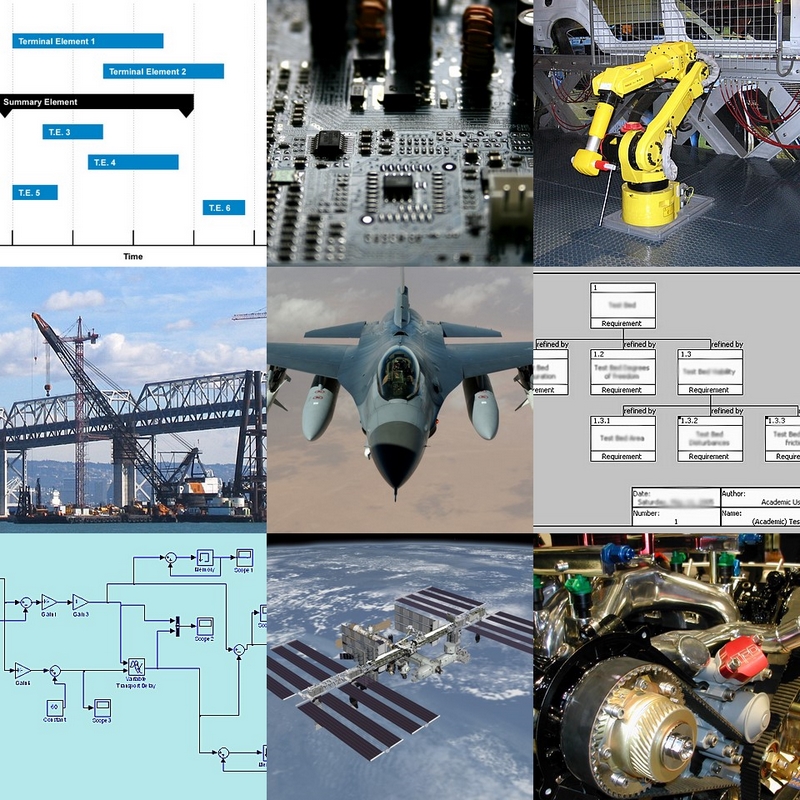 Systems engineering
"A new concept and a new method were needed. The concept from the engineering standpoint is the evolution of the engineering scientist, i.e., the scientific generalist who maintains a broad outlook. The method is that of the team approach. On large-scale-system problems, teams of scientists and engineers, generalists as well as specialists, exert their joint efforts to find a solution and physically realize it. We are led to the concept of the system-design team, a small group of engineers or scientists, to lead a large project and organize the system effort. Such men have been variously called engineering scientists, system engineers, system analysts, or large-scale-system designers. The technique has been variously called the systems approach or the team development method. It is toward this man and his teammates that these discussions are directed. With the realization that not enough can be learned in all the required fields to make him a specialist, enough is introduced to make him aware of the language and problems of the specialist. This generalist is a new quantity in the engineering world, and his education must be begun."
Systems engineering is an interdisciplinary field of engineering and engineering management that focuses on how to design, integrate, and manage complex systems over their life cycles. At its core, systems engineering utilizes systems thinking principles to organize the systems engineering body of knowledge. The individual outcome of such efforts, an engineered system, can be defined as a combinat
"Systems engineering is the key technology to manage this complexity"
Systems engineering"Systems engineering should be, first and foremost, a state of mind and an attitude taken when dealing with complexity."
Systems engineering"The term "systems engineering" is a term with an air of romance and of mystery. The romance and the mystery come from its use in the field of guided missiles, rockets, artificial satellites, and space flight. Much of the work being done in these areas is classified and hence much of it is not known to the general public or to this writer. But one term that has defied classification limits is the term "systems engineering." One sees the term "systems engineering" in technical help-wanted advertisements in newspapers and magazines. For example, the New York Times advertisements have often mentioned it, and it is far from rare in the advertising carried by the magazine Scientific American. The term is also found among the course offerings of a few leading universities."
Systems engineering"The Systems Engineering method recognizes each system is an integrated whole even though composed of devices, specialized structures and sub-functions. It is further recognized that any system has a number of objectives and that the balance between them may differ widely from system to system. The methods seek to optimize the overall system function according to the weighted objectives and to achieve maximum capability of its parts."
Systems engineering"Some engineering artifacts are most easily analysed, described, or designed as an assembly of simpler parts. Artifacts of this kind are called systems. Some systems have the property that flowing through them are streams of some working fluid (which may be matter, energy, or information), in such a way that the working fluid passes in turn through many parts of the system, which is in consequence termed a sequential (or flow) system. Examples are a chemical plant, an electrical power distribution network, a digital computer, a sewer system. Systems which do not have this property are termed associative systems of which examples are a motor car, an aircraft, or a bridge - - it is with (sequential) systems that the theory of has primarily been developed."
Systems engineering"System engineering is the art and science of creating effective systems, using whole system, whole life principles."
Systems engineering