SHAWORDS
Systems engineering

Systems engineering

Systems engineering

Systems engineering

author
31Quotes

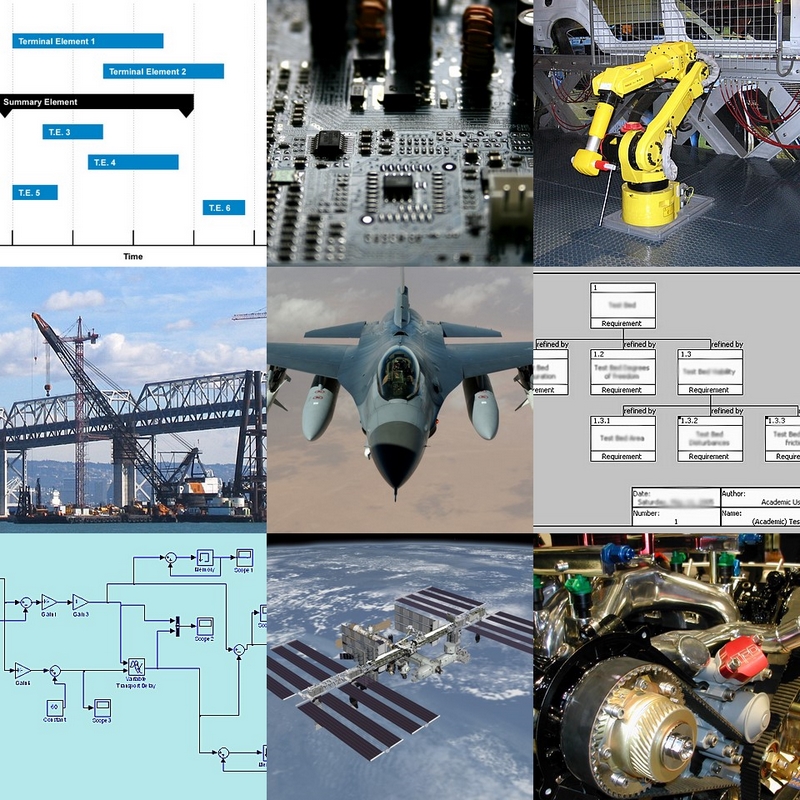
Systems engineering is an interdisciplinary field of engineering and engineering management that focuses on how to design, integrate, and manage complex systems over their life cycles. At its core, systems engineering utilizes systems thinking principles to organize the systems engineering body of knowledge. The individual outcome of such efforts, an engineered system, can be defined as a combinat

Popular Quotes

31 total
Quote
"Systems engineering is the name given to engineering activity which considers the overall behavior of a system, or more generally which considers all factors bearing on a problem, and the systems approach to control engineering problems is correspondingly that approach which examines the total dynamic behavior of an integrated system. It is concerned more with quality of performance than with sizes, capacities, or efficiencies, although in the most general sense systems engineering is concerned with overall, comprehensive appraisal."
Systems engineeringSystems engineering
Quote
"The term "systems engineering" is a term with an air of romance and of mystery. The romance and the mystery come from its use in the field of guided missiles, rockets, artificial satellites, and space flight. Much of the work being done in these areas is classified and hence much of it is not known to the general public or to this writer. But one term that has defied classification limits is the term "systems engineering." One sees the term "systems engineering" in technical help-wanted advertisements in newspapers and magazines. For example, the New York Times advertisements have often mentioned it, and it is far from rare in the advertising carried by the magazine Scientific American. The term is also found among the course offerings of a few leading universities."
Systems engineeringSystems engineering
Quote
"Systems engineering embraces every scientific and technical concept known, including economics, management, operations, maintenance, etc. It is the job of integrating an entire problem or problem to arrive at one overall answer, and the breaking down of this answer into defined units which are selected to function compatibly to achieve the specified objectives. The problem can be practically anything - designing a missile, building a plant, replanning an existing process, developing a new instrument, or establishing a maintenance procedure. Instrument and control engineering is but one aspect of systems engineering - a vitally important and highly publicized aspect, because the ability to create automatic controls within overall systems has made it possible to achieve objectives never before attainable, While automatic controls are vital to systems which are to be controlled, every aspect of a system is essential. Systems engineering is unbiased, it demands only what is logically required. Control engineers have been the leaders in pulling together a systems approach in the various technologies."
Systems engineeringSystems engineering
Quote
"By some definitions "systems engineering" is suggested to be a new discovery. Actually it is a common engineering approach which has taken on a new and important meaning because of the greater complexity and scope of problems to be solved in industry, business, and the military. Newly discovered scientific phenomena, new machines and equipment, greater speed of communications, increased production capacity, the demand for control over ever-extending areas under constantly changing conditions, and the resultant complex interactions, all have created a tremendously accelerating need for improved systems engineering. Systems engineering can be complex, but is simply defined as "logical engineering within physical, economic and technical limits" — bridging the gap from fundamental laws to a practical operating system."
Systems engineeringSystems engineering
Quote
"A new concept and a new method were needed. The concept from the engineering standpoint is the evolution of the engineering scientist, i.e., the scientific generalist who maintains a broad outlook. The method is that of the team approach. On large-scale-system problems, teams of scientists and engineers, generalists as well as specialists, exert their joint efforts to find a solution and physically realize it. We are led to the concept of the system-design team, a small group of engineers or scientists, to lead a large project and organize the system effort. Such men have been variously called engineering scientists, system engineers, system analysts, or large-scale-system designers. The technique has been variously called the systems approach or the team development method. It is toward this man and his teammates that these discussions are directed. With the realization that not enough can be learned in all the required fields to make him a specialist, enough is introduced to make him aware of the language and problems of the specialist. This generalist is a new quantity in the engineering world, and his education must be begun."
Systems engineeringSystems engineering
Quote
"It is hard to say whether increasing complexity is the cause or the effect of mans effort to cope with his expanding environment. In either case a central feature of the trend has been the development of large and very complex systems which tie together modern society. These systems include abstract or non-physical systems, such as government and the economic system. They also include large physical systems like pipe line and power distribution systems, transportation and electrical communication systems. The growth of these systems has increased the need not only for over-all planning, but also for long-range development of the systems. This need has induced increased interest in the methods by which efficient planning and design can be accomplished in complex situations where no one scientific discipline can account for all the factors. Two similar disciplines which emerged about the time of World War II to cope with these problems are called systems engineering and operations research."
Systems engineeringSystems engineering

Similar Authors & Thinkers



